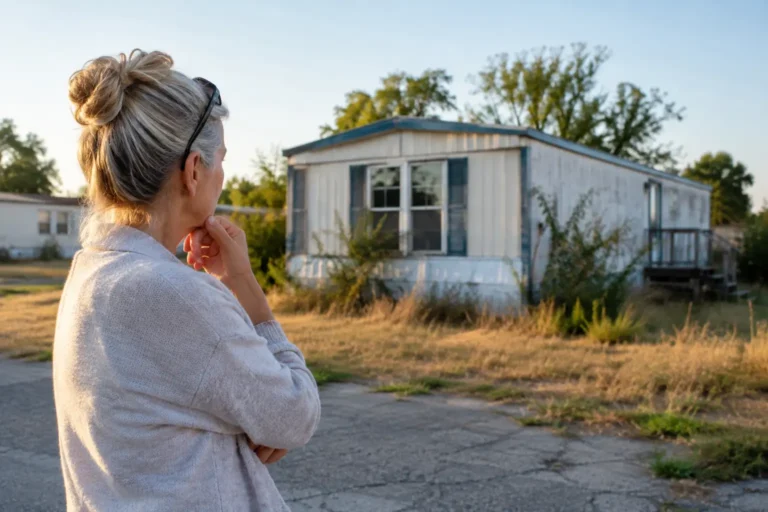

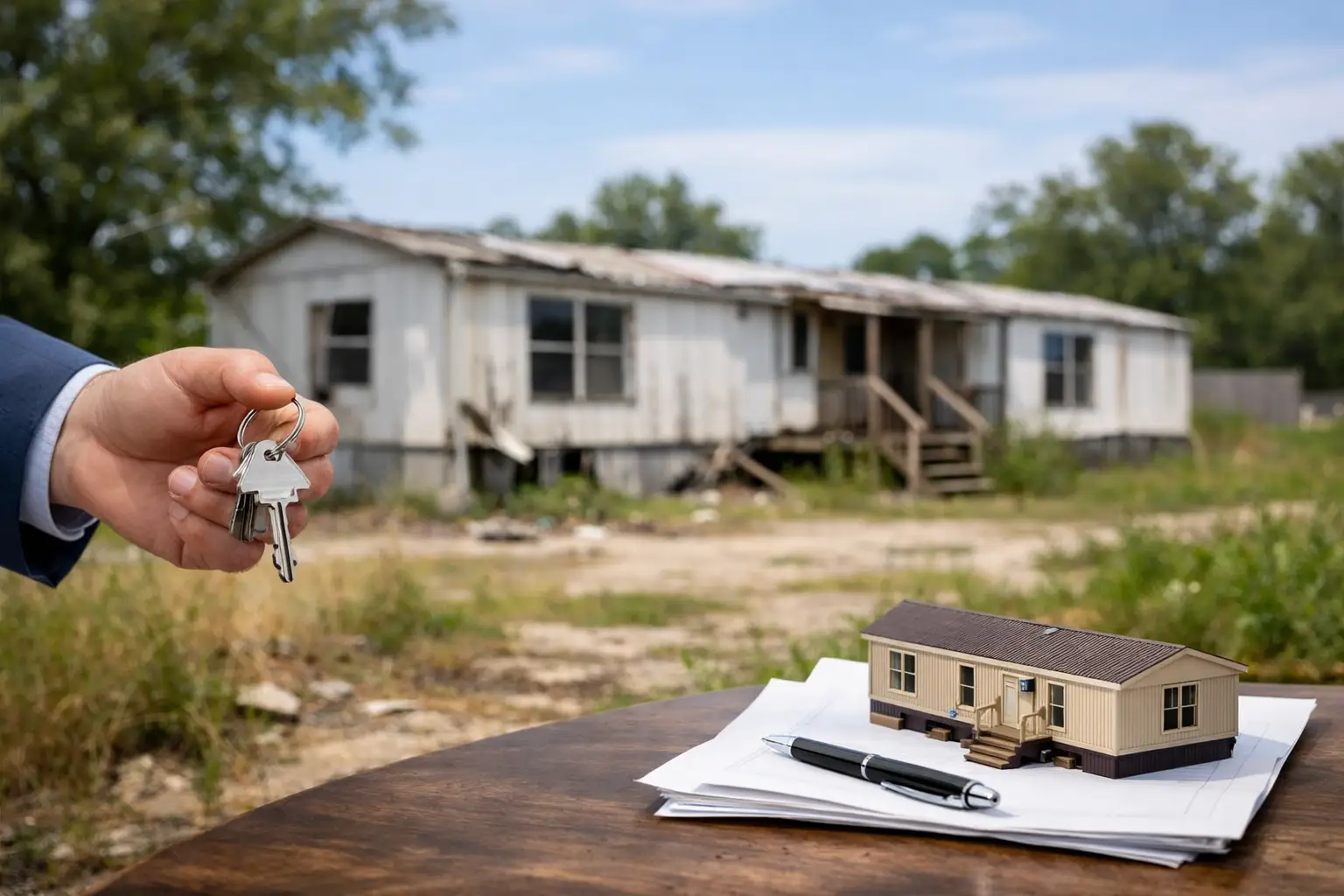
That old mobile home sitting on your land is not just an eyesore. It can hold up a sale, create code problems, attract dumping, and leave you stuck with a property you cannot easily move forward with. If you need to sell abandoned mobile home on property in North Carolina, the right path depends on one question first: do you actually own the home, the land, or both?
That distinction matters more than most owners realize. A mobile home can be treated like personal property, real property, or a titled vehicle-type asset depending on how it was set up, financed, and recorded. Add in missing paperwork, heirs, back taxes, or a long-gone occupant, and what looks simple can turn into a delay that costs you time and money.
Sell abandoned mobile home on property: start with ownership
Before you advertise anything or agree to a price, figure out what is legally yours to sell. If the abandoned mobile home is on your property, that does not automatically mean you own the home itself. In some cases, a tenant or former buyer owned the home and only rented the lot. In others, the home was transferred years ago but the title was never properly updated.
Start with the basics. Check your deed for the land, then look for any title, bill of sale, tax record, or old financing paperwork for the home. In North Carolina, manufactured homes may have titles unless the title was canceled and the home was converted to real property. If the title still exists, that title often controls the transfer.
If you inherited the land, do not assume the mobile home passed cleanly with it. Estates often leave gaps, especially when family members moved, passed away, or never recorded paperwork. If there are multiple heirs, everyone with an ownership interest may need to sign.
When the landowner does not own the mobile home
This is where many sellers get tripped up. A home may be abandoned on your land, but if someone else legally owns it, you cannot simply sell it as your own. You may need to follow a legal process tied to abandonment, eviction, storage, or disposal before you can clear the issue.
What that process looks like depends on the facts. Was there a lease? Was the occupant evicted? Was there a tax foreclosure? Was the home part of a failed owner-finance deal? The answers affect whether you can claim the home, require removal, or negotiate a transfer.
If your goal is to sell the land quickly, sometimes the cleanest move is not trying to retail the mobile home at all. Instead, you work with a buyer who understands manufactured housing issues and can evaluate the whole situation – land, structure, title problems, and all.
If you own both the land and the home
If you do own both, the next question is whether the home has value as a structure, as salvage, or mainly as a problem to be removed. Age and condition matter here. A newer single-wide or double-wide in decent shape may still attract buyers, especially if it can stay in place. An older home with soft floors, roof leaks, missing HVAC, or severe deferred maintenance may be worth less than the cost to move or repair.
That is why pricing an abandoned mobile home on property is rarely about square footage alone. Buyers look at whether the title is clear, whether access is easy, whether the home can legally remain where it sits, and whether county or permit issues exist. A cheap asking price will not solve paperwork problems.
The biggest issues that slow down a sale
Most abandoned mobile home situations are not blocked by one big issue. They are slowed down by several smaller ones stacked together.
Missing title is one of the most common. If you cannot produce the title and the home was never properly retired or converted, transferring ownership becomes harder. Delinquent taxes can also complicate things, especially if the county has separate records for the home and the land.
Condition is another major factor. Water damage, mold, vandalism, and stripped-out interiors can make traditional buyers disappear fast. If the home has been vacant for a long time, buyers may assume the worst unless someone experienced has looked at it.
Then there is the placement question. If the home sits in a way that creates setback problems, encroachment concerns, septic issues, or permit violations, that can reduce your options. The same goes for homes in parks, though on private land the issue is usually whether the home can stay, be repaired, or needs to be removed.
Your options when you want out fast
There are really three practical ways to handle this.
The first is to sell the land and home together as-is. This is usually the simplest option when you have legal ownership but do not want to repair, clean, market, or coordinate multiple contractors. It works best when the buyer understands mobile homes and is willing to sort through title, moving, or disposition issues.
The second is to separate the problem. You remove the home first, then sell the cleared land. That can make sense if the home is beyond saving and the land has stronger value without it. The downside is cost. Demolition, hauling, debris removal, and site cleanup can add up quickly.
The third is to try selling the mobile home itself to a private buyer, investor, or mover. This can work if the home still has usable value, but it tends to be slower and more uncertain. You may spend weeks answering messages only to find out the buyer cannot move the home, cannot get park approval elsewhere, or backs out when title questions come up.
How to decide whether the home should stay or go
A lot depends on location. If the abandoned mobile home sits on private land in a desirable part of Central North Carolina, keeping it in place may add convenience for the next buyer, even if the home needs work. Utilities may already exist. The site may already be improved. That can matter.
But if the home is older, damaged, or not financeable, its presence may actually drag value down. Some buyers want land only. Others will buy the package if the numbers make sense, but they will account for removal costs in the offer.
This is where a realistic assessment helps. Not every abandoned home is worthless, and not every one is worth saving. You need a numbers-first answer, not guesswork.
A practical process to sell abandoned mobile home on property
If you want movement without wasting weeks, keep the process simple.
First, gather what paperwork you have. That includes deed records, title or VIN information, tax bills, old purchase contracts, probate documents, and any notices tied to the occupant or prior owner. Even incomplete records help.
Next, document the current condition. Take clear photos of the exterior, each room, the hitch area if visible, the data plate if available, and any obvious damage. If there is no safe interior access, say that upfront.
Then decide what outcome matters most. If your priority is highest possible price, be prepared for a longer process and more back-and-forth. If your priority is speed, certainty, and selling as-is, a direct buyer is usually the better fit.
Finally, get the property evaluated by someone who already works with mobile homes in your market. In the Triad and surrounding Central NC areas, that matters. Local buyers know what counties require, what titles tend to look like, what moving challenges come up, and what these homes actually sell for in real conditions, not ideal ones.
Why direct buyers are often the right fit
An abandoned mobile home does not fit the normal real estate playbook. Agents often do not want the listing if title is unclear, repairs are heavy, or the property has occupancy and condition issues. Even when they take it, the buyer pool is smaller.
A direct buyer can be different because the focus is on solving the problem, not making the property look retail-ready. That usually means no repairs, no cleaning, no showings, and no waiting for a financed buyer to get cold feet. If the situation calls for finding a buyer through mobile home channels instead of a standard retail listing, that can also be part of the solution.
Companies like Triad Mobile Homes work in this space specifically because these situations are rarely simple. The value is not just making an offer. It is knowing how to deal with title questions, condition issues, transport concerns, and seller timelines without creating more friction.
What to expect from a fair cash offer
A fair cash offer on an abandoned mobile home property is usually based on risk, repair cost, title clarity, land value, and how quickly the deal can close. It may be lower than what you imagine in a fully fixed-up scenario, but that comparison is often not realistic. The real comparison is this: what do you net after cleanup, delays, holding costs, legal process, and uncertainty?
For many sellers, especially heirs, landlords, and owners dealing with vacancy or financial pressure, certainty wins. A straightforward as-is sale lets you stop paying taxes, stop worrying about complaints, and move on.
If you are looking at an abandoned mobile home on your property and wondering whether it is even sellable, the answer is often yes. The path just depends on ownership, paperwork, and condition. Start there, be honest about the problems, and work with someone who knows how to handle the hard parts so you do not have to.