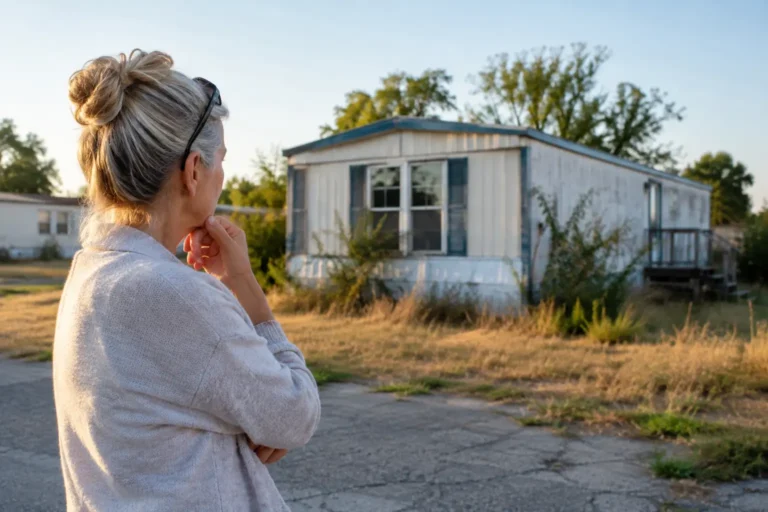


If you need to sell a mobile home quickly, cash sale versus owner financing is not a small decision. It affects how fast you close, how much risk you keep, and how long this property stays tied to your life. For many owners in Central North Carolina, especially when there is lot rent pressure, title trouble, vacancy, damage, or an inherited home, the right answer usually comes down to one thing: do you want a clean exit now, or do you want payments over time with more responsibility attached?
Cash sale versus owner financing: the real difference
A cash sale is simple. You agree on a price, sign the paperwork, close, and get paid. Once the transaction is done, you are generally done with the home too. That matters when you are trying to move fast, avoid more carrying costs, or stop dealing with a home that has become a burden.
Owner financing works differently. Instead of receiving the full purchase price at closing, you accept a down payment and monthly payments from the buyer over time. On paper, that can look attractive because the total sales price may be higher. In real life, you are taking on the role of lender, and that changes everything.
For a site-built house in a stable retail market, some sellers are willing to wait. For a mobile home, especially one in a park or one with condition issues, title questions, or moving concerns, owner financing can get more complicated much faster.
Why cash is often the better fit for mobile home sellers
The biggest advantage of a cash sale is certainty. You know the amount, you know the timeline, and you know when the transaction ends. There are no future payment worries, no chasing someone down next month, and no wondering whether the buyer will keep the home up or stay current.
That certainty is not just about convenience. It protects you from a long list of common mobile home problems. If a home needs repairs, has soft floors, roof leaks, missing skirting, or old systems, a cash buyer may still be willing to buy it as-is. If the home is in a mobile home park, there may be park approval issues, age restrictions, or rules about who can live there. If the title is missing or paperwork is incomplete, a direct cash buyer who knows manufactured housing can often help work through those issues.
A cash sale also cuts down on holding costs. Every extra month you own the home may mean lot rent, taxes, insurance, utilities, storage, mowing, or more repairs. If the home is vacant, the risk goes up too. Vacant mobile homes can attract vandalism, leaks that go unnoticed, and weather damage that gets worse fast.
For sellers dealing with divorce, inherited property, relocation, repossession pressure, or a home that has become too expensive to carry, speed usually matters more than squeezing out every possible dollar over several years.
When owner financing looks appealing
Owner financing does have a place. If your home is in decent shape, the title is clear, the park approves the buyer, and you do not need all your money right away, owner financing can produce a higher total price. Some buyers who cannot get traditional financing are willing to pay more over time for the chance to buy.
That monthly income can sound like a win, especially if the home is paid off and you want steady payments instead of one lump sum. In some cases, a seller may also move the home faster with owner financing because it opens the door to more buyers.
But this is where many sellers stop the analysis too early. A higher sale price is not the same as a better deal. If the buyer pays late, stops paying, damages the home, or leaves the lot rent unpaid, your higher paper price can disappear in a hurry.
The hidden risks of owner financing
The main risk is default. If the buyer misses payments, you may have to start a legal process to get the home back, enforce the contract, or clear up possession issues. That takes time, money, and patience. Meanwhile, the home may be sitting in worse condition than before.
There is also servicing risk. Someone has to track payments, document the balance, handle late notices, keep records, and make sure the agreement is structured properly. If paperwork is sloppy, small mistakes can become expensive disputes.
For mobile homes in parks, owner financing brings another layer of exposure. If the buyer fails park screening, breaks park rules, or falls behind on lot rent, the situation can get messy. Even if you have a contract with the buyer, the park has its own rules and rights. You may find yourself trying to sort out a problem that no longer feels like your home but is still very much your problem.
Then there is condition risk. Buyers who purchase through owner financing often do not have much cash reserve. If the HVAC fails, the roof leaks, or plumbing breaks, some buyers stop paying instead of repairing the issue. The seller ends up in a bad middle ground – not fully paid, not fully free, and potentially facing a damaged asset.
Cash sale versus owner financing for difficult situations
If your situation is complicated, cash usually gets stronger and owner financing gets weaker.
Take an inherited mobile home. If you live out of state, you probably do not want years of monthly collection, maintenance questions, and title follow-up. You want the property handled so you can move on.
Take a home with deferred maintenance. Owner financing may attract a buyer, but buyers with limited cash often struggle after closing. If the home needs work now, that risk does not disappear because a contract says they will pay over time.
Take a seller behind on lot rent or under time pressure from a park. In that case, the delay built into owner financing can work against you. A clean cash deal is often the safer path.
The same is true with divorce, job relocation, vacant homes, permit issues, or homes that may need to be moved. The more moving parts there are, the more valuable certainty becomes.
How to decide which option fits your goals
Start with your timeline. If you need to sell in days or weeks, a cash sale is usually the realistic option. Owner financing takes more screening, more paperwork, and more ongoing management.
Next, think about risk tolerance. If the idea of collecting payments, handling defaults, or dealing with legal enforcement sounds stressful, listen to that. Owner financing is not passive income. It is an active responsibility.
Then look at the home itself. Is the title clean? Is the condition decent? Will the park approve a buyer? Is there strong demand for homes like yours? If several answers are no, owner financing becomes less attractive.
Finally, be honest about your real goal. Some sellers want the highest possible price on paper. Others want the fastest, simplest, lowest-stress sale. Neither goal is wrong, but they do not lead to the same decision.
A practical way to compare both paths
When weighing cash sale versus owner financing, do not compare price alone. Compare net outcome.
With a cash sale, ask how much you will receive after avoiding repairs, commissions, listing time, lot rent, utilities, and carrying costs. Also factor in the value of closing quickly and being done.
With owner financing, ask how much money you actually collect if payments are late, the buyer defaults, the home needs repairs midstream, or you spend months enforcing the agreement. A bigger number spread over years is not automatically worth more than a fair cash offer today.
This is especially true in the manufactured housing space, where paperwork, park rules, title issues, and move logistics can derail a deal that looked good at first.
What many sellers in North Carolina end up choosing
In our market, sellers often come in thinking owner financing will bring them more money. Sometimes it can. But once they see the time, risk, and follow-up involved, many decide that a fair cash offer is the better business decision.
That is particularly true for owners who do not want to clean up the home, make repairs, deal with tire-kickers, or spend weeks trying to find the right buyer. A direct buyer who understands mobile homes can usually remove a lot of the friction that slows down other sale methods.
Triad Mobile Homes LLC works with sellers in exactly these situations, especially when the home is not perfect and the seller wants straightforward terms without pressure or obligation.
If you are stuck between the two options, do not ask which one sounds better in theory. Ask which one fits your timeline, your stress level, and the condition of the home you need to sell. The best deal is the one you can actually close with confidence and leave behind without looking over your shoulder.