

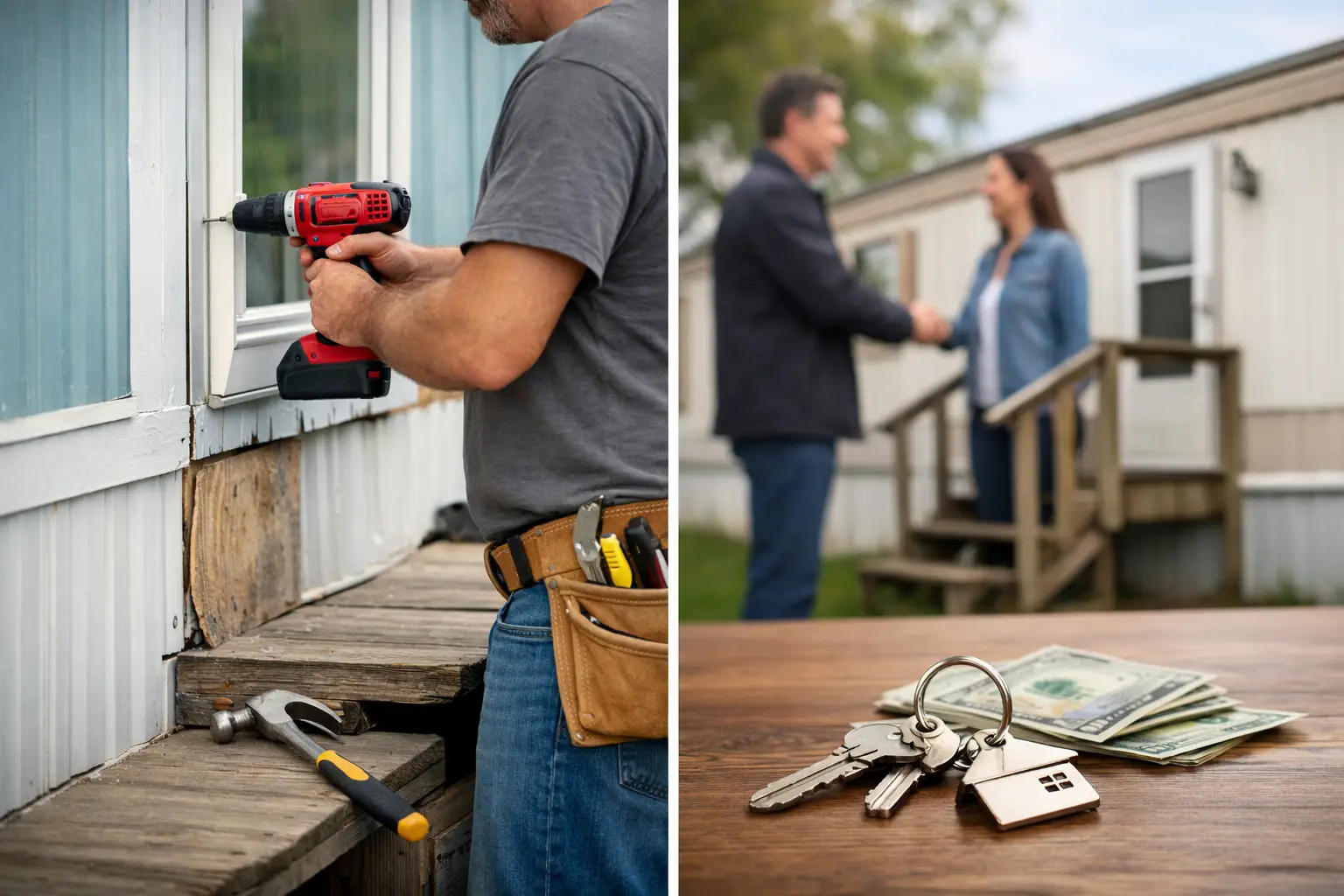
A soft floor by the bathroom, a roof leak that keeps coming back, missing title paperwork, lot rent coming due – this is where repairing versus selling as is becomes a real decision, not a theory. For many mobile home owners in Central North Carolina, the question is not which option looks better on paper. It is which one gets the problem solved without draining more time, money, and energy.
If you own a manufactured home in Greensboro, Winston-Salem, High Point, or the surrounding area, the right choice depends on three things: how much the home really needs, how fast you need to sell, and how much uncertainty you can afford. In some cases, repairs make sense. In plenty of others, selling as is is the cleaner and safer move.
Repairing versus selling as is: what actually changes?
When people think about making repairs before selling, they usually picture a higher sale price. That can happen, but mobile homes are not the same as site-built houses. Buyers, parks, lenders, title issues, age restrictions, and move requirements can all affect value. A seller may put thousands into repairs and still run into the same bottlenecks.
Selling as is shifts the focus. Instead of trying to make the home market-ready, you sell it in its current condition. That often matters most when the real problem is not cosmetic. It is a deadline, a legal issue, a park rule, unpaid lot rent, inherited property, or a home that simply needs more work than you want to take on.
The key is to compare net outcome, not just gross price. A repaired home may sell for more, but that does not always mean you keep more.
When repairing a mobile home may be worth it
Repairs can make sense when the work is limited, the title is clear, and you have time to wait for the right buyer. If the home is in a park that allows resales, the lot rent is current, and the needed updates are mostly cosmetic, putting in some work may help you appeal to a broader group of buyers.
Fresh paint, basic cleaning, replacing broken fixtures, or fixing minor skirting issues can improve first impressions without turning into a major project. If the home is newer, structurally sound, and in a desirable location, modest repairs may help support a stronger asking price.
But the numbers still have to work. If you spend $6,000 to chase an extra $8,000 in price, that looks fine at first glance. Then add carrying costs, utility bills, park rent, time off work, contractor delays, and the chance that the buyer still asks for concessions. Suddenly the margin shrinks fast.
That is why light repairs and cleanup can be reasonable, while major rehab is much harder to justify unless you already know the market well.
Repairs that often cost more than sellers expect
In mobile homes, the expensive problems are usually the hidden ones. Soft spots in the floor can point to subfloor damage. Roof leaks can mean insulation, ceiling panels, or wall damage too. Plumbing repairs can expose bigger water issues underneath the home. Electrical work can become a code issue. Missing HVAC components, storm damage, or older windows can all stack up.
Then there is the paperwork side. If the title is missing, if there is a lien, or if ownership records are not clean, spending money on repairs before clearing those issues may not help you much. The home can look better and still be hard to sell.
When selling as is is usually the smarter move
Selling as is is often the better option when speed and certainty matter more than squeezing out every possible dollar. That is especially true if the home needs significant repairs, has title complications, sits in a park with strict requirements, or is part of a stressful life event.
For example, if you inherited a mobile home and live out of state, managing contractors from a distance can turn into a long, frustrating process. If you are behind on lot rent or facing repossession pressure, waiting on repairs may make the situation worse. If the home has tenant damage, permit issues, or move-related complications, selling as is to a buyer who already understands those problems can save you from months of back-and-forth.
Selling as is can also protect you from pouring good money into a home you no longer want. That matters for owners going through divorce, relocation, vacancy, or financial strain. In those situations, the clean exit often has more value than the highest possible list price.
The real cost of waiting
Many sellers underestimate what waiting costs. Every extra month can mean lot rent, taxes, insurance, utilities, travel, cleanup, and stress. If the home is vacant, there is also risk. Damage can get worse. Parks can increase pressure. Weather can add to the repair list.
That is why a lower but certain cash offer can beat a higher but uncertain retail number. Not in every case, but often enough that it deserves a serious look.
Repairing versus selling as is in mobile home parks
This is where mobile home sales get more complicated than many owners expect. If your home is in a park, your buyer may need park approval. The park may have age restrictions for the home, rules about condition, or policies about whether the home can stay in place. Those factors can limit your buyer pool even if you fix the property up.
In some parks, repairing the home does not solve the main issue. The issue is buyer qualification. In others, the park may pressure the seller to address cleanup, unpaid rent, or compliance items before approving a transfer.
Selling as is to a buyer familiar with park rules can remove a lot of friction. A specialized buyer already knows how to deal with management, documents, titles, and practical questions about whether the home stays or moves.
How to make the decision without guessing
Start with a simple test: ask what problem you are really trying to solve. If the goal is top-dollar pricing and you have time, money, and a home in decent shape, repairs may help. If the goal is speed, certainty, and a straightforward sale, selling as is is often the better fit.
Next, get realistic repair estimates. Not rough guesses – actual numbers. Then compare those costs to your likely sale price after repairs, minus carrying costs and selling friction. If you are dealing with a mobile home in less-than-perfect shape, do not assume every repair dollar comes back to you.
Also factor in your bandwidth. Some owners can manage contractors, paperwork, and buyer calls. Others do not want that job, and there is nothing wrong with that. A sale should solve a problem, not create a second full-time job.
A practical rule of thumb for NC sellers
If your home needs only minor work and you are not under pressure, repairing first may be worth exploring. If the repairs are major, the title or park situation is messy, or you need the home gone quickly, selling as is is usually the safer play.
That is especially true in manufactured housing, where the sale is rarely just about flooring and paint. It is also about title transfer, lot status, buyer fit, park approval, transport questions, and whether you want to keep carrying the property while all of that gets sorted out.
Companies like Triad Mobile Homes LLC work with sellers who want a fair cash offer without the usual delays, repairs, or listing process. For many owners, that kind of direct sale is less about convenience and more about getting control back.
The best choice is the one that leaves you in a stronger position a month from now, not the one that looks best in a perfect-case scenario. If the home is becoming a burden, there is real value in a simple sale, clear terms, and being able to move on.