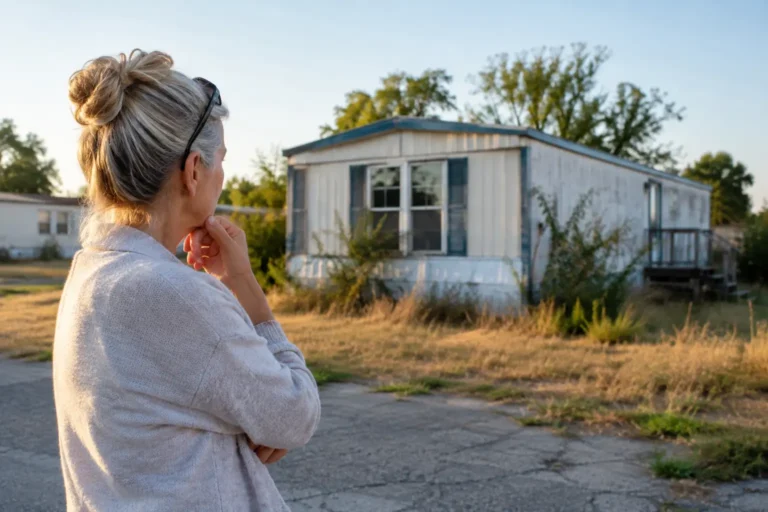


A long-distance sale gets difficult fast when the home is vacant, the lot rent is still due, and you live several states away. This example long distance home sale shows how a North Carolina manufactured home owner can move from uncertainty to a completed sale without driving back and forth, cleaning out every room, or trying to find a buyer from afar.
The names and numbers below are illustrative, but the problems are common across Greensboro, Winston-Salem, High Point, and surrounding Central North Carolina communities.
An Example Long Distance Home Sale: The Situation
Karen inherited her father’s 1998 single-wide mobile home in a Greensboro-area mobile home park. She lived in Virginia, worked full time, and had not visited the property in more than a year. Her father had passed away unexpectedly, and the home had been sitting empty while the family handled the estate.
The house was not in perfect shape. A small roof leak had stained part of the ceiling. There was old furniture inside, the yard needed attention, and one bedroom had damage from a former pet. More urgently, monthly lot rent continued to add up. Karen did not want to put money into repairs or make repeated trips to North Carolina just to coordinate showings.
At first, she considered listing the home herself online. That could have brought a higher price if she found the right buyer, but it also meant taking photos, answering messages, screening people, arranging park approval, and dealing with buyers who might back out after seeing the condition. She also needed to confirm where the title was and whether the home could stay in the park.
For an owner who lives nearby and has time to manage the process, marketing a home independently can make sense. For Karen, the bigger priority was stopping the carrying costs and closing with a buyer who understood manufactured housing.
Start With the Facts a Buyer Needs
A remote sale does not have to begin with a perfect file of paperwork. It does need an honest picture of the home and its situation. Karen provided the year, make, size, park name, general condition, photos she had on her phone, and the best contact information for the park manager.
She also shared what she knew about ownership. Her father’s name was on the title, and the estate process was underway. That did not automatically prevent a sale, but it meant the paperwork had to be reviewed before anyone could promise a closing date.
This early fact-finding matters because manufactured homes are not handled exactly like site-built houses. The buyer may need to verify title status, vehicle identification or serial numbers, tax information, whether taxes are current, the park’s rules for a new resident, and whether the home is staying in place or being moved. If the home is on private land, the land and home may involve separate decisions.
A fair cash offer should reflect those details. Age, condition, location, lot rent, title status, park requirements, repair needs, and the cost of removing unwanted belongings all affect value. Be cautious with anyone who gives a high number before asking basic questions, then lowers it sharply later. A straightforward buyer explains what they need to verify and puts the terms in writing.
The Three Steps That Kept the Sale Moving
Karen did not need to come to North Carolina for every task. The work was handled in a clear order so there were no surprises at the finish line.
1. Tell the buyer about the home
She spoke with a local manufactured home specialist and sent photos by text. A short call covered the condition, the park, the inheritance, and her timeline. She was clear that she did not want to repair the roof stain, remove all the furniture, or hold open-house-style showings.
The buyer then confirmed the basics with the community. Could the home remain in the park? What would a prospective resident need for approval? Was there a transfer fee, a past-due balance, or a requirement that the exterior be brought up to a certain standard? These questions are better answered before an offer is finalized, not after everyone expects to close.
2. Review the offer and paperwork
Once the home details and park requirements were reviewed, Karen received a cash offer with the expected closing process. There were no realtor commissions, listing fees, repair invoices, or pressure to accept. She could compare the offer against the cost and effort of selling it herself.
The number was not the same as retail asking prices she saw for newer, renovated homes online. That is the trade-off in a direct cash sale. The offer accounted for the home’s condition, the risk and work of reselling it, park coordination, cleanout, and the time savings for Karen. In return, she had a defined path forward rather than months of unanswered messages and uncertain buyers.
Because the title was still connected to her father’s estate, the closing documents had to match the authority she had as the heir or personal representative. The exact documents depend on the estate and title record. A legitimate buyer should not tell you to sign something you do not understand or skip required ownership steps just to rush the deal.
3. Sign, transfer ownership, and get paid
Karen reviewed the documents remotely and used the appropriate signing process for her situation. The buyer coordinated the remaining details with the park and confirmed when possession would transfer. She did not have to schedule dozens of showings or negotiate with strangers from another state.
At closing, the agreed cash payment was issued according to the signed terms. The buyer took on the next phase: securing the home, dealing with the remaining items inside, making repairs, and finding the next buyer or resident. Karen could stop worrying about an empty home and the next lot-rent bill.
Problems That Can Change the Timeline
Not every long-distance sale closes in a few days. A clean title, cooperative park, vacant home, and clear ownership can allow a fast closing. Other situations need more time, especially if there is probate, a lost title, multiple heirs, unpaid taxes, a lien, park violations, or a disagreement about who has the right to sell.
The key is to identify the issue early. A missing title may be replaceable. An inherited home may be sellable once the right estate documents are in place. A park may approve a new resident but not allow an older home to remain indefinitely. If the home must be moved, transport costs, permits, setup requirements, and the condition of the structure can change the numbers significantly.
Distance adds another layer. Before you hand over keys or sign a bill of sale, make sure you know who is buying the home, how payment will be made, what happens to personal property left inside, and when your responsibility for lot rent and utilities ends. Keep copies of every signed document and written communication.
When a Cash Sale Is the Right Fit
A direct cash sale is usually a strong fit when speed, convenience, and certainty matter more than trying to reach the highest possible retail price. It can be especially helpful for heirs, owners who have relocated, people facing growing lot rent, and sellers with homes needing repairs or cleanup.
It may not be the best choice for every owner. If the home is newer, in excellent condition, has a clear title, and you have time to market it properly, selling through a retail buyer may produce more money. But that route comes with marketing work, buyer financing issues, park approval, showings, and no guarantee of a quick close.
Triad Mobile Homes LLC works with sellers across Central North Carolina who need a practical path out of a mobile or manufactured home situation. The process starts with the facts, not pressure: tell us about the home, review a fair cash offer, and decide what works for you.
If you are managing a mobile home from another city or state, do not let the problem sit because the process feels too complicated. Gather the documents you have, take a few current photos if someone local can help, and ask direct questions about title, park rules, timing, and payment. A clear answer is worth more than another month of uncertainty.