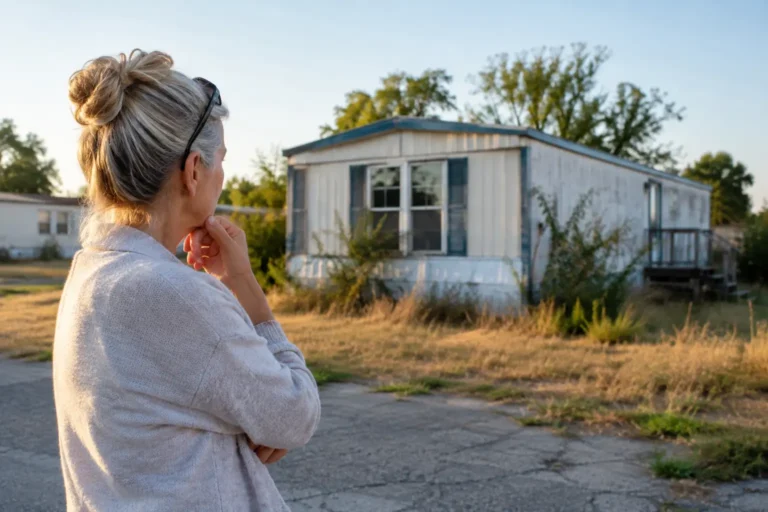

A vacant manufactured home can get expensive fast. Lot rent keeps coming due. Utilities may still need to stay on. Small leaks, break-ins, and damage can turn a manageable situation into a bigger problem. This vacant home sale case study follows a common Central North Carolina situation: an owner who needed a clear, fast way to sell without putting more money into a home they no longer lived in.
The details below are a composite example based on issues vacant mobile home owners regularly face. Every home, community, title, and offer is different. But the decisions and trade-offs are real.
The situation: A vacant home with mounting costs
The owner had moved out of a single-wide home in a mobile home community outside the Triad. The home was older but usable. It needed cleaning, had a soft spot in one area of the floor, and had been sitting empty for several months.
At first, the owner planned to sell it the traditional way. They took a few phone pictures, posted an online ad, and waited for interested buyers. Some people asked whether the home could be moved. Others wanted seller financing. A few scheduled a visit and never showed up.
Meanwhile, the monthly lot rent continued. The community wanted to know the owner’s plan, and the owner was worried that an extended vacancy could create more trouble. Vacant homes can attract trespassers, suffer weather damage, and become harder to sell each month they sit.
The owner did not need a perfect retail price. They needed certainty. Their priority was to stop the ongoing costs, avoid repair work, and move on without a long sales process.
Why a vacant mobile home is not a standard home sale
A vacant home is not automatically a distressed home. Sometimes it is clean, updated, and ready for a new owner. But vacancy changes the math because every extra week can cost money and create risk.
With a manufactured home, there are also questions that do not always come up in a site-built house sale. Is the home located in a park or on private land? Is the title available and properly signed? Will the community approve a new resident? Can the home stay in place, or does it need to be moved? Are there back lot-rent balances or park rules that affect the sale?
Those details matter because a buyer may walk away when they hear about them late in the process. That is why a quick sale is not just about finding someone who says they want the home. It is about finding a buyer who understands the next steps and can actually close.
The owner’s options and the real trade-offs
The owner had three practical paths.
They could keep marketing the home themselves. This might have produced a higher sales price if the right buyer came along, but it meant more calls, more no-shows, more negotiation, and no guarantee of timing. It also meant continuing to pay lot rent while waiting.
They could repair and clean the home before listing it. New flooring, paint, hauling away belongings, and basic maintenance might make the home easier to market. But the owner did not have the time or cash to invest in repairs for a property they wanted off their hands.
The third option was a direct cash sale. A cash offer would likely be lower than a top retail price after repairs and a longer marketing period. In return, the owner could avoid commissions, listing fees, repeated showings, and the uncertainty of waiting for financing or a park-approved buyer to come together.
There is no one right answer for every seller. If a vacant home is in excellent shape, the owner has time, and the community is easy to work with, a marketed sale may make sense. But when lot rent is adding up and the home needs work, speed and simplicity often have real value.
The vacant home sale case study: From call to closing
The owner chose to request a no-obligation cash offer. The first step was simple: provide the home’s location, year, size, general condition, whether it was in a community, and what was known about the title and lot rent.
A local buyer then reviewed the situation. Instead of treating the soft floor, cleanup, and vacancy as automatic deal-breakers, they were considered part of the property’s condition. The conversation also addressed the community’s requirements for a new buyer and the paperwork needed to transfer ownership.
After an inspection of the home, the owner received a straightforward offer. There was no request to repaint the walls, replace the flooring, remove every unwanted item, or stage the home for photos. The offer reflected the home’s condition and the work the buyer would need to take on after closing.
The owner reviewed the numbers against the cost of holding the home for another month or two. Continuing to market it might have brought in more money eventually, but it could also mean more lot rent, additional repairs, and another round of buyers who could not follow through.
They accepted the cash offer and coordinated a closing date. Once the required title documents and community steps were in order, the sale was completed and the owner was paid. The owner no longer had to manage an empty home from a distance or worry about what would happen if the next lot-rent payment was missed.
What made the sale move faster
The speed did not come from skipping important details. It came from dealing with the important details early.
First, the owner was upfront about the home’s condition. A soft floor, old appliances, clutter, water damage, or an overdue repair should not be hidden. Honest information helps a serious buyer make a realistic offer and prevents surprises that delay closing.
Second, the title question was addressed right away. In North Carolina, title issues can slow a manufactured home sale, especially when an owner cannot locate paperwork, an inherited home is still in a relative’s name, or signatures are missing. These problems are often solvable, but they are easier to handle before a buyer is waiting at the finish line.
Third, the park situation was not ignored. If the home is in a mobile home community, the buyer may need to meet community requirements to live there. A seller should know who to contact, whether there is a balance due, and whether the home can remain on the lot. That information helps everyone set a realistic timeline.
Lessons for owners of vacant manufactured homes
A vacant home does not have to become a long-term burden. The key is to look at the full cost of waiting, not just the asking price. Holding costs can include lot rent, taxes, insurance, utilities, lawn care, repairs, travel, and the risk of damage while the home is empty.
It also helps to separate a fair offer from a high number on paper. A higher price is only better if the buyer can close and the additional money is not eaten up by months of expenses, repair bills, commissions, or seller financing risk.
Before you choose a path, gather what you know about the home: the title, the community name and office contact, the lot-rent status, the home’s year and size, and any major damage. You do not need to fix everything before asking for help. You just need to give a clear picture of the situation.
A practical next step when the home is sitting empty
If you own a vacant mobile or manufactured home in Greensboro, Winston-Salem, High Point, or nearby Central NC communities, get the facts before another month passes. A direct buyer such as Triad Mobile Homes LLC can review the home as-is, explain the likely paperwork and park steps, and provide a fair cash offer without pressure or obligation.
You may decide a direct sale is the right move, or you may decide the home is worth marketing longer. Either way, a clear plan beats paying to hold an empty home while hoping the right buyer appears.