

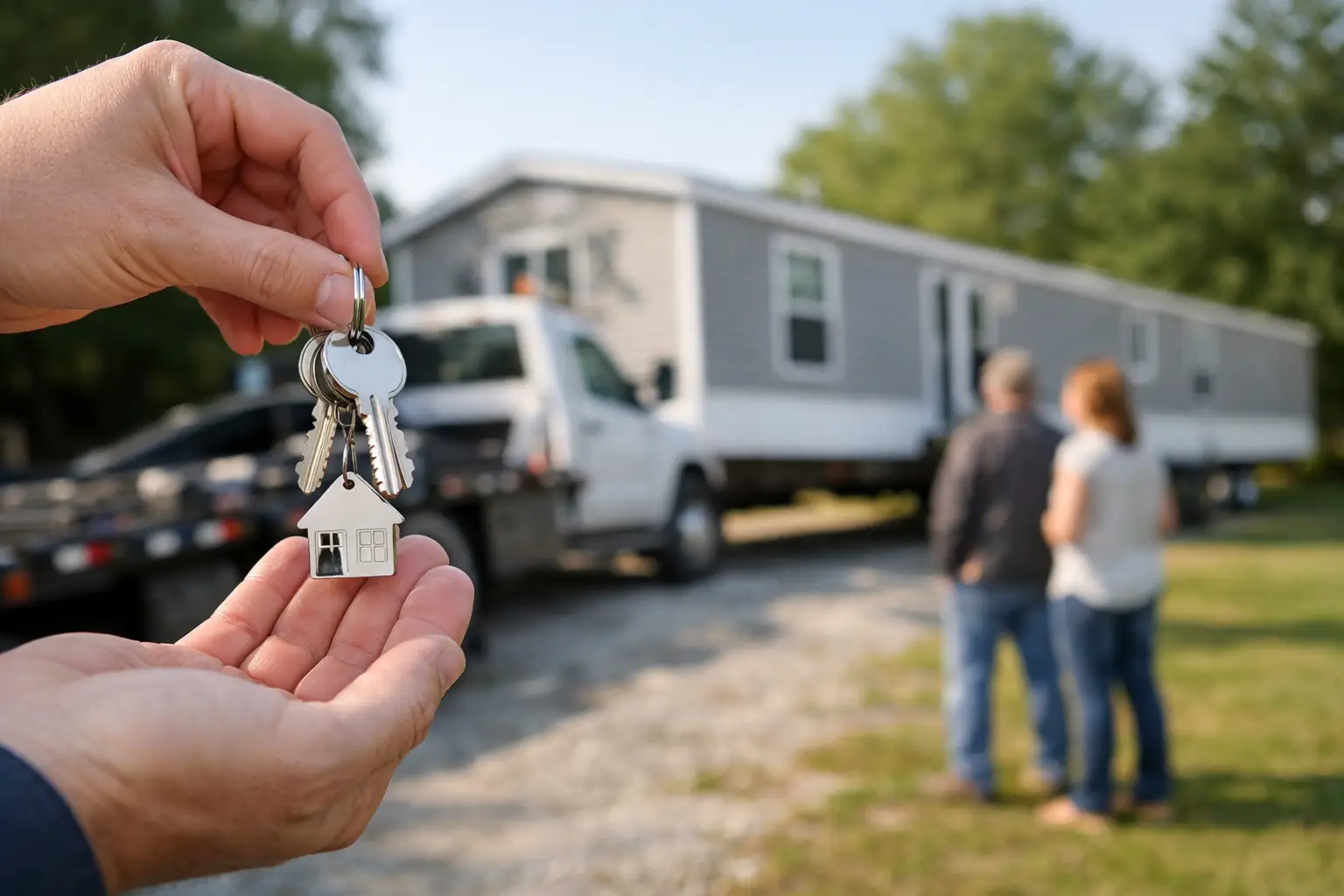
When you are behind on a mobile home loan, every phone call and letter can make the situation feel worse. A repossession sale example can make the next decision clearer: selling before the lender takes the home may give you more control, protect more of your equity, and keep you from dealing with an auction result you did not choose.
For many Central North Carolina owners, the goal is not to squeeze out every last dollar. The goal is to get a fair number, pay off what must be paid, handle the title and park requirements correctly, and move forward without more missed deadlines.
A Mobile Home Repossession Sale Example
Consider a homeowner in Greensboro who owns a 2016 single-wide in a mobile home community. She needs to relocate for work and has fallen two payments behind after a period of reduced hours. Her lender has sent a notice of default, but the home has not been repossessed yet.
Here is where she stands:
- The loan payoff is $24,500.
- She owes $1,350 in unpaid lot rent and late fees.
- The home needs cosmetic work, including damaged flooring, a leaking kitchen faucet, and trash that still needs to be removed.
- Similar well-kept homes in the community may be advertised around $35,000 to $40,000, but those prices do not mean a buyer will pay that amount quickly or accept the home’s condition.
She could list the home herself, clean it, make repairs, answer messages, arrange showings, and hope a qualified buyer is approved by the park. That route could bring a higher price if everything lines up. It could also take weeks or months she does not have.
Instead, she requests a direct cash offer. After confirming the home details, location, condition, loan payoff, and community rules, the buyer offers $29,000 as-is. The offer is not based on a perfect retail listing price. It reflects the repairs, resale risk, buyer sourcing, and work required to complete the transaction.
At closing, the money is applied in order. The lender receives $24,500 to release its lien. The community receives $1,350 for the past-due lot rent. That leaves $3,150 for the seller before any agreed closing or transfer costs. She avoids making repairs, does not pay a real estate commission, and does not have to wait for a retail buyer.
That is a simple repossession sale example, but real situations can be more complicated. The key point is that a sale before repossession can turn a rushed problem into a documented transaction with a known payoff, a known closing plan, and a specific move-out date.
Why Selling Before Repossession Can Change the Outcome
Once a lender takes possession, the owner usually loses the ability to control the sale process. The home may be moved, marketed, or sold at auction under terms set by the lender. An auction sale can be lower than expected, especially if the home needs work, has park restrictions, or must be transported.
A lower sale price does not always make the debt disappear. Depending on the loan documents and the final sale amount, there may still be a remaining balance. The lender’s policies and your loan agreement matter, so ask for a written payoff and speak with a qualified legal or financial professional if you need advice about your specific liability.
Selling first is not automatically the best answer in every case. If the home is worth substantially less than the payoff, you may need lender approval for a short sale or another arrangement. But acting early gives you more options than waiting until the truck arrives to pick up the home.
What Has to Happen Before You Can Sell
The first step is to find out exactly who has a claim on the home. Request a current payoff amount from the lender and ask how long that figure is valid. Payoffs often change daily because of interest, late charges, or other fees.
Next, locate the title or ownership documents. In North Carolina, manufactured home title transfers can involve the North Carolina Division of Motor Vehicles, and a lender lien must generally be released before clear ownership can be transferred. If you cannot find the title, do not assume the deal is over. A missing title, an old lien, or a name mismatch can often be addressed, but it needs to be handled early.
If your home is in a park, contact the community office as well. Ask whether lot rent is current, whether there are past-due charges, and what the park requires from an incoming buyer. Some communities require buyer applications, background checks, proof of income, or specific home condition standards. A buyer who does not understand those rules can waste valuable time.
On private land, the questions may be different. You may need to clarify whether the land is included, whether the home has been converted to real property, and whether there are taxes or recorded liens affecting the sale. The right path depends on how the home is titled and financed.
A Fast, Practical Plan When Time Is Short
Do not wait until you have every document perfectly organized before asking for help. Start by gathering what you can: the lender name, account information, approximate payoff, VIN or serial number if available, park name, monthly lot rent, and a few honest photos of the home.
Then get a realistic offer from a buyer that understands manufactured homes. Be direct about water damage, soft floors, missing appliances, back taxes, lot rent, or notices from the lender. Surprises discovered late can delay closing. Honest details up front help produce an offer that is actually workable.
If the offer works, confirm the closing schedule in writing. A legitimate buyer should explain how the lender payoff will be handled, when the lien release is expected, what documents you need to sign, and when you will receive any remaining proceeds. If the home must stay in the park, make sure the buyer understands the community approval process before you count on a closing date.
Triad Mobile Homes LLC works with owners facing these kinds of time-sensitive situations across the Triad and surrounding Central North Carolina areas. The process begins with the facts about your home, not pressure or a demand to repair it first.
Watch for Problems That Can Delay a Repossession Sale
A fast sale still requires clean communication. Four issues commonly cause trouble: an unknown payoff, unpaid lot rent, title or lien errors, and park approval requirements. None automatically means you cannot sell, but each needs a plan.
Be cautious with anyone who promises to “take over payments” without paying off your existing lender or completing a proper title transfer. If the loan stays in your name, missed payments can remain your problem. Also be careful about signing over a title before you understand who is paying the lender, where the home is going, and when you will be released from the transaction.
A cash offer is useful because it can remove financing uncertainty. Still, compare the offer to the real cost of waiting. A higher advertised price may not be better if you must spend thousands on repairs, keep paying lot rent and loan payments, or risk repossession before a retail buyer closes.
The Best Time to Act Is Before the Deadline
If you have received a late notice, default letter, or repossession warning, get the payoff amount and find out how much time you have. You do not have to decide on the first conversation, and a fair offer should come with no obligation.
A quick sale is not about pretending the situation is easy. It is about putting a clear number and a workable closing plan in front of a problem that gets more expensive the longer it sits. The sooner you know your options, the sooner you can choose the one that lets you move on.