

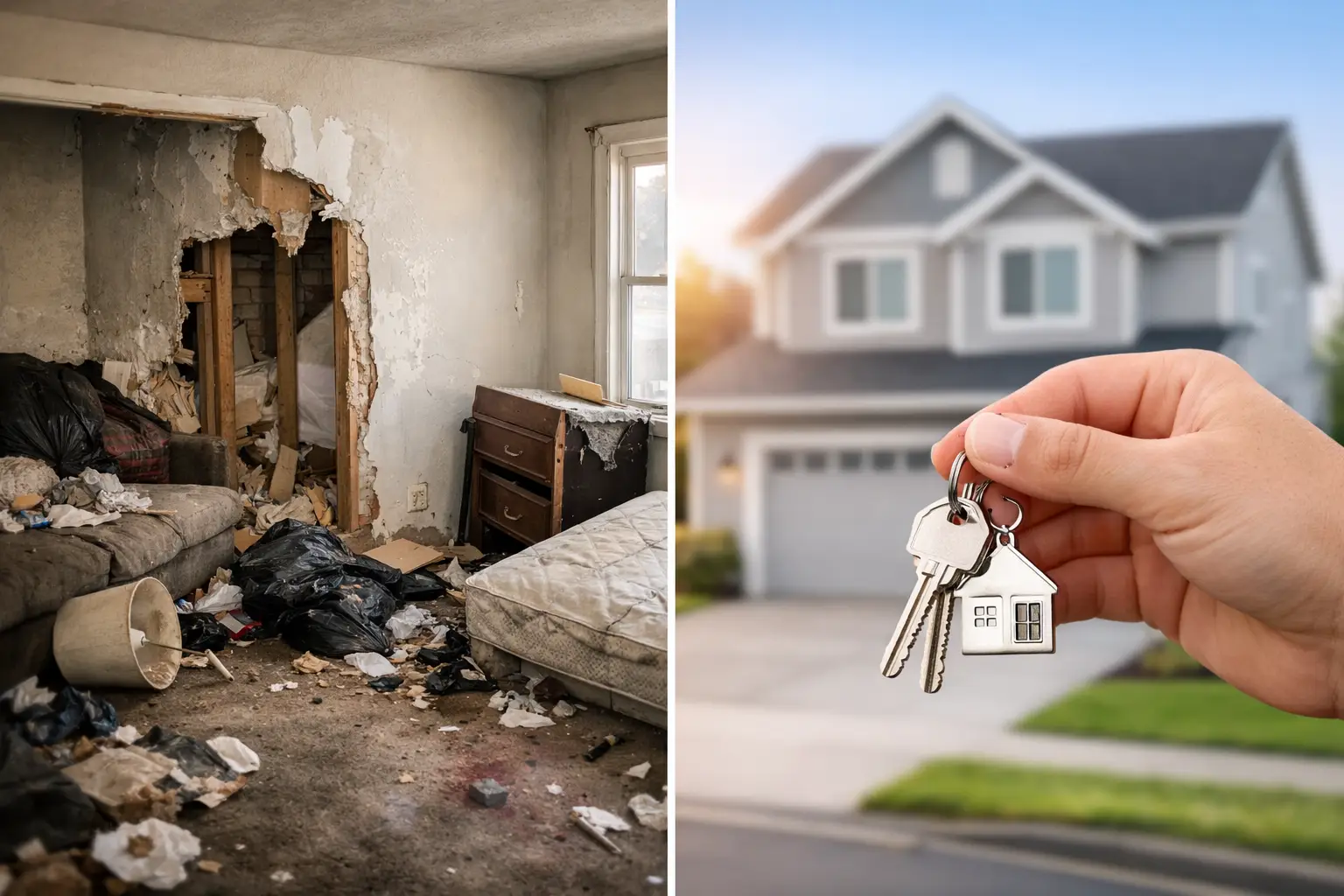
A tenant moved out of a Greensboro-area mobile home owing rent and leaving behind broken doors, damaged flooring, trash, and a bathroom leak. The owner was left with a choice that many landlords know too well: spend thousands fixing a home that may still be hard to sell, or find a practical way to move on. This tenant damage sale case study shows why an as-is cash sale can be the right answer when repairs, lot rent, and stress are piling up.
This is an illustrative composite based on situations mobile home owners commonly face across Central North Carolina. Every home, park, title, and offer is different. But the decision points are real, especially when a rental home has become more trouble than it is worth.
The Situation: Damage Was Only Part of the Problem
The owner had rented out a single-wide mobile home in a local community for several years. The rent had helped cover the payment and lot rent, but the last tenancy did not end well. When the tenant left, the home needed more than a quick cleanup.
Several interior doors were split. The kitchen floor had soft spots near the refrigerator. A slow leak under the bathroom sink had stained the subfloor, and the tenant had left bags of belongings, old furniture, and trash throughout the home. The exterior was not destroyed, but it needed skirting repairs and a serious cleanup before it would show well.
On paper, the owner could have repaired it. In real life, that option came with a list of costs and unknowns:
- Disposal and cleanout labor
- Flooring, plumbing, door, and skirting repairs
- Materials, contractor scheduling, and repeat trips to the park
- Continuing lot rent while the work was completed
- Marketing time, buyer showings, and the chance that a buyer would still back out
The owner lived nearly an hour away and had a full-time job. He did not have the time to manage contractors or the appetite to put more money into a rental that had already caused a loss. He also did not want to list the home, have strangers walking through it, and negotiate with buyers who expected the price of a clean, move-in-ready home.
The goal was not to get the highest possible retail price after months of work. The goal was to stop the monthly bleed and sell with a clear closing plan.
What a Tenant Damage Sale Case Study Reveals
Tenant damage changes the math of a sale. Owners often start by asking, “What could this home sell for fixed up?” That is a fair question, but it is not the only one that matters.
A better question is: “What will I actually have left after repairs, holding costs, cleanup, commissions, and the time it takes to find a buyer?”
For this owner, the potential repair list was estimated at several thousand dollars. That estimate could rise once flooring was opened up and the plumbing issue was fully addressed. Even if the repairs stayed on budget, the owner would still need to pay lot rent while waiting for contractors and a retail buyer.
There was another issue: park approval. In many mobile home communities, a buyer needs to apply with park management before the sale can be completed. A seller who finds an interested buyer may still lose that buyer if their application is denied or if they decide the home needs more work than expected. That does not make a retail sale impossible. It simply makes the timeline less certain.
An as-is buyer evaluates the home differently. Damage, debris, aging systems, and deferred maintenance are built into the offer. The seller does not need to make the home look perfect to start the conversation.
The Owner’s Options, Compared Honestly
The owner considered fixing the home, listing it as-is, and selling directly to a cash buyer. Each route had a different trade-off.
Repairing and listing could potentially bring a higher sales price. But it required upfront cash, project management, and patience. It also carried the risk that repairs would uncover more damage. This route makes more sense when the owner has funds available, time to oversee the work, and a strong reason to pursue the highest possible price.
Listing as-is through a traditional sales process would reduce repair work, but not all of the selling friction. The owner could still need to clean out the home, coordinate showings, wait for a buyer, and handle price negotiations after inspections. In a park, the buyer approval process could extend the timeline further.
A direct cash offer would likely be lower than a fully repaired retail sale price. That is the trade-off. In return, the owner could avoid repair costs, commissions, repeated showings, and the uncertainty of trying to sell a damaged home to a retail buyer. For him, speed and certainty had real value because every additional month meant another lot rent payment and more worry.
How the As-Is Sale Moved Forward
The first step was simple: the owner provided the home’s location, year, size, condition, and a straightforward description of the tenant damage. He did not need to hide the bad parts. Photos of the floors, bathroom, doors, and exterior helped create a realistic picture of the property.
A local mobile home buyer reviewed the information, considered the community requirements, and discussed the title status. This step matters. A home can be in rough shape and still be sellable, but title problems, liens, missing documents, and park rules need to be addressed early instead of becoming last-minute surprises.
The owner received a fair cash offer based on the home’s actual condition. There was no request to install new flooring, haul away every item, repaint the walls, or repair the bathroom before moving forward. The terms were clear: sell as-is, coordinate the required paperwork, and close on a schedule that worked with the park and seller.
Because the home was located in a community, communication with management was part of the process. The sale needed to respect the park’s rules and transfer requirements. In some cases, the buyer may need approval to live in the community or arrangements may need to be made for moving the home. A mobile home transaction is not always as simple as handing over keys, which is why local experience matters.
Once the paperwork was lined up, the owner closed and received payment. He no longer had to manage the cleanup, chase contractors, or keep paying lot rent while hoping a retail buyer would appear.
Why the Seller Chose Certainty Over a Bigger Number
The seller understood that a repaired home might bring more on the open market. But “might” was the key word. The extra money was not guaranteed, and neither were the repair budget or selling timeline.
By selling as-is, he turned an open-ended problem into a defined outcome. He knew the offer amount, knew the expected closing process, and could focus on his next step rather than a damaged rental home.
That does not mean a cash sale is automatically the right answer for every landlord. If the damage is light, the home is in a strong park, and the seller has the time and money to improve it, making repairs could be worthwhile. If the home has serious water damage, missing title paperwork, growing lot rent, or a seller who needs to relocate quickly, a direct sale may be the more practical choice.
What to Do When a Tenant Leaves Your Mobile Home Damaged
Start by documenting the condition with photos and a written list. Separate cosmetic issues, such as dirty carpet or wall scuffs, from problems that affect value and safety, such as soft floors, leaks, electrical concerns, or missing skirting. This helps you understand whether you are dealing with a cleanup job or a larger rehab.
Next, gather what you have: title documents, park contact information, recent lot rent statements, and any loan payoff details. Do not delay a sale because you assume missing paperwork makes it impossible. It can create extra steps, but a manufactured home specialist can often explain what needs to happen.
Then compare your real net result, not just asking prices online. Include repair costs, disposal, lot rent, travel, commissions, and the value of your time. If you want a straightforward path, Triad Mobile Homes LLC can review the home as it stands and provide a no-obligation cash offer for qualifying Central NC properties.
A damaged rental does not have to become a second job. The right sale is the one that gives you a clear path out, with terms you understand and a closing plan you can count on.