

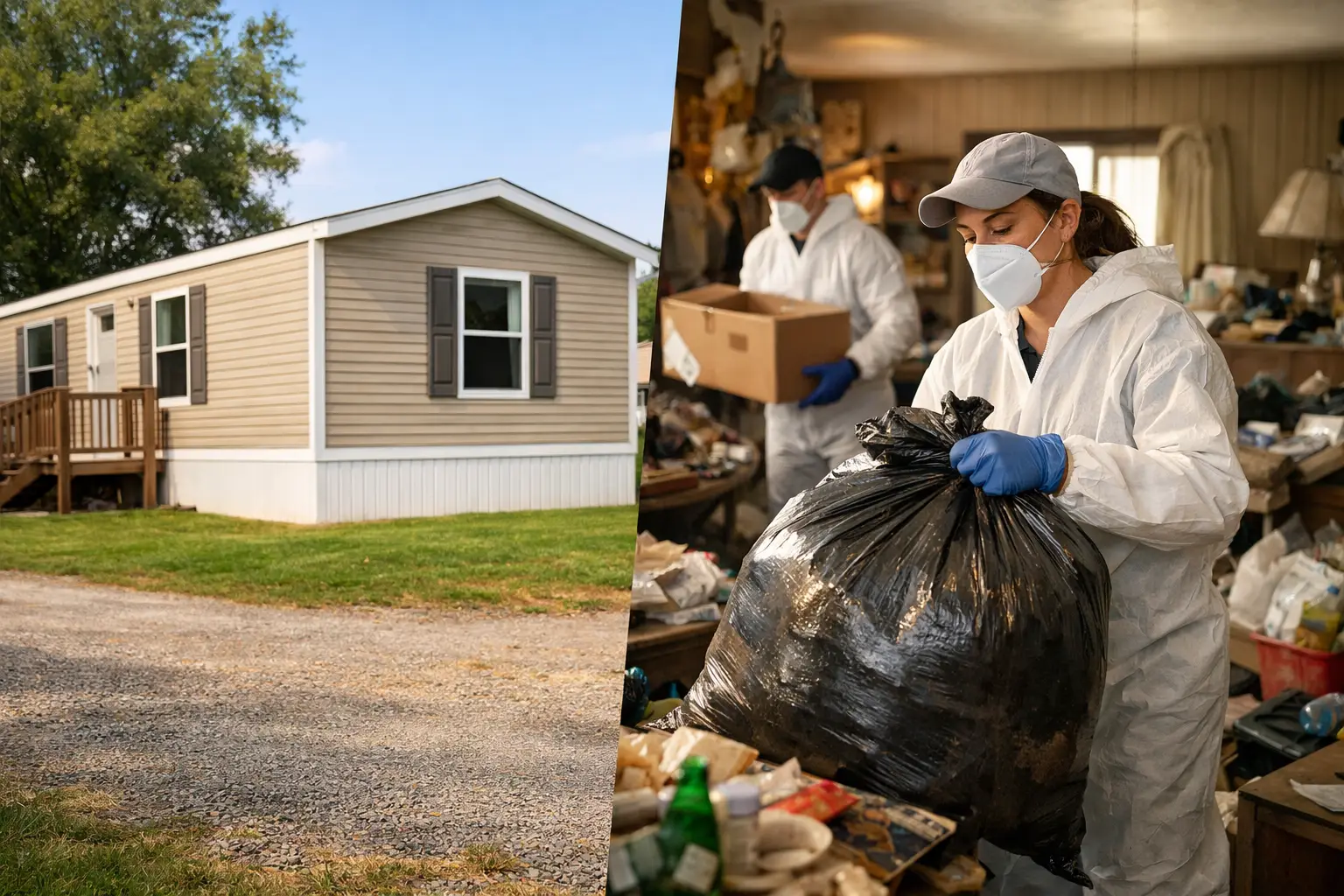
When a mobile home is packed wall-to-wall with boxes, trash, damaged furniture, or years of belongings, the usual advice to “clean it up and list it” stops being useful. If you need to sell mobile home with hoarder house cleanup issues, the real question is not whether the situation is ideal. It is how to get the home sold without sinking more time, money, and stress into a problem that already feels too heavy.
For many owners in Central North Carolina, this comes up after a parent passes away, a tenant leaves a mess behind, lot rent is behind, or the home has simply become too hard to manage. In those cases, speed and certainty usually matter more than getting the place picture-perfect. That changes the strategy.
Can you sell mobile home with hoarder house cleanup still unfinished?
Yes, in many cases you can. But the path depends on who the buyer is, where the home is located, and how severe the cleanup problem has become.
A traditional retail buyer usually wants a home that is empty, cleaned, and easy to inspect. If the mobile home is in a park, management may also have rules about occupancy, appearance, or approval that make a messy property harder to transfer. If the home is on private land, a standard buyer may still hesitate because cleanup often hides other issues like soft floors, leaks, mold, pest activity, or electrical damage.
That is why homes with hoarder conditions are often a poor fit for the normal listing route. The market gets smaller fast. Many buyers do not want the labor, the unknowns, or the disposal costs. The ones who are still interested usually expect a discount.
That does not mean you are stuck. It means you need a buyer or sales process built for difficult-condition homes.
What hoarder house cleanup does to a mobile home’s value
The biggest mistake sellers make is assuming the mess only affects appearance. In mobile homes, clutter often makes the real condition hard to verify, and uncertainty lowers offers.
Buyers start asking practical questions. Can they walk every room safely? Is there water damage under the piles? Are the subfloors solid? Did rodents get into the insulation or wiring? Can appliances even be tested? If nobody knows the answers, the buyer has to price in risk.
There is also the cost of cleanup itself. With a standard house, cleanup is expensive enough. With a mobile home, the numbers can get worse because access is tighter, flooring may be weaker, and damage can spread faster in a smaller space. If the home is in a park, the buyer may also have deadlines or rules to satisfy before the sale can close or before the home can stay in place.
So yes, hoarder conditions usually reduce value. But the real issue is not just lower value. It is reduced buyer demand and a longer selling timeline if you try to force the home into the wrong sales channel.
When cleaning first makes sense and when it does not
Sometimes partial cleanup helps. Sometimes it is just throwing good money after bad.
If the home only has excess personal property but the structure is otherwise solid, removing obvious trash and opening pathways can improve how fast it sells. That is especially true if you are trying to market to individual buyers who need to see the layout and basic condition.
But if the home has deep damage, strong odors, biohazards, mold, animal waste, or years of packed contents, full cleanup may not pay off. The disposal bill, labor, dumpsters, and hauling can add up quickly. Then repairs show up after the debris is gone. What started as a cleanup project turns into flooring, plumbing, drywall, and electrical work.
For owners already dealing with back lot rent, code issues, probate stress, distance, or financial pressure, that path often makes things worse. You spend money first and still may not have a retail-ready home.
The fastest way to sell mobile home with hoarder house cleanup
If your main goal is to move on quickly, the simplest option is usually selling the home as-is to a direct mobile home buyer that understands distressed situations. That means no Realtor, no open houses, no cleaning requirement, and no waiting around for a financed buyer to back out.
This matters even more with manufactured housing because these deals are not always straightforward. Title issues, park approval, moving questions, and condition problems can all stack on top of each other. A general home buyer may not know how to handle that. A mobile home specialist should.
A local buyer can typically look at the home, assess the cleanup level, factor in any title or park concerns, and make a straightforward cash offer based on current condition. That gives you a real number without requiring you to haul everything out first.
For many sellers, that certainty is worth more than chasing a higher price that may never materialize.
What buyers will want to know before they make an offer
Even in rough condition, a serious buyer still needs key facts. If you have them ready, the process moves faster.
They will usually ask whether the home is in a mobile home park or on private land, whether you have the title, how much lot rent is owed if any, the age and size of the home, and whether anyone still lives there. They may also ask about roof leaks, soft spots in the floor, HVAC condition, and whether the home can stay in the park.
If the home belonged to a relative who passed away, be upfront about probate or estate paperwork. If the title is missing, say that early too. These problems do not always kill the deal, but surprises slow things down.
Good buyers are not looking for perfection. They are looking for clear facts so they can solve the problem correctly.
Park homes vs. homes on private land
This is where a lot of mobile home sales get complicated.
If the home is in a park, management may need to approve the buyer, confirm account status, or decide whether the home can remain on the lot. Some parks are strict about home age, condition, and appearance. In a hoarder situation, that can affect timing. If lot rent is behind or the park is threatening removal, you need to act quickly.
If the home is on private land, you may have more flexibility, but land issues can create their own delays. You need to know whether you are selling the home only, the home with land, or planning to move the home. Moving an older mobile home is not always possible or cost-effective, especially if it has condition problems.
This is one reason local experience matters. A buyer who understands the Triad and surrounding Central NC markets can usually spot the likely roadblocks early instead of discovering them halfway through.
A practical way to handle the sale
The cleanest approach is usually simple. First, gather whatever basic paperwork you have, including title, tax records, park contact information, or estate documents. Second, take a few honest photos if you can do so safely. They do not need to be flattering. They just need to show the condition. Third, get a direct evaluation from a buyer who purchases mobile homes as-is.
From there, you can compare the real cost of cleanup against the real cash offer in front of you. That is the comparison that matters. Not a theoretical top price from a perfect-condition listing, but the actual net result after dumpsters, labor, repairs, time on market, lot rent, utilities, and stress.
In many distressed situations, the as-is sale wins because it stops the bleeding. No more carrying costs. No more trying to coordinate cleanup crews. No more arguing with family about what to keep. No more wondering whether the park will wait.
Companies like Triad Mobile Homes LLC work with exactly these kinds of situations, which is why they can often move faster than a typical buyer and give sellers a clear next step without pressure.
What to watch out for
Not every low offer is a fair offer, and not every buyer who says “as-is” can actually close. Ask how quickly they can buy, whether they understand mobile home titles, and whether they have experience with park sales, inherited homes, and heavy cleanup situations. If they get vague when the details get harder, keep looking.
You should also be realistic about pricing. A hoarder-condition mobile home is not priced like a clean, finance-ready home. The goal is a fair offer based on condition, location, and the work required after closing. Fair does not always mean high. It means honest and executable.
If you are overwhelmed, that is normal. These are not easy properties to deal with, especially when there is family history, shame, or urgency attached to the mess. The right sale should reduce pressure, not add more of it.
A mobile home with hoarder house cleanup problems can still be sold. The key is choosing the route that fits the real condition of the home and your actual timeline. If you need speed, clarity, and a way forward without cleaning everything first, start there and make the next decision from solid ground.