
If you need to sell fast, the difference between a mobile home park sale vs private land sale is not a small detail. It changes who has to approve the deal, what paperwork matters most, whether the home can stay put, and how quickly you can actually get paid. For many sellers in North Carolina, that difference is the reason one sale moves smoothly and the other stalls out.
A lot of owners assume a manufactured home sale works the same way no matter where the home sits. It does not. A home inside a park usually comes with park rules, lot rent, and buyer approval issues. A home on private land often adds land value, deed questions, tax questions, and sometimes financing complications. If you are trying to avoid months of back-and-forth, it helps to know what changes before you start.
Mobile home park sale vs private land sale: the biggest difference
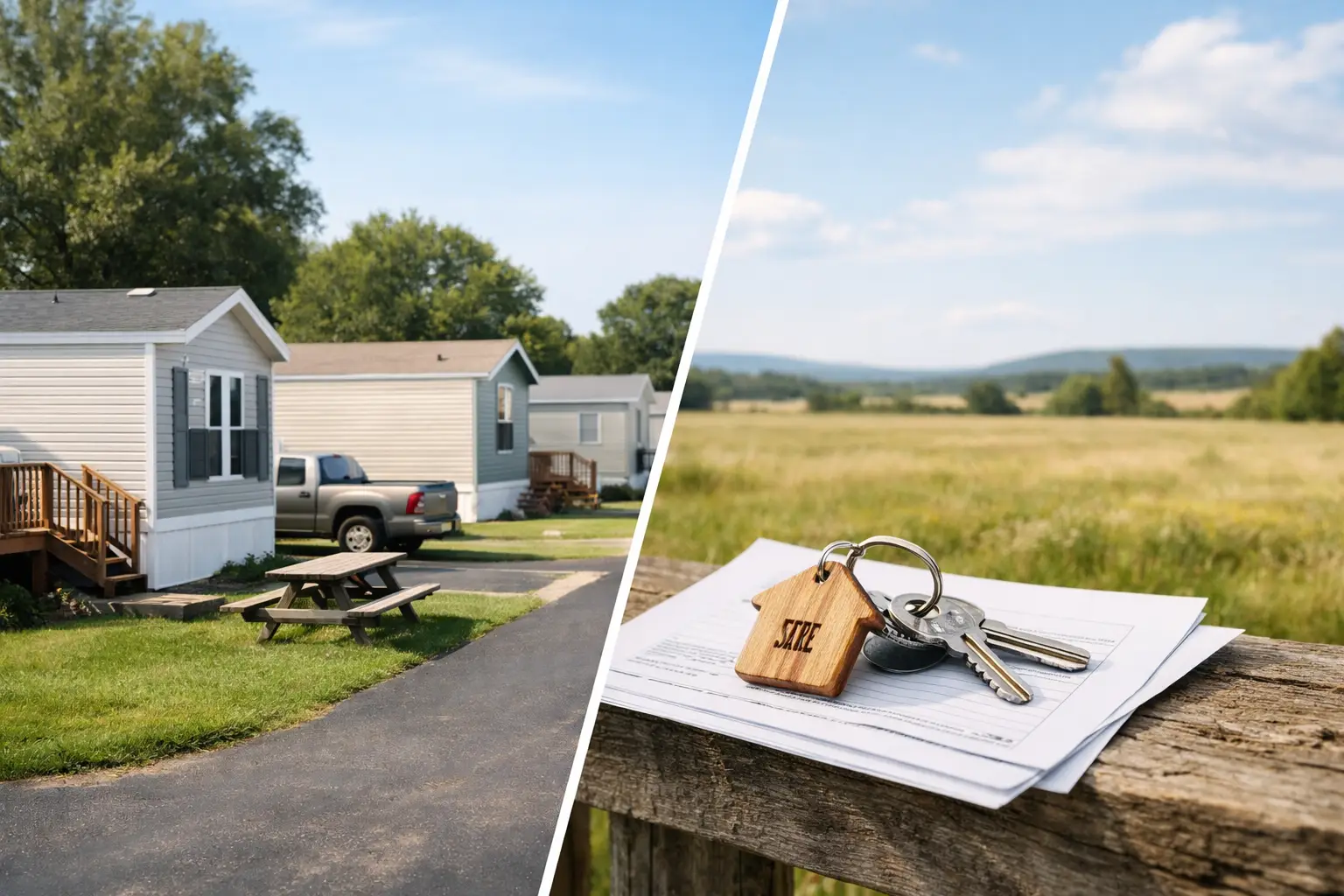
The shortest way to look at it is this: in a park, you are usually selling the home only. On private land, you may be selling the home, the land, or both together.
That sounds simple, but it affects almost everything. In a park sale, the buyer has to be comfortable with the lot rent, park rules, and the park itself. In a private land sale, the buyer is evaluating location, acreage, access, utilities, and property condition along with the home. One is more about park acceptance and affordability. The other is more about real estate value and land-related paperwork.
Because of that, the right selling strategy is different too. A park home may sell quickly if the title is clear and the park will approve the next resident. A private land deal may attract more buyers on paper, but it can also take longer because more is being reviewed.
Selling a mobile home in a park
When your home is in a mobile home park, the sale often depends on two separate questions. First, is the home itself sellable? Second, can the buyer actually take over the lot?
That second question trips people up. Even if a buyer wants the home, many parks require an application, background check, income verification, and approval before the home can stay on the lot. If the buyer is denied, your sale may fall apart unless the home is moved. And moving a mobile home is rarely cheap, simple, or fast.
Lot rent also matters more than many sellers expect. If rents have gone up, some buyers back out. If you are already behind on lot rent, the park may pressure the timeline. In some cases, park management may also have rules about the age or condition of the home, which can affect whether it can remain in place.
The upside is that a park sale can be more straightforward when the paperwork is clean. If you have a clear title, the home is in livable shape or priced accordingly, and the park is cooperative, the process can move faster than a private land transaction. You are usually dealing with fewer moving parts than a full real estate closing.
Still, the buyer pool may be narrower. Many traditional buyers do not understand manufactured housing, and some lenders do not want older mobile homes or homes inside parks. That is why sellers often benefit from working with someone who already knows how park sales work and can deal with title transfer, buyer sourcing, and park communication without wasting time.
Common park sale obstacles
The most common problems are unpaid lot rent, title issues, homes in poor condition, and buyers who cannot get park approval. If any one of those is present, your sale can slow down quickly.
This is also where a direct buyer can make a big difference. If your goal is certainty over chasing the highest possible number, an all-cash offer can remove showings, repairs, and a lot of the waiting. That matters when you are trying to avoid eviction, stop ongoing lot rent, or move on from an inherited home you do not want to manage.
Selling a mobile home on private land
A private land sale is a different animal. Here, the home may be part of a larger real estate transaction, especially if the land is included. Buyers are not just looking at the home. They are also looking at the lot, septic or sewer, well or water connection, zoning, road access, tax value, and neighborhood.
That can increase the potential value, especially if the land is desirable. But more value does not always mean easier. More value usually means more review, more paperwork, and more chances for delay.
If the home has been permanently affixed to the land, the legal treatment may be different than a titled mobile home sitting separately on a parcel. You may need to confirm whether the home is still titled as personal property, whether the title has been retired, and whether the deed matches the current setup. If there are heirs involved, old liens, permit issues, or boundary questions, those have to be addressed too.
Financing is another variable. Some buyers can finance land-home packages through mortgage-style products, but approvals are not automatic. Condition, age of the home, and lender guidelines all matter. If the home needs major repairs, that can shrink your buyer pool just as much as a park sale would.
Why private land can still take longer
People often assume private land equals easier sale because land has value. Sometimes that is true. But if a buyer needs financing, inspections, surveys, appraisals, or county-level confirmations, the timeline stretches. Even strong buyers can take weeks to close.
That is why urgency matters. If you are behind on taxes, dealing with probate, handling a divorce, or managing a vacant property from out of town, a traditional listing may not fit the situation. Speed has value too.
Which sale is usually faster?
If everything is clean, a park home cash sale is often faster than a private land sale. There is simply less to review. But that depends on park approval and whether the home can remain on the lot.
A private land cash sale can also move quickly, especially when the seller has clear ownership documents and no major title surprises. The issue is that private land deals tend to involve more due diligence, so they more often run into delays.
If your priority is speed, the right question is not which category is faster in theory. It is what problem is most likely to kill your deal. In a park, that may be lot rent or buyer approval. On private land, it may be title, condition, or financing.
Pricing expectations in a mobile home park sale vs private land sale
Private land usually increases the total value because land itself has market value. That part is obvious. What is less obvious is that a higher asking price can bring a longer selling timeline, more negotiation, and more repair pressure.
Park homes are often priced lower because the buyer is not getting land ownership. They are buying the home and taking on ongoing lot rent. That lowers the ceiling in many cases. But lower pricing can also bring faster decisions when the home is affordable and the process is simple.
The real trade-off is speed versus maximum market exposure. If you have time, money for repairs, and patience for listings and buyer fallout, you may want to test the market. If you need the sale done and do not want to clean, fix, show, or wait, a direct cash option is often the better fit.
How to choose the right path for your situation
Start with the property facts, not wishful thinking. Is the home in a park or on deeded land? Is the title clear? Are payments, taxes, or lot rent current? Does the home need work? Can the buyer leave it where it sits?
Then look at your timeline. If you need out quickly, the cleanest path is usually the one with the fewest approvals and the least dependence on outside financing. If you are handling a difficult situation like inheritance, storm damage, repossession risk, or major deferred maintenance, simplicity matters more than squeezing out every last dollar.
For sellers across Central North Carolina, this is where a specialist can help. Triad Mobile Homes LLC works with park homes and homes on private land, including complicated situations where titles, moving logistics, or property condition would normally scare off buyers. That kind of hands-on support matters when you do not have time to learn the process the hard way.
The best sale is not the one that looks best on paper. It is the one that actually closes, pays you fairly, and lets you move on without more stress than the home is already causing.