
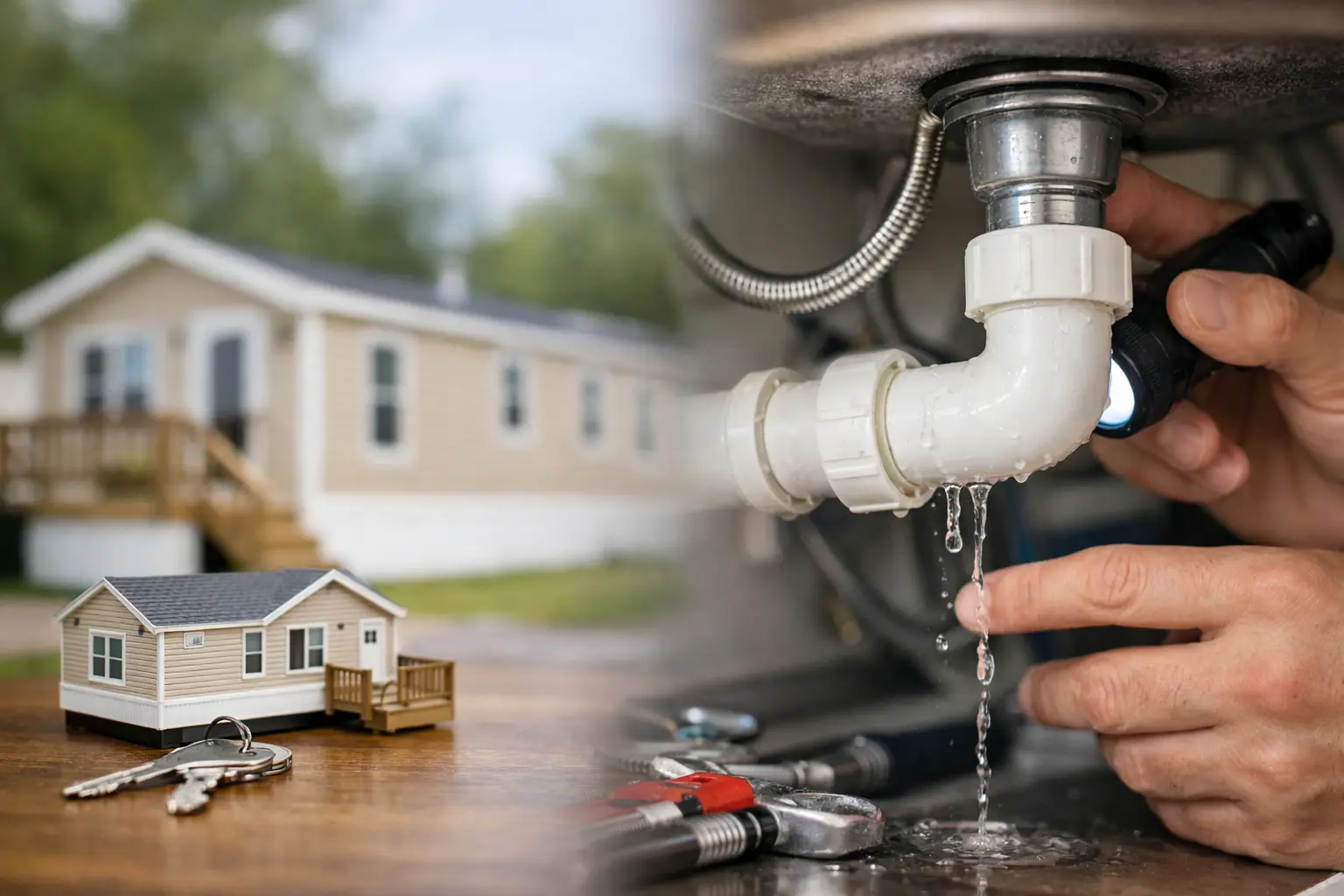
A plumbing leak in a mobile home rarely stays small for long. One soft spot under the bathroom, one cabinet with water damage, one sagging patch near the water heater – and suddenly you’re not just dealing with a repair. You’re dealing with a sale that feels harder than it should be. If you need to sell mobile home with plumbing leaks, the good news is you still have options, even if the home needs work and even if you need to move fast.
The key is knowing what kind of sale makes sense for your timeline, your budget, and the condition of the home. Some owners can fix the issue first and list it. Others are better off selling as-is and avoiding more money, more delays, and more stress.
Can you sell mobile home with plumbing leaks as-is?
Yes. A mobile home with plumbing leaks can be sold as-is. The bigger question is who will actually buy it, how much they will pay, and how long it will take.
Traditional retail buyers usually want financing, inspections, and a home that is move-in ready or close to it. Plumbing problems can stop that deal fast. If the leak has caused floor damage, mold, wall stains, or subfloor issues, many buyers will back out or try to renegotiate hard after inspection. If the home is in a park, management approval and age restrictions can narrow the buyer pool even more.
That does not mean the home is unsellable. It means the most realistic buyer is often someone prepared to buy in current condition. That may be a local cash buyer, an investor familiar with manufactured housing, or a dealer who knows how to handle repairs, title work, and transport questions if needed.
What plumbing leaks do to value
Not all leaks affect value the same way. A slow drip under a kitchen sink is different from a long-term leak under the tub that has weakened the floor. Buyers look at plumbing leaks as both a repair cost and a risk cost.
The repair cost is the obvious part. They may need to replace supply lines, drain lines, fixtures, sections of flooring, insulation, or damaged wall panels. The risk cost is what scares people more. Once water has been leaking for a while, no one knows the full damage until the area is opened up. That uncertainty lowers offers.
In mobile homes, water damage can spread quickly because floors, wall panels, and underlayment are often more vulnerable than in site-built homes. A leak around toilets, tubs, water heaters, or washing machine hookups can turn into soft floors and structural concerns faster than many sellers expect.
If you’re trying to decide whether to repair first or sell now, the real question is this: will the repair cost less than the value it adds, and do you have time to wait for the right buyer? Sometimes yes. Often, no.
When repairing before the sale makes sense
Fixing the leak before you sell can make sense if the damage is minor, the title is clear, the home is in good overall condition, and you’re not under a deadline. If a licensed plumber can solve the problem quickly and there is little to no water damage, that repair may widen your buyer pool.
But this only works when the issue is truly limited. Many sellers start with one repair quote and end up facing floor replacement, fixture replacement, mold cleanup, or patchwork that still does not satisfy retail buyers. If you’re already behind on lot rent, dealing with an inherited home, managing a vacancy, or trying to sell from out of town, a repair project can drag on longer than planned.
For many owners, the simpler path is selling the home as-is and letting the buyer take on the repair risk.
The fastest way to sell a mobile home with plumbing leaks
If speed matters, the fastest route is usually a direct cash sale. That means selling to a buyer who understands manufactured homes, buys in current condition, and does not require you to repair the leak first.
This type of sale works well when the home has obvious damage, the seller cannot afford repairs, or there are extra complications like title issues, back lot rent, park rules, or probate. Instead of cleaning up every problem, listing the home, answering messages, scheduling showings, and hoping a buyer follows through, you move straight to an offer and a closing timeline.
That is especially helpful in Central North Carolina, where mobile home sellers often run into park approval issues, older home limitations, and buyer financing problems. A buyer who specializes in this space can usually tell you quickly whether the home can be purchased as-is and what paperwork will be needed.
What to expect from an as-is buyer
A serious as-is buyer is not going to ignore the plumbing leak. They will factor it into the offer. That is normal. What matters is whether the offer still saves you money and time compared to fixing the problem yourself.
When you request an offer, be upfront. Mention where the leak is, how long it has been happening if you know, and whether there is floor damage, stains, mold, or utility shutoff issues. If the home is in a park, say whether the lot is leased and whether management has sale or occupancy requirements. If the home is on private land, be clear about whether land is included.
The more accurate the information, the more realistic the offer and the fewer surprises later. A straightforward buyer would rather hear the bad news early than uncover it after everyone has wasted time.
Documents and details that help the sale move faster
Even when the home has plumbing leaks, the sale can move quickly if your paperwork is in order. The title matters first. In North Carolina, mobile home transactions can slow down fast when titles are missing, names do not match, or there are old liens that were never properly released.
You should also know whether you own the land, lease the lot, or need park approval for the buyer. If the home is in an estate, divorce, or inherited situation, gather any court or ownership documents early. Plumbing damage may be the reason you’re selling, but paperwork problems are often what delay the closing.
This is one reason many owners prefer working with a specialist instead of trying to sell alone. The leak is only one piece of the deal. The title transfer, buyer sourcing, park communication, and timing matter just as much.
Should you list it yourself or sell directly?
It depends on what matters more to you – price ceiling or certainty.
If you list the home yourself, you might find a buyer willing to take on repairs. But that route usually means photos, messages, no-shows, negotiation, and buyers who lose interest once they hear about the leak or feel the soft floor. If the home is older, in rough shape, or in a park with restrictions, that process can become frustrating fast.
A direct sale usually brings a lower top-end number than a perfect retail deal. But for many sellers, the net result is better because there are no repair bills, no agent fees, no long wait, and no repeated price drops. You get clarity instead of uncertainty.
That trade-off is worth it when time, convenience, and problem-solving are the priority.
How the process usually works
If you want a simple sale, the process should be simple. First, share basic information about the home, including the leak and any known damage. Then schedule a quick review, which may be in person or based on photos and details depending on the situation. After that, you review the offer and decide if it works for you.
There should be no pressure and no obligation. If the offer makes sense, the closing timeline can often move much faster than a traditional listing. If it does not, at least you know where you stand.
For sellers in the Triad and surrounding Central NC markets, Triad Mobile Homes works with owners in exactly these kinds of situations – homes with damage, title issues, park complications, and urgent timelines. The goal is not to make the situation sound prettier than it is. The goal is to give you a fair cash offer and handle the hard parts so you can move on.
Common mistakes to avoid
The biggest mistake is hiding the leak or downplaying the damage. That usually backfires and slows the sale. The second mistake is putting money into repairs without a clear payoff. A patch job can still leave you with the same buyer objections, just after you’ve spent more cash.
Another common problem is waiting too long while the damage gets worse. Plumbing leaks tend to spread. A home that needs a simple fix today may need flooring, wall, and insulation work a month from now. If you already know you want to sell, acting sooner usually gives you better options.
If your mobile home has plumbing leaks, you do not need a perfect house to get it sold. You need a realistic plan, a buyer who understands the situation, and a process that does not waste your time. Start with the facts, be honest about the condition, and choose the path that gets you out of the problem instead of deeper into it.