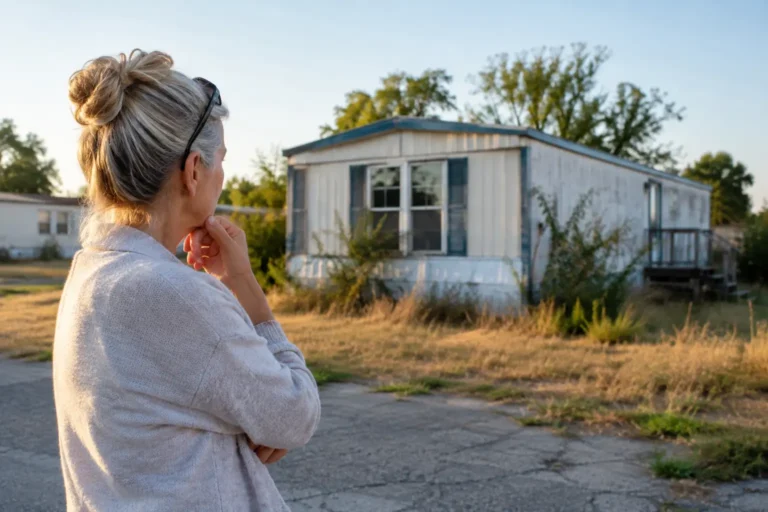


A vacant mobile home can start costing you money faster than most owners expect. Lot rent keeps coming due, utilities may stay on, small leaks turn into larger repairs, and an empty home can attract damage or unwanted attention. When owners ask whether to sell a mobile home or rent it, the right answer is rarely about the highest possible monthly income. It is about how much risk, work, and delay you can realistically take on.
For some Central North Carolina owners, renting creates steady income and makes sense. For others, selling for a fair cash offer is the cleanest way to stop the expenses, settle a complicated situation, and move forward. Here is how to make the call without guessing.
Sell Mobile Home vs Rent It: Start With Your Real Goal
The biggest mistake is treating this as only a math problem. Rent can look attractive on paper. A $700 or $900 monthly payment sounds better than a one-time sale price until you account for vacancies, repairs, park rules, late payments, and the time it takes to manage a tenant.
Start by being honest about what you need most right now. If you need cash for a move, are behind on lot rent, inherited a home from out of state, or want to avoid repossession, a sale may solve the immediate problem. If you have stable finances, a well-maintained home, and the ability to handle landlord duties, renting may be worth considering.
A mobile home is not a hands-off rental property just because it is small. It still needs a responsible owner behind it.
When Renting Your Mobile Home Can Make Sense
Renting may be a reasonable option when the home is in good condition, the location has reliable rental demand, and you can afford to hold it for the long term. A newer manufactured home in a well-run community or a desirable spot on private land may attract qualified tenants and produce dependable income.
You also need room in your budget for the months when it does not produce income. A vacancy is not just lost rent. You may still owe lot rent, insurance, taxes, utilities, loan payments, and maintenance. If the home needs a furnace repair, plumbing work, a roof patch, or new steps before a tenant moves in, those costs are yours.
Renting is strongest when you can treat it like a business. That means screening applicants, using a written lease, collecting deposits, documenting the home’s condition, responding to repairs, and enforcing payment terms. It also means having a plan when a tenant stops paying or leaves damage behind.
For owners who live nearby, understand the park’s policies, and do not need quick cash, rental income can be a useful asset. But it should be income you can manage, not a hoped-for fix to a financial emergency.
Check the mobile home park rules first
If your home sits in a mobile home community, the park has a major say in whether renting is allowed. Some parks prohibit rentals completely. Others require management approval, tenant applications, background checks, or separate lease terms. Some restrict subleasing or require the homeowner to remain responsible for lot rent regardless of whether the tenant pays.
Do not advertise the home for rent until you know the rules. A tenant who is denied park approval can leave you with a vacant home, a returned deposit, and another month of expenses. If you already have tension with park management or unpaid lot rent, renting may not be available at all.
Calculate net rent, not advertised rent
The number that matters is what stays in your pocket after expenses. Take the expected monthly rent and subtract lot rent, insurance, taxes, maintenance reserves, vacancy time, utilities you cover, and any loan payment. Then set aside something for major repairs.
For example, $900 in monthly rent may shrink quickly after $450 in lot rent, $75 in insurance, $100 for future repairs, and an occasional vacancy. If the home needs work between tenants or a renter pays late, your expected income may disappear for months.
That does not mean renting is bad. It means the decision needs to be based on real numbers, not the highest rent listed in an online ad.
When Selling Is the Better Move
Selling is often the better choice when certainty matters more than future income. This is especially true when the home is vacant, needs repairs, has tenant damage, carries overdue lot rent, or has become a burden during a divorce, job relocation, inheritance, or family emergency.
A direct sale can turn an ongoing obligation into cash you can use now. You avoid screening tenants, waiting for rent, chasing late payments, and paying for repairs that may never increase your return. If the home is older or in poor condition, that simplicity has real value.
Selling can also make sense if you are not local. Managing a rental from another state is difficult even with a single-family house. With a mobile home, you may also need to coordinate with park management, deal with title paperwork, arrange repairs, and handle community-specific requirements from a distance.
At Triad Mobile Homes LLC, owners can request a no-obligation cash offer without cleaning, making repairs, or listing the home themselves. For sellers facing a time-sensitive situation, an offer within 24 hours can be more useful than months of uncertain rental income.
A sale is not always about the top price
You may get a higher number by repairing, marketing, and selling the home yourself. But that route takes time and money. You may need to clean out the home, fix flooring or soft spots, locate the title, photograph the property, answer messages, coordinate showings, and find a buyer approved by the park.
A cash sale may not match an ideal retail price, but it can remove the costs and uncertainty between you and that price. The best choice depends on your net result, your deadline, and how much work you are willing to take on.
If your goal is to stop lot rent, avoid another repair bill, or leave the area quickly, a straightforward sale may be worth more than trying to squeeze out every possible dollar.
Compare the Risks Before You Decide
The sell mobile home vs rent it decision gets clearer when you look at what can go wrong with each path.
With renting, the biggest risks are nonpayment, eviction, property damage, vacancy, and ongoing repair costs. You also remain responsible for the home. A tenant’s missed rent does not erase your obligation to the park, lender, insurer, or tax office.
With selling, the main trade-off is giving up future monthly income and possibly accepting less than a fully renovated retail sale might bring. You need to make sure the buyer understands manufactured housing, including title transfers, park approval, and whether the home must stay in place or be moved.
A good decision is usually the one that removes the risk you cannot afford. If one missed rent payment would put you behind on your own bills, renting may be too risky. If you have cash reserves and want long-term income, a carefully managed rental could be a fit.
Ask These Questions Before You Commit
You do not need a complicated spreadsheet to get clarity. Ask yourself whether the park allows rentals, whether the home is safe and ready for a tenant, and whether you can cover three to six months of expenses without rent coming in. Consider whether you are prepared to handle calls, repairs, payment issues, and possible eviction.
Then ask what selling would solve right away. Would cash help you relocate? Would it stop lot rent from building up? Would it let you settle an estate or end a difficult ownership situation? The answers usually point toward the right path.
If you choose to rent, set firm standards before anyone moves in. Verify income, follow park approval procedures, use a written lease, collect a proper deposit, and document the condition of the home with photos. Do not rent to the first person who promises to pay tomorrow.
If you choose to sell, gather what you have: the title or ownership documents, home year and size, park information, photos, and details about repairs or damage. Missing paperwork does not always prevent a sale, but being upfront helps resolve issues faster.
A mobile home should serve your life, not keep you stuck. If rent income gives you stability and you can manage the work, pursue it with clear numbers and firm rules. If the home is draining your time, money, or peace of mind, getting a fair cash offer may be the practical next step that lets you move on.