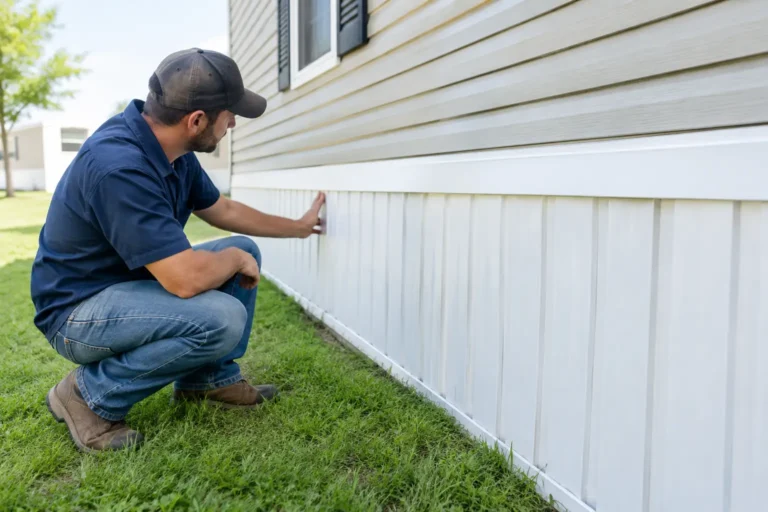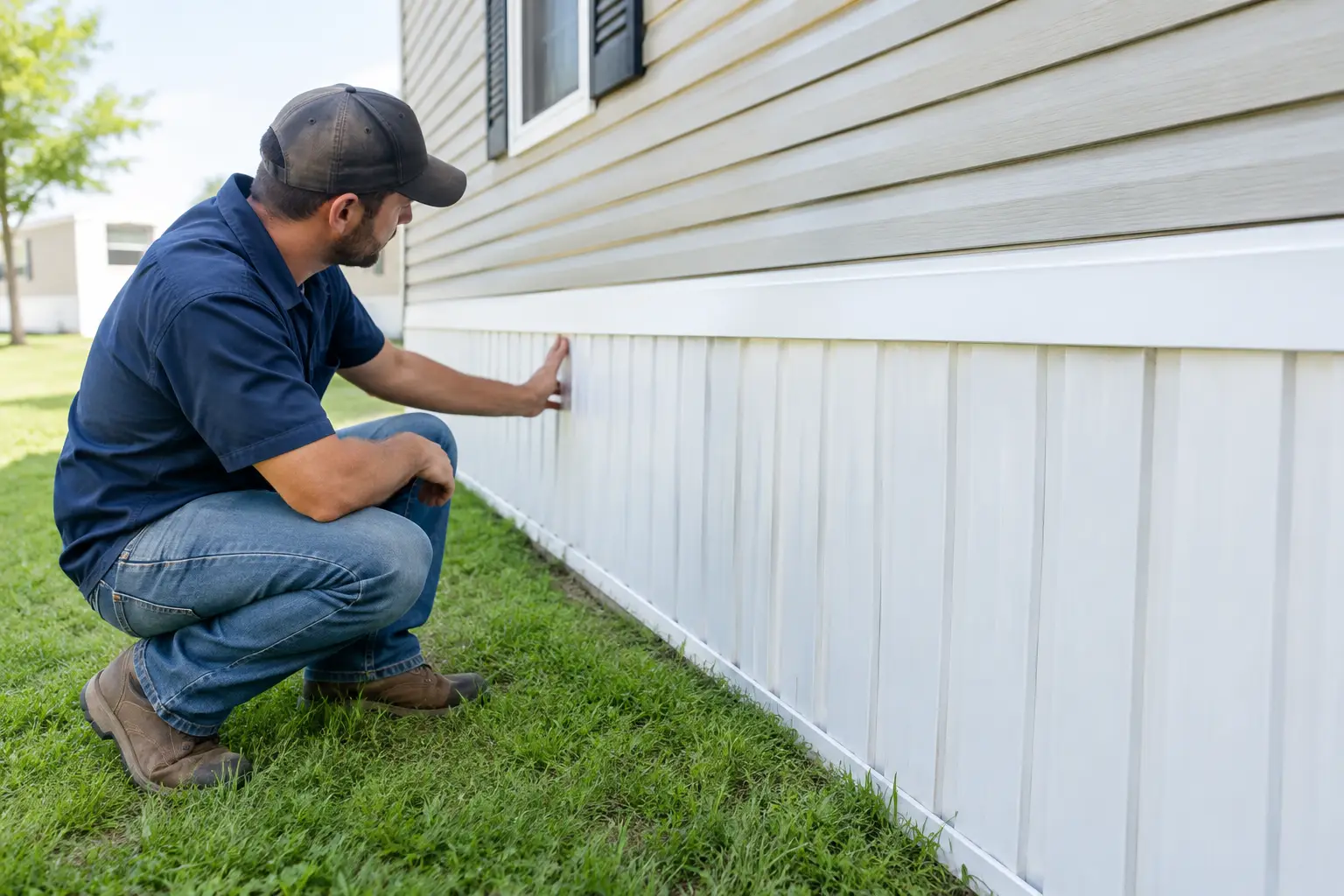
A few missing panels of mobile home skirting can make an otherwise solid home look neglected before a buyer ever steps inside. But that does not automatically mean you should spend thousands of dollars replacing it before you sell. The right decision depends on the condition of the home, whether it is in a park or on private land, and how quickly you need to move on.
For many Central North Carolina owners, skirting is one item on a long repair list. If lot rent is behind, a home is inherited, or you need to relocate quickly, putting more money into the property may not make sense. Knowing what skirting does, what damage matters, and what buyers will reasonably expect can help you make a clear decision.
What Mobile Home Skirting Actually Does
Mobile home skirting is the material installed around the bottom edge of a manufactured home. It covers the open space between the ground and the home, protecting the undercarriage while giving the property a finished appearance.
Good skirting helps limit wind-driven debris, animals, and standing water from getting beneath the home. It can also help protect plumbing from cold weather and reduce drafts around the floor. Ventilation matters, too. A fully sealed crawlspace without proper vents can trap moisture, which may contribute to wood rot, mildew, insulation damage, or problems with the home’s belly board.
Skirting also affects first impressions. A buyer may see cracked vinyl, bent metal, holes, or missing access panels and assume there are bigger issues underneath. That assumption is not always fair, but it is common. In a mobile home park, management may also require the skirting to be repaired before approving a new resident or allowing a home to remain on the lot.
When Damaged Skirting Is More Than a Cosmetic Problem
Not every broken panel is an emergency. A small crack in an otherwise secure skirting system is different from an open perimeter with exposed insulation and plumbing. The key is to look beneath the home, not just at the outside.
Signs You Should Investigate Further
If you notice soft floors, a musty smell indoors, sagging insulation, water stains, frozen pipes, or evidence of animals under the home, the issue may go beyond the skirting itself. Missing or damaged panels can allow moisture and pests in, but the real expense may be a plumbing leak, a torn vapor barrier, or damaged flooring.
Look for areas where the ground stays wet after rain. In the Triad and surrounding Central NC communities, heavy rain can expose drainage problems quickly. Water that collects under a manufactured home can create a bigger concern than a few damaged panels on the outside.
You should also check for a usable access panel. Buyers, repair technicians, and inspectors need a practical way to reach plumbing, electrical connections, and the crawlspace. If an access door is missing or difficult to open, replacing it is usually a simple, worthwhile fix.
Common Mobile Home Skirting Materials
The best skirting material is not always the most expensive one. It should fit the home’s condition, your budget, local requirements, and your plans for selling.
Vinyl skirting is common because it is affordable, lightweight, and easy to replace one panel at a time. It comes in several colors and can improve the appearance of an older home quickly. Its downside is that it can crack from impact, fade over time, and blow loose if it is not installed correctly.
Metal skirting is durable and often found on older homes. It can handle bumps and weather well, but it may rust, dent, or develop sharp edges. Matching older metal panels can also be difficult.
Concrete or block skirting offers a more permanent look and can be appealing on homes set on private land. It is usually more expensive and may not be practical if the home could be moved later. Masonry work also needs proper ventilation and access points.
Some owners use engineered panels, faux stone products, or wood lattice. These can look attractive, but appearance should not come ahead of function. Lattice may allow too much access for animals, while wood can rot when it sits close to damp ground. If you are selling soon, a basic, secure repair is often a better use of money than a major appearance upgrade.
Should You Repair Skirting Before Selling?
If the rest of the home is clean, functional, and marketable, repairing obvious skirting damage can help it show better. Replacing a few panels, securing loose tracks, removing weeds around the base, and making sure the access door closes can make the home feel cared for. Those smaller repairs may be worth doing when they remove an easy objection for a buyer.
A complete skirting replacement is a different decision. It may make sense when the home is in good overall shape, park rules require it, or the existing skirting is so damaged that it raises concerns about animals, moisture, and the condition underneath. Get a realistic cost before committing. A repair that costs several hundred dollars is different from a project that exposes drainage, plumbing, or foundation concerns.
Do not assume every dollar spent on skirting comes back in the sales price. Buyers of older manufactured homes often focus more on the roof, HVAC, floors, plumbing, title status, lot rent, and whether the home can stay in the park. New skirting cannot make up for a leaking roof or unresolved title problem.
Selling a Mobile Home With Bad Skirting
You can sell a mobile home with damaged or missing skirting. The practical question is whether you want to sell it as-is, make a limited repair, or complete a larger project before listing it.
Selling as-is is often the right move when the home needs several repairs, you are facing a deadline, or you do not have the cash to invest upfront. Be straightforward about the condition. A serious buyer will want to know whether there is water damage, a plumbing problem, or simply cosmetic skirting deterioration. Clear information saves time and prevents a deal from falling apart later.
Park-owned communities add another layer. The park may have rules about skirting standards, colors, repairs, and buyer approval. Before promising a buyer anything, ask the community office what they require for a transfer or new tenancy. If the buyer plans to move the home, they may also need to consider the condition of the frame, axles, tie-downs, transport route, and local permits. Skirting is only one piece of that process.
For owners who want a fast, straightforward sale, an as-is cash offer can remove the pressure to repair every visible issue. Triad Mobile Homes LLC works with owners facing complicated situations and understands that a home with damaged skirting, title questions, park restrictions, or deferred maintenance still needs a practical path forward.
A Simple Way to Decide What to Do Next
Start by taking clear photos around all four sides of the home, including any missing panels, vent openings, and the access door. If you can safely look underneath, note standing water, loose insulation, plumbing leaks, animal activity, or damage to the vapor barrier. You do not need to diagnose every issue yourself. You just need an honest picture of the condition.
Then compare the likely repair cost with your selling goal. If you have time and the issue is limited, a basic repair may help the home show better. If the skirting problem is connected to broader damage, or you need to sell quickly, avoid putting money into projects that may not change your outcome.
A home does not have to be perfect to sell. It does need a clear plan, accurate information, and a buyer who understands manufactured housing. If skirting is one more problem standing between you and your next step, focus on the option that gives you the most certainty, not the longest repair list.