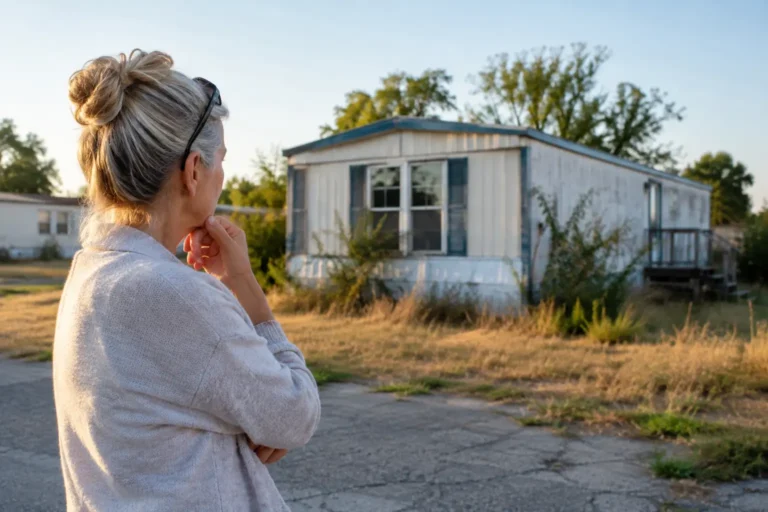


A seller in Greensboro was two months behind on lot rent, had a soft floor near the bathroom, and had already heard “no” from one park-approved buyer. That is exactly why mobile home seller case examples matter. They show what actually happens when a sale is urgent, messy, or tied up in paperwork – and what options tend to work best in real life.
If you own a mobile home in the Triad or nearby Central North Carolina, you may not be dealing with a clean, retail-ready sale. You may be trying to move for work, settle an estate, avoid more lot rent, or get rid of a home that needs repairs you do not want to make. In those situations, the right path usually comes down to speed, park rules, title status, condition, and whether you want certainty or are willing to wait for a higher price.
Mobile home seller case examples that reflect real situations
The cases below are based on common seller situations in North Carolina. The numbers and details are simplified, but the problems are real. More importantly, each example shows the trade-off between price, speed, and hassle.
Case 1: Behind on lot rent in a mobile home park
A Winston-Salem owner needed to sell a 1998 single-wide in a park after falling behind on lot rent. The home was livable, but not updated. The seller first considered listing it privately to get more money, but the park required buyer approval, and time was not on their side.
The main issue was not the home itself. It was the monthly carrying cost. Every extra week meant more lot rent owed, more stress, and a higher chance the situation would get worse.
In a case like this, a direct cash offer often makes sense because it removes the waiting game. There is no cleaning up for showings, no chasing strangers from online ads, and no guessing whether a buyer will actually get approved by the park. The seller may not hit the highest possible sale price, but they avoid more losses and close fast. For many owners, that is the better financial move.
Case 2: Inherited home with missing paperwork
An out-of-state heir inherited a mobile home in High Point after a family member passed away. The home had been sitting vacant, and the title could not be found right away. Utilities were off, the steps felt unsafe, and the family did not want to travel back and forth to deal with it.
This is one of the most common situations people underestimate. Selling an inherited house is one thing. Selling an inherited mobile home is different because title transfer, ownership records, and park or land status can slow everything down.
The first question in this kind of case is simple: can the seller prove ownership and transfer it legally? If yes, the sale can usually move forward once the paperwork is sorted out. If not, that becomes the first problem to solve. A local buyer who deals with mobile homes every week can often help identify what documents are needed and what order to handle them in.
The trade-off here is speed versus cleanup. The family could have spent time clearing out furniture, making repairs, and trying to market it. Instead, they chose a simpler route, sold as-is, and moved on. That decision usually comes down to whether the seller wants to maximize price or minimize hassle.
Case 3: Divorce and a fast deadline
A Greensboro couple needed to sell a double-wide on private land during a divorce. Neither person wanted to keep making payments, and neither wanted a long sales process. The home was in decent shape, but emotions were high, and the biggest need was certainty.
When multiple decision-makers are involved, delays happen fast. One person wants to wait. The other wants cash now. If the home sits, both sides stay stuck.
In this type of case, a straightforward offer with a short closing timeline often solves more than a listing does. A traditional sale may bring more if the home photographs well and has strong financing options for buyers. But that route also brings inspections, buyer financing risk, repair requests, and more back-and-forth. For sellers dealing with divorce, simple terms are often worth more than squeezing out every last dollar.
Case 4: Storm damage and repair fatigue
A seller outside Lexington had a manufactured home with roof leaks after a storm. There was interior ceiling damage, soft spots in one bedroom, and visible staining. Insurance did not fully cover the repairs. The owner got a few contractor estimates and quickly realized the work would cost more than expected.
This is where many sellers hit a wall. On paper, repairing the home before selling sounds smart. In reality, the numbers may not work. If the roof, subfloor, and cosmetic damage all need attention, you can spend thousands before even knowing what the final sale price will be.
A damaged home usually has two realistic paths. One is investing the money and time to improve it, then marketing it for more. The other is selling as-is at a lower number but keeping your cash in your pocket. Which one is better depends on repair cost, available time, and whether the seller can tolerate more uncertainty.
For owners already stretched thin, a fair cash offer is often the cleanest exit. No repairs. No inspections for financing. No pretending the home is in better shape than it is.
What these mobile home seller case examples have in common
Even though each seller situation looks different, the same pressure points show up again and again.
One is carrying cost. Lot rent, taxes, insurance, utilities, loan payments, and maintenance keep running whether the home sells or not. Another is paperwork. Titles, VINs, land records, and ownership transfers can slow down a deal fast if they are not handled early. The third is buyer reliability. A person responding to an online ad is not the same as a ready buyer who can actually close.
That is why many sellers choose speed and certainty over chasing a higher number. Not every owner should sell fast for cash. If your home is in excellent shape, on owned land, with clear title and time to market it properly, listing may be the better path. But if the situation is urgent or complicated, the cleaner deal often wins.
How to judge your own case
Start with the question most sellers avoid: what is costing you money right now? If the answer is lot rent, vacant-home risk, travel, missed payments, or repair estimates, that cost needs to be part of your decision.
Next, look at the condition honestly. Cosmetic issues are one thing. Floor damage, leaks, title problems, park restrictions, and buyer financing trouble are another. A home that is hard to finance or difficult to move has a smaller buyer pool, which changes the best selling strategy.
Then look at your timeline. If you need to sell in days or a few weeks, your options are narrower. If you can wait a few months and the home shows well, you may be able to test the market. There is no magic answer. It depends on the home, the paperwork, and how much uncertainty you are willing to carry.
A simple way to think about the trade-off
If your priority is top dollar, expect more effort, more waiting, and more deal risk. If your priority is a fast, low-stress sale, expect the price to reflect that convenience. The right choice is the one that fits your situation, not the one that sounds best online.
For many Central NC sellers, that means talking to someone who understands mobile home titles, park rules, and as-is sales – not just general real estate. That is where a specialist like Triad Mobile Homes can make the process easier, especially when the home has damage, paperwork issues, or a tight deadline.
If your situation feels complicated, that does not mean you are out of options. It usually just means you need the right process, the right local buyer, and a clear next step so you can stop carrying a problem that no longer fits your life.