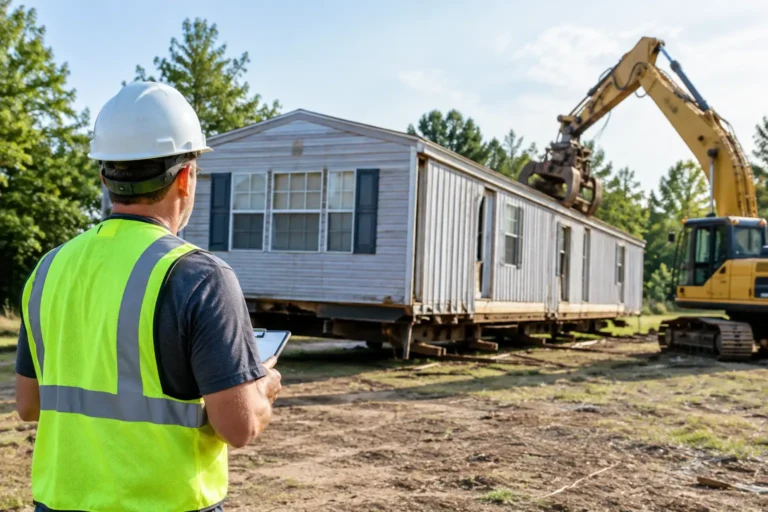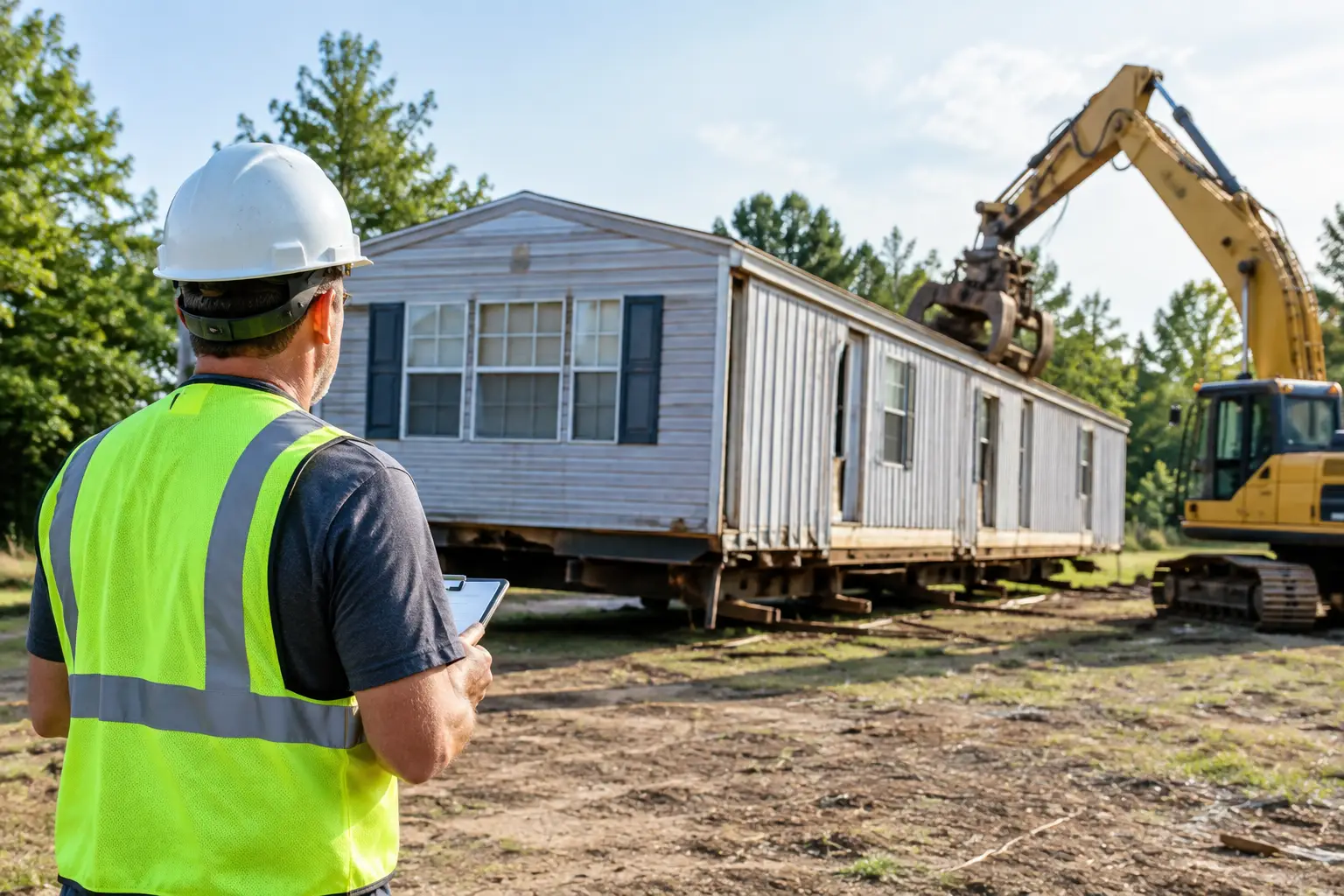
A leaking roof, soft floors, a missing title, and past-due lot rent can make a mobile home feel impossible to sell. This mobile home salvage case study follows a realistic Central North Carolina seller situation and shows what happens when a damaged home is handled as a problem to solve, not a project the owner has to finish first.
The details have been simplified to protect privacy, but the challenges are common in Greensboro, Winston-Salem, High Point, and nearby communities. The owner did not need a perfect house. They needed a clear path out.
The situation: A home no traditional buyer wanted
The seller owned an older single-wide in a Central NC mobile home community. The home had been vacant for several months after a family member moved into assisted living. During that time, a bathroom supply line had leaked. The flooring near the bathroom and hallway was soft, part of the ceiling had staining, and the home needed a serious cleanout.
There were other complications. Lot rent was behind, the park required approval before a new resident could move in, and the original title paperwork could not be found in the seller’s files. The seller lived out of town and could not make repeated trips back to manage repairs, meet contractors, or show the home to strangers.
At first, the family considered listing it themselves. That sounded simple until the real questions started: Who would pay for repairs? Could a buyer get approved by the park? Would someone buy it as-is? Could the title issue be resolved before the lot balance grew larger?
This is where many sellers lose time. They post the home online, receive low-quality messages, arrange showings that go nowhere, and still have to deal with the same paperwork and park requirements. A damaged mobile home can attract interest, but interest is not the same thing as a qualified buyer who can close.
Mobile home salvage case study: The first 24 hours
The seller provided basic information about the home: year, size, community location, known damage, occupancy status, photos, and the estimated lot-rent balance. That was enough to begin evaluating the real situation.
A proper cash-offer review is not based only on what a similar clean home might sell for. It has to account for condition, title status, park rules, repair scope, cleanup, resale demand, transport questions if a move is needed, and the timeline for closing. A home with a roof leak may still have value, but the cost and risk of correcting that damage belong in the numbers.
Within a day, the seller had a straightforward conversation about the available paths. One option was an as-is cash sale. Another was having a specialist market the home to buyers in the community network if a direct purchase did not make sense. The seller chose the cash-sale route because certainty mattered more than waiting for a higher offer that might not materialize.
The offer was not presented as a no-questions-asked promise. The buyer still needed to confirm the home condition, review the title path, and coordinate with the community. But the seller did not have to repair the floors, replace the stained ceiling, haul out years of belongings, or hire an agent.
What “as-is” actually meant in this case
“As-is” can be misunderstood. It does not mean a seller can hide known problems, and it does not mean every home will qualify at the same price. It means the seller is not required to bring the home up to retail condition before receiving an offer.
In this case, the seller disclosed the leak and soft flooring. During the walkthrough, the buyer confirmed that the affected area was larger than the photos suggested. That adjusted the final numbers, but it did not stop the sale. The parties dealt with the actual condition rather than pretending the home was move-in ready.
The seller also left behind unwanted furniture, damaged carpet, and general household contents. For a conventional sale, that could have meant weeks of cleaning, dumpsters, and labor. Here, the cleanup was included in the buyer’s plan. That saved the seller money and, just as importantly, eliminated another task from an already stressful situation.
There is a trade-off. A seller who repairs water damage, updates the home, clears it out, and waits for the right retail buyer may be able to pursue a higher price. But that route requires upfront cash, time, coordination, and a willingness to accept uncertainty. For an owner facing rising lot rent, distance, probate responsibilities, or financial pressure, an as-is sale can be the more practical financial decision even when it is not the highest possible number on paper.
The title and park issues that could have killed the deal
The missing title was the biggest concern. North Carolina mobile home transactions depend on getting ownership paperwork right. Without a clear title path, a buyer may not be able to transfer ownership, move the home, or place it with a new resident.
Instead of telling the seller to figure it out alone, the transaction moved into a title-resolution process. The seller gathered the information they had, including prior registration details and identification. The buyer helped clarify what documentation was needed and allowed time for the appropriate replacement or transfer steps.
The mobile home community also had a role. The home could not simply be sold and occupied by anyone without considering park policies. The buyer communicated with the community about the planned transaction and worked through the requirements tied to the lot. That mattered because a buyer who ignores community rules can create more trouble for the seller, not less.
The past-due lot rent was addressed as part of the closing conversation. In some cases, an agreed amount can be paid from sale proceeds. In others, the balance, park policy, and overall home value may change what is possible. There is no one-size-fits-all answer, which is why sellers should bring up lot rent early instead of hoping it will disappear later.
The result: A clean exit without a repair project
Once the title path and community requirements were in place, the seller signed the necessary documents and received the agreed cash payment at closing. The buyer took responsibility for the home, cleanup, and next steps.
The result was not just a sale. The seller stopped carrying monthly lot-rent exposure, stopped worrying about a vacant damaged home, and avoided spending money on repairs that may not have produced a reliable buyer. The family could focus on their relative’s care instead of managing a property from hours away.
That is the real value of a salvage-style transaction. It turns a stalled situation into an executable plan. The home may still need work, but the seller does not have to become a contractor, marketer, title specialist, or park liaison to move on.
When a salvage sale makes sense
A direct as-is sale is often worth considering when the home has major deferred maintenance, water damage, tenant damage, code or permit concerns, or a large amount of personal property left inside. It can also make sense for inherited homes, divorce situations, repossession risk, relocation, or any case where lot rent is continuing while the home sits empty.
It may not be the best fit for every owner. A newer home in good condition, with a clear title and no urgency, may benefit from being marketed for a higher retail price. But even then, an owner should compare the likely net proceeds after repairs, cleaning, commissions, listing time, and carrying costs, not just compare asking prices.
For complicated homes across Central North Carolina, Triad Mobile Homes LLC can review the condition, explain the realistic options, and provide a no-obligation cash offer when a direct sale fits. The goal is not to pressure a seller into one path. It is to make the hard parts clear before they become expensive.
If your mobile home has become a burden, start with the facts: its condition, title status, lot-rent situation, and your timeline. A fair solution begins when you stop treating every problem as something you have to fix yourself.