

Most private mobile home sales go sideways for the same reason – the seller thinks it will work like selling a site-built house. Then the calls are flaky, the paperwork gets confusing, the park wants approval, and the buyer suddenly needs financing they do not have. A solid mobile home private sale guide starts with one reality: speed and certainty usually matter more than squeezing out every last dollar.
If you are selling in Greensboro, Winston-Salem, High Point, or nearby Central North Carolina markets, the right approach depends on your timeline, the home’s condition, and where it sits. A home in a park is one kind of sale. A home on private land is another. A single-wide with title issues, back lot rent, or repair needs is different again. Private sale can work well, but only if you handle the details in the right order.
What this mobile home private sale guide should help you decide
Before you clean, list, or print a bill of sale, decide what kind of outcome you actually need. If your goal is top price and you have time to wait, market the home properly and expect back-and-forth. If your goal is to stop carrying costs, avoid repairs, or close fast, a direct cash sale may be the better move.
That distinction matters because many sellers waste weeks chasing the wrong buyer. They list high, get lots of messages, show the home several times, and still end up taking less than they would have accepted from a serious buyer at the start. Private sale is not just about avoiding commissions. It is about choosing the least stressful path for your situation.
Know what you are selling before you price it
The first question is simple: are you selling just the home, or the home and land together? In North Carolina, that changes how buyers view value, financing, title work, and even how the property is marketed.
If the home is in a mobile home park, buyers will care about lot rent, park rules, age restrictions, pet rules, and whether the park will approve them. If the home is on private land, buyers will care about the land itself, utilities, septic or sewer, access, and tax status. Sellers often skip this step and wonder why the responses are all over the place.
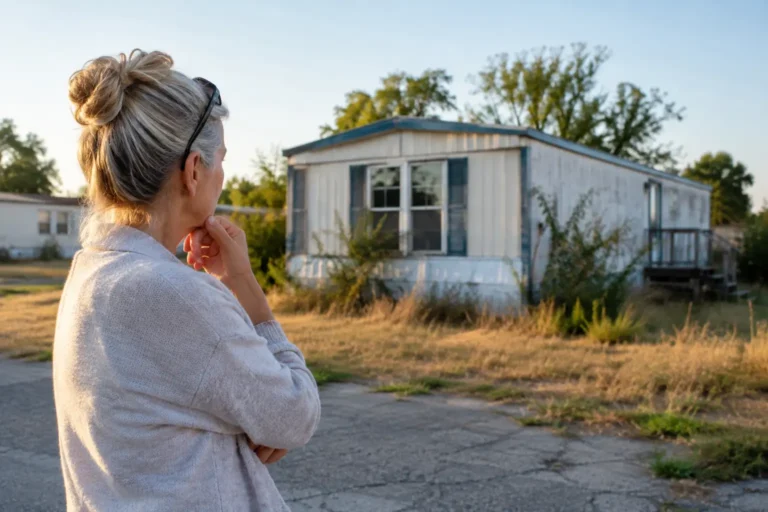
You also need to be honest about condition. Roof leaks, soft floors, missing HVAC, plumbing issues, storm damage, and outdated interiors all affect what a real buyer will pay. In manufactured housing, needed repairs can cut your buyer pool fast because many retail buyers do not want a project, and lenders are often pickier than sellers expect.
Price for the real market, not the hoped-for market
Pricing is where private sales usually stall. Sellers look at asking prices online, not closed deals, and assume their home should bring the same number. But listed prices are easy. Sold prices are what matter.
A fair price depends on age, size, condition, location, whether the home must be moved, and whether the title is clean. A move-ready buyer will usually pay less if they have to transport the home. A park-approved buyer may pay more if the home can stay in place. Cosmetic updates help, but they do not erase major structural or title problems.
If you need speed, price slightly below the small group of comparable homes that are actually moving. If you have time, you can test a higher number, but be ready to adjust quickly. A stale listing sends the wrong signal. Buyers assume something is wrong, even when the real issue is just overpricing.
Get your paperwork straight before you advertise
This is the part many sellers underestimate. A buyer can love the home and still walk away if the paperwork is messy.
Start with the title. Make sure you know whose name is on it, whether there are liens, and whether the title is available. If the home was inherited, transferred after divorce, or involved in an estate, the chain of ownership needs to be clear. If taxes, lot rent, or loan balances are unpaid, handle those questions early instead of hoping they work themselves out at closing.
You should also gather the VIN or serial number, year, make, model, and any documents tied to the home’s setup or ownership. If the home is in a park, ask management what they require for a sale. Some parks require buyer applications, background checks, or office approval before occupancy. Some will not allow older homes to stay. That one detail can make or break your sale.
Market the home without wasting your time
A private sale does not mean posting one blurry photo and waiting. Good marketing is still work. Clear photos, accurate details, and direct wording save time because they filter out buyers who are not serious.
State the basics up front: year, size, bed and bath count, location, whether the home stays on the lot or must be moved, current lot rent if applicable, known repairs needed, and what documents are ready. The more specific you are, the fewer dead-end conversations you will have.
That said, more attention does not always mean better results. Marketplace leads can be high volume and low quality. Some people are only curious. Some cannot get approved by the park. Some want owner financing when you need cash. If you are dealing with urgency, every extra day spent answering weak leads costs you money and peace of mind.
Screen buyers early and keep control of the process
When someone reaches out, ask a few direct questions before scheduling anything. Can they pay cash, or are they using financing? If the home is in a park, have they spoken with management or can they pass approval? If the home needs work, do they understand that? If the home must be moved, do they have a transport plan and budget?
This is not about being difficult. It is about protecting your time. Private sales get stressful when sellers start reacting to every message as if it is a real offer. Serious buyers answer direct questions. Tire-kickers usually disappear.
Once you have a qualified buyer, move quickly. Confirm the price, what is included, expected closing timing, and who is responsible for any move, title transfer, taxes, lot rent, or cleanup. Put the terms in writing. Verbal promises cause problems later.
Understand where private sale gets complicated
A lot of sellers can handle a straightforward sale on their own. But some situations get complicated fast.
If the title is missing, the home has damage, the buyer wants financing, or the park has restrictions, private sale can drag on. The same is true if you are out of state, dealing with an inherited home, behind on payments, or trying to avoid repossession or eviction from the park. In those cases, the cheapest route on paper is not always the best route in real life.
This is where a direct buyer can make more sense than a pure do-it-yourself sale. A local company that understands mobile home titles, park communication, and buyer sourcing can remove a lot of friction. In some cases, a fair cash offer beats waiting on a maybe-buyer who needs three weeks to figure things out.
Triad Mobile Homes LLC works with sellers in exactly these kinds of situations, especially when the goal is speed, no repairs, and a straightforward close. That option is not right for every seller, but it is often the right fit when certainty matters more than testing the market.
When a cash sale is the smarter private sale
Some sellers hear “cash offer” and assume it means giving up too much. Sometimes that is true. Sometimes it is not.
If your home needs major work, if lot rent is piling up, if the park is putting pressure on you, or if you simply do not want strangers walking through the home, a cash sale can be the more profitable decision once you factor in time, repairs, holding costs, and failed deals. A lower gross number can still leave you better off if it cuts out cleaning, fixing, listing, waiting, and uncertainty.
The right question is not, “What is the highest possible price?” It is, “What is the best real outcome after costs, delays, and hassle?” That is a much better lens for any mobile home private sale guide.
A simple path forward
If you want to sell privately, start by confirming what you own, what condition it is in, and what your timeline looks like. Then price from reality, not hope. Get your title and park details lined up early. Market clearly, screen hard, and do not mistake activity for progress.
And if the sale has any pressure behind it – back lot rent, inherited property, repair issues, title problems, or a deadline – do not wait until things get worse to ask for help. The best sale is the one that actually closes so you can move on.