

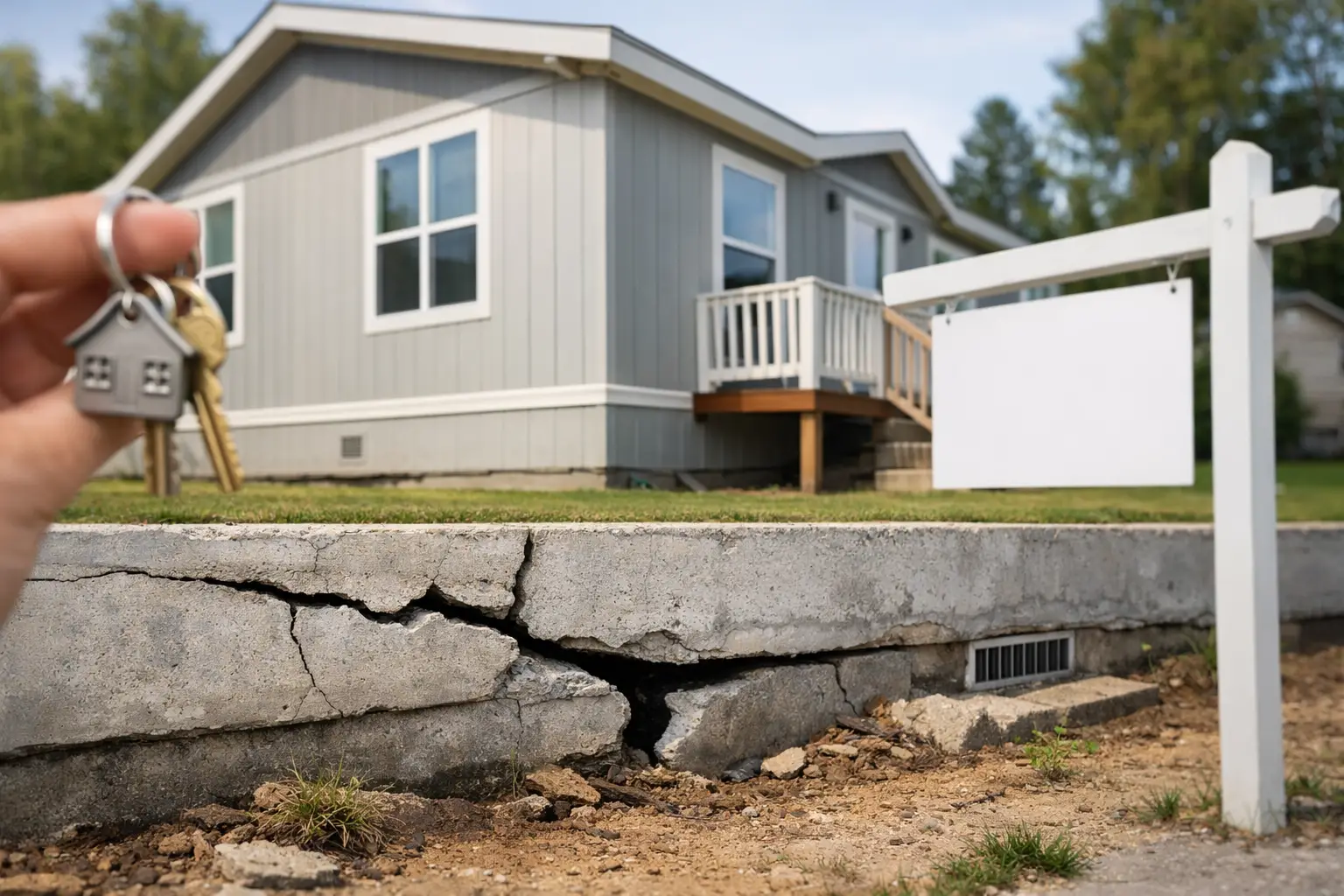
A bad pier, a sinking corner, cracked skirting, doors that will not shut right – foundation trouble can turn a simple sale into a stalled one fast. If you need to sell manufactured home with foundation problems, the biggest mistake is waiting too long and assuming no one will buy it. Buyers still exist, but the path depends on the condition, the land setup, and how much time you have.
For many owners in North Carolina, this situation comes with pressure. Maybe lot rent is behind. Maybe the home was inherited and no one wants to pour money into repairs. Maybe a retail buyer backed out after seeing soft spots, uneven floors, or a failed inspection. The good news is that foundation issues do not automatically make the home unsellable. They just change who the likely buyer is, how the home will be priced, and what paperwork matters most.
Can you sell manufactured home with foundation problems?
Yes, but you usually will not sell it the same way you would sell a move-in-ready home. A home with visible settling, damaged piers, poor tie-downs, moisture-related deterioration, or an unpermitted setup tends to scare off financed buyers. Traditional buyers want certainty. Foundation problems create questions about safety, cost, and whether the lender will approve the deal.
That does not mean the home has no market. It means your buyer pool shifts toward cash buyers, investors, manufactured home specialists, park-approved buyers, or companies that understand how to solve title, setup, and repair issues. If the home sits in a mobile home park, park rules matter too. Some parks restrict older homes, require buyer approval, or may not allow transfers if the home needs major work.
The key is to stop thinking in terms of perfect condition and start thinking in terms of clean facts, realistic pricing, and a fast path to closing.
What counts as a foundation problem?
Not every issue is catastrophic, but buyers and inspectors tend to lump a lot of problems together under the word foundation. In manufactured housing, that can mean damaged or missing piers, failing footings, poor leveling, loose anchors, frame stress, moisture damage under the home, or skirting that hides bigger support issues.
Sometimes the problem is structural. Sometimes it is setup-related. That distinction matters because the repair cost can vary widely. A simple relevel and support correction is one thing. Extensive moisture damage, rotten subflooring, or a long-term settling problem is another.
If you are not sure what you are looking at, be careful about guessing. You do not need a full renovation plan to sell, but you do need to describe the issue honestly. Buyers can work with a problem they understand. They get nervous when the story keeps changing.
Your three main options
Most sellers with foundation trouble have three realistic choices. The first is to repair the issue before listing. That can help if the home is in otherwise strong condition and you have the money, time, and confidence that the repair will increase the sale price enough to justify it. This route is not always practical, especially if you are already under financial pressure.
The second is to list the home as-is and wait for the right buyer. That can work, but it often takes longer. You may deal with showings, renegotiation, buyers who disappear after inspections, and people who want retail pricing while expecting wholesale risk.
The third is to sell directly to a manufactured home buyer that handles difficult properties. This is often the best fit when speed matters, the home needs more than minor work, or you do not want to manage repairs, buyer screening, paperwork, and back-and-forth. In Central North Carolina, that direct-sale route is usually about certainty over maximum list price.
How foundation problems affect price
Foundation issues reduce value, but not always in a straight line. Sellers often assume they only need to subtract the repair estimate from the expected price. In real life, buyers usually discount more than that because they are pricing in risk, time, unknowns, and the chance that one visible problem is hiding two more.
For example, if the home is out of level, a buyer may also worry about doors, windows, subfloors, plumbing lines, roof stress, or transportability. If it is in a park, they may ask whether the park will approve a transfer before repairs are completed. If the home is on land, the buyer may look at whether the existing foundation meets current standards or whether permitting issues could surface later.
That is why a fair as-is offer may look lower than you hoped, but still make financial sense once you factor in holding costs, lot rent, taxes, utilities, cleanup, and the risk of a failed retail sale. A lower cash offer that closes quickly can leave you better off than a higher paper price that drags on for months.
Should you fix it first or sell as-is?
It depends on the scope of the damage and your timeline. If the issue is limited, clearly documented, and inexpensive to correct, making the repair can widen your buyer pool. But sellers get into trouble when they start a repair they cannot finish or spend money on the wrong fix while bigger issues remain.
If you are behind on payments, facing park pressure, managing an inherited home from out of state, or dealing with a property that has multiple problems at once, selling as-is is usually the cleaner move. You avoid sinking more cash into a home you are trying to exit. You also avoid the common cycle of repair, relist, renegotiate, and still sell at a discount.
A practical rule is simple: if the repair will strain your budget or delay your exit, get an as-is offer before spending a dollar.
Disclosure matters more than polish
When you sell a manufactured home with foundation problems, honesty is not optional. Buyers will notice uneven floors, cracks, or signs of settling. Trying to hide the issue usually leads to retrading, canceled deals, or legal headaches later.
Be upfront about what you know. If the home has been releveled before, say so. If you have estimates, invoices, or photos, keep them ready. If you know there are moisture issues or damaged supports underneath, disclose that too. Straight answers build trust and save time.
This matters even more in manufactured housing because the sale often already includes extra moving parts like title verification, VIN or serial number confirmation, tax status, park approval, and occupancy questions. The smoother you are on the front end, the fewer surprises show up before closing.
North Carolina factors sellers should not ignore
In North Carolina, the details around the home matter just as much as the damage itself. Is the home being sold with land, or is it in a leased lot? Is the title clear, retired, or missing? Are taxes current? Is there an active loan? Has the home been modified, added onto, or set up in a way that creates permit questions?
Foundation problems often show up alongside these issues, especially in older homes. That is why specialized buyers have an advantage. They are not just looking at whether the home leans. They are looking at whether the transaction can actually close.
If your home is in Greensboro, Winston-Salem, High Point, or the surrounding Central NC market, local knowledge helps. Park managers, county paperwork, title steps, and transport realities can all slow down a sale if the buyer does not know manufactured housing.
What a faster sale usually looks like
If speed is your priority, the process should feel simple. You share the basic details about the home, including the foundation issue, location, title status, and whether the home is on land or in a park. The buyer reviews the situation, may schedule a quick visit or ask for photos, and then makes an offer based on the condition and the work required.
A direct buyer like Triad Mobile Homes LLC can often remove the usual friction – no listings, no agent commissions, no repair demands, no repeated showings, and no guessing whether the buyer will back out when they see the underneath. That does not mean every home gets the same price. It means the conversation is based on real condition and a clear timeline, not wishful pricing.
For sellers under stress, that certainty matters. A straightforward cash offer gives you a real decision to make now instead of an open-ended process with no guaranteed finish line.
How to prepare before asking for offers
You do not need to clean the home up like a retail listing, but a little preparation helps. Gather any title documents, tax information, lot rent details, and recent photos. Write down what you know about the foundation issue and when it started. If the home has other major problems, mention them early.
This does two things. First, it speeds up the offer process. Second, it helps you avoid inflated expectations from buyers who do not understand manufactured homes and then disappear once they get the full picture.
A serious buyer would rather hear the hard truth upfront than waste your time with a number that will never hold.
Foundation problems make a manufactured home harder to sell, not impossible. The best move is usually the simplest one – get clear on the condition, price it for the real market, and choose the path that gets you out without more stress than the home is worth.