

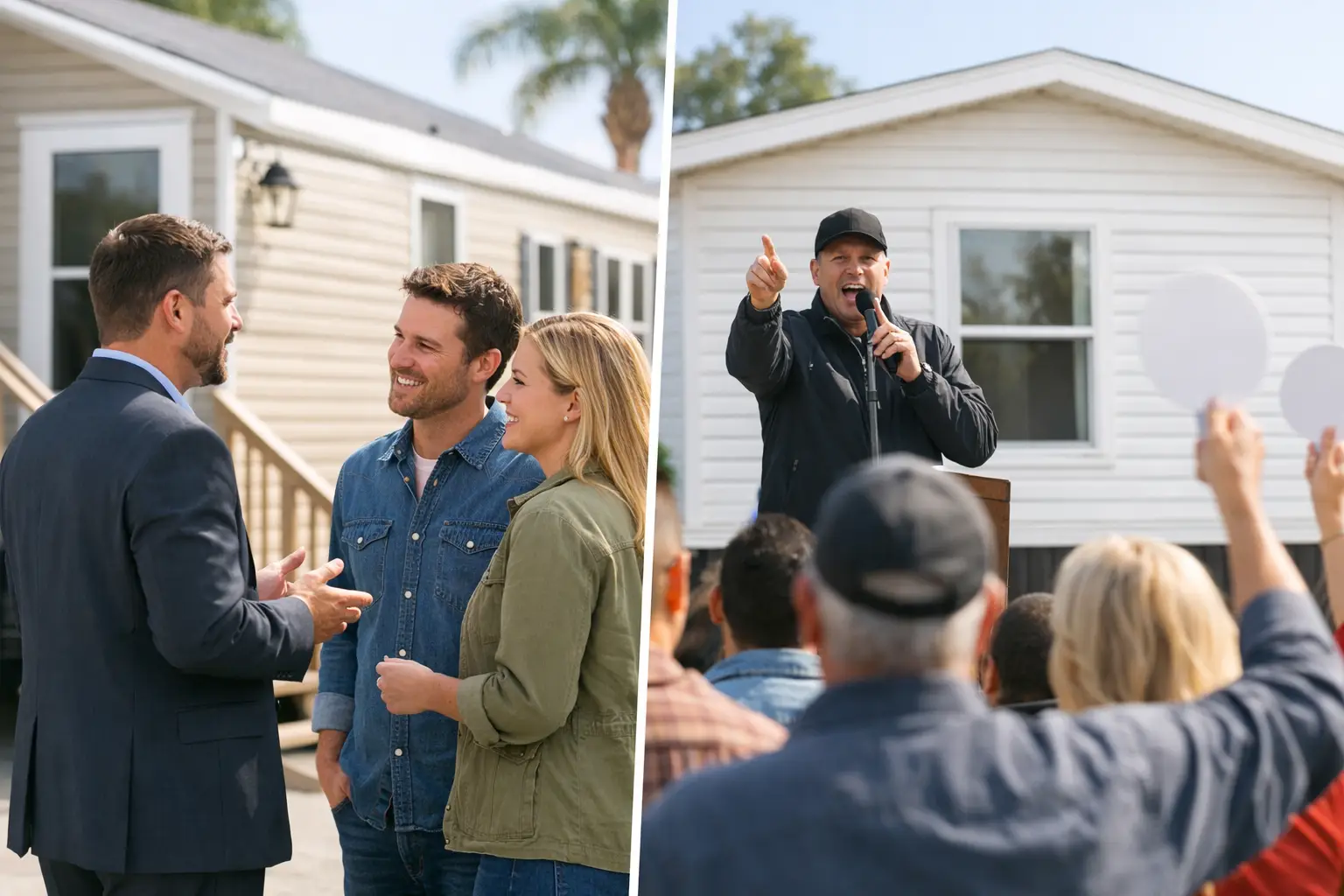
A dealer versus auction decision can feel simple when you need to sell a mobile home fast: take a cash offer or let bidders compete. But manufactured homes do not sell like ordinary houses. Park approval, title status, lot rent, condition, and whether the home can stay in place can all affect what buyers will pay and how quickly the sale can close.
If you are dealing with a move, an inherited home, late lot rent, repairs, or a vacant property, the best option is usually the one that gives you a clear outcome without creating another problem to solve. Here is how a direct sale to a mobile home dealer compares with an auction in Central North Carolina.
Dealer Versus Auction: The Biggest Difference
Selling to a dealer is a direct transaction. You provide the details of your home, the dealer evaluates the condition, location, title, and park situation, and you receive an offer. If you accept, the parties work through the paperwork and closing steps. With the right buyer, there is no public listing, no open house, and no waiting to see whether someone will follow through.
An auction puts the home in front of bidders for a set period or event date. The highest qualifying bid may win, subject to the auction terms, reserve price, and any required approvals. This can create urgency, but it also means you do not fully control the final price or know in advance whether the sale will produce enough money to meet your needs.
Neither route is automatically right for every seller. The deciding factor is usually whether you need certainty or are willing to trade certainty for the possibility of more competitive bidding.
When Selling to a Dealer Makes More Sense
A direct dealer sale is often the practical choice when speed and simplicity matter more than holding out for the highest possible price. This is especially true for older single-wides, homes needing repairs, and homes in parks where buyer rules limit the pool of eligible purchasers.
With a specialized mobile home buyer, you may be able to sell as-is. That means you do not have to repaint, replace flooring, remove damaged furniture, clean out every room, or pay for repairs before asking for an offer. A direct buyer can also evaluate complications that can stop a retail sale, including missing title paperwork, liens, park communication, transport questions, or a home that is no longer in move-ready condition.
For many owners, the main benefit is knowing the number and the process upfront. You can review the offer, ask questions, and decide without pressure. If the offer works for your situation, you move toward a defined closing rather than hoping the right bidder appears.
A dealer sale can be a strong fit when you are facing one of these situations:
- You need to relocate quickly or have already moved out.
- You inherited a manufactured home and live outside the area.
- Repairs, storm damage, tenant damage, or age make a traditional sale difficult.
- Lot rent is adding up and you want to stop carrying the property.
- You are behind on payments, managing a divorce, or trying to avoid repossession or eviction-related pressure.
- You need help understanding titles, park rules, and the transfer process.
The trade-off is straightforward: a direct cash buyer needs room to handle repairs, resale risk, marketing, carrying costs, and logistics. That can mean the offer is lower than the price you might get after repairs and a longer marketing period. For a seller who has time, money, and a clean, desirable home, that difference may matter. For a seller who needs a dependable exit now, it may be worth it.
What a fair direct offer should account for
A fair offer is not based on a generic online estimate. It should reflect the home’s year, size, make, condition, location, title status, whether it is on private land or in a community, current lot rent, and whether the home can remain in the park. A home in good condition with an approved location and current paperwork has a different value than the same model that must be moved or has significant repair needs.
Ask the buyer what they need from you, who handles the paperwork, whether there are commissions or hidden charges, and when you will be paid. Clear answers matter more than a vague high number.
When an Auction May Be Worth Considering
An auction can make sense when the home has features that are likely to attract multiple ready buyers. For example, a well-kept newer manufactured home in a desirable community, with a clean title and manageable lot rent, may generate interest from buyers who are prepared to compete.
Auctions can also work when a seller wants a firm sale date and is comfortable accepting the market’s response. The event structure can create urgency that ordinary listings do not always produce. If several qualified bidders want the same home, the result may exceed a private offer.
That said, bidding activity is not the same as a guaranteed closing. Before choosing an auction, read the agreement carefully. Find out whether there is a reserve price, what happens if it is not met, who pays advertising costs, whether the seller pays an auction commission, and whether buyer premiums affect the bid amount buyers are willing to make.
For mobile homes, you also need to consider buyer qualification. A bidder may be interested but unable to meet community approval rules, prove income, secure financing, or satisfy the park’s application requirements. If the home must be moved, a buyer may back away after learning the real cost of permits, site preparation, utility work, skirting, transport, and setup.
An auction is most useful when the home is easy to understand and easy to transfer. The more complicated the property, the more likely an auction will attract low bids, unqualified bidders, or buyers looking for a bargain.
Compare the Real Costs, Not Just the Selling Price
The highest advertised price is not always the best deal. Look at what you will actually receive and how long you will keep paying costs while the home waits to sell.
With an auction, expenses may include auctioneer commissions, advertising, event fees, title preparation, cleanout, repairs requested before marketing, and continuing lot rent. If the home does not sell, you may have spent money without solving the problem.
With a dealer, the offer may be lower on paper, but the transaction can reduce other costs. There may be no agent commission, no listing fee, no repair budget, and no need to keep the home market-ready for weeks or months. If the buyer handles the difficult steps, that has real value when time is tight.
Also consider your own time. Selling a mobile home yourself can mean answering messages, screening buyers, arranging visits, communicating with park management, gathering title documents, and following up with people who disappear after saying they are interested. An auction company manages part of that work, but it still needs a marketable home and a willing buyer pool. A direct dealer sale is designed to remove much of the back-and-forth.
Questions to Ask Before You Choose
Whether you speak with a dealer or an auction company, ask direct questions. What is the expected timeline? What fees come out of the sale? Is the price guaranteed or dependent on bidding? Who verifies title and park requirements? What happens if the buyer is not approved? Who is responsible for repairs, cleanout, moving, or lot rent before closing?
You should also be honest about the home’s condition. Water damage, soft floors, roof leaks, missing appliances, tax issues, liens, and title problems do not automatically prevent a sale. They do affect the path to a sale. Raising them early helps you get a realistic answer instead of a deal that falls apart later.
Choose the Option That Lets You Move Forward
If your home is clean, desirable, and likely to draw several qualified buyers, an auction may be worth exploring. If you need a known cash offer, want to sell as-is, or have a home with paperwork, condition, park, or timing complications, a direct dealer sale is often the steadier route.
Triad Mobile Homes LLC works with Central North Carolina owners who need that kind of practical support. Share the basic details of your mobile home, review a no-obligation offer, and decide whether it gives you the clean break you need. The right sale is the one that lets you stop worrying about the home and start handling what comes next.