

You can agree on a price, set a move-out date, and even have a buyer ready to go – then the whole deal stalls because the title work is wrong. In North Carolina, mobile home titles are handled through the NCDMV, and small details (names, liens, notarization, taxes, park rules) are what make transfers either quick or painfully slow.
This guide walks you through how to transfer a mobile home title in North Carolina the practical way, including the situations that trip up sellers most often.
First, confirm what you actually own
Before anyone signs anything, get clear on whether the home is titled like a vehicle, or treated like real estate. That one detail changes the paperwork.
If the home is still titled through the NCDMV, you will transfer ownership by assigning the title to the buyer and completing the DMV-required forms.
If the home has been legally converted to real property (typically when it is permanently affixed to land you own and the title has been surrendered), then you are not transferring a “mobile home title” anymore. You are transferring real estate through a deed, and the sale is handled like a house closing.
Not sure which one you have? Many owners are. A quick clue is whether you have a physical title (or can request a duplicate) and whether you pay property taxes only as real estate. When in doubt, treat it like a titled home until you confirm otherwise – it is easier to adjust than to discover at the last minute that you needed a DMV title all along.
What you need to transfer a titled mobile home in NC
A clean title transfer usually comes down to four things: the correct title, correct names, correct lien status, and correct taxes.
You typically need the original NC title (or a duplicate if it is lost), the buyer’s legal name and address, your legal name exactly as printed on the title, and signatures that are properly notarized.
If there is a lien listed on the title, you also need a lien release from the lender. No release, no transfer. It is that simple.
And if the home is in a county that requires tax verification for mobile home transfers, you will need proof that property taxes are current. This step surprises people, especially heirs selling an older home that has been sitting vacant.
How to transfer a mobile home title in North Carolina (the actual steps)
Step 1: Check the title for problems before you meet the buyer
Look at the front of the title and confirm three things:
First, the owner name(s). If there are two names, pay attention to whether it says “and” or “or.” If it is “and,” both owners generally need to sign. If one owner has passed away or cannot be located, the transfer can get complicated fast.
Second, confirm the VIN/serial number matches the home. On manufactured homes, you may have a data plate and a HUD label, and the paperwork might show different identifiers. Make sure you are using the identifier shown on the NC title.
Third, check for liens. If there is a lienholder listed, start the payoff and release process early. Waiting until closing day is how deals die.
Step 2: Resolve liens and ownership issues up front
If you owe money on the home, ask your lender for a payoff statement and what they require to issue a lien release. Some lenders send an electronic release, some mail a paper release, and some will only release after they receive payoff funds.
If the title is in a deceased owner’s name, you may need estate paperwork before the DMV will recognize the signer. If you are an out-of-state heir trying to handle this remotely, plan extra time. This is a common “it depends” scenario, and it is where many private sales stall.
If you cannot find the title, request a duplicate. Do not sign a bill of sale and hope the buyer “figures it out.” Buyers, parks, and lenders typically will not accept that.
Step 3: Fill out the assignment on the title carefully
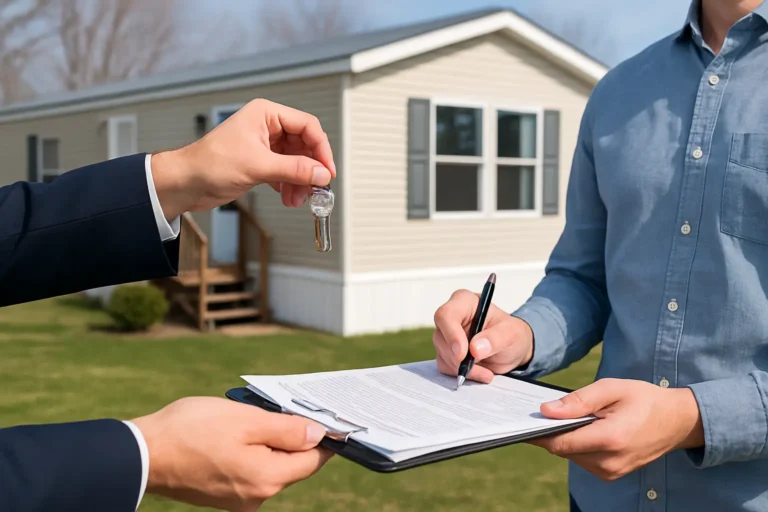
On the back of the NC title, there is an assignment section where the seller assigns ownership to the buyer. Use the buyer’s full legal name and address. If the buyer is putting it in two names, both names should be written exactly as they want them on the new title.
Be consistent with ink color and legibility. Cross-outs and white-out can cause a rejection.
If the sale includes multiple sections (for example, a doublewide with two titles), each title must be assigned properly. This is another common surprise: some doublewides are titled as two separate units, and you cannot transfer “half” and call it good.
Step 4: Notarize the seller signature(s) if required
North Carolina title transfers often require notarization of the seller’s signature. Many sellers miss this and find out only when the buyer goes to register.
Plan to meet at a place where a notary is available, or bring a mobile notary. If there are two sellers who must sign, both should be present with valid ID.
Step 5: Complete the DMV paperwork the buyer will need
In addition to the title itself, there are DMV forms that may be required depending on the situation, including an application for a new title and, in some cases, documentation related to taxes.
Here is the practical point: ask the buyer how they plan to register and where they plan to place the home. A buyer moving the home to a new county or putting it into a park may need extra documents. It is better to align expectations now than to get a call a week later saying the DMV would not process it.
Step 6: Handle taxes and county requirements
Mobile homes can trigger property tax verification requirements. Counties may want confirmation that taxes are paid before the DMV will issue a new title.
If the home is in a park, you may also have lot rent due, and the park may require the account to be current before they approve a new tenant or owner. That is not a DMV rule, but it can still stop the sale because the buyer cannot take possession without park approval.
Step 7: Exchange payment and documents in a way that protects you
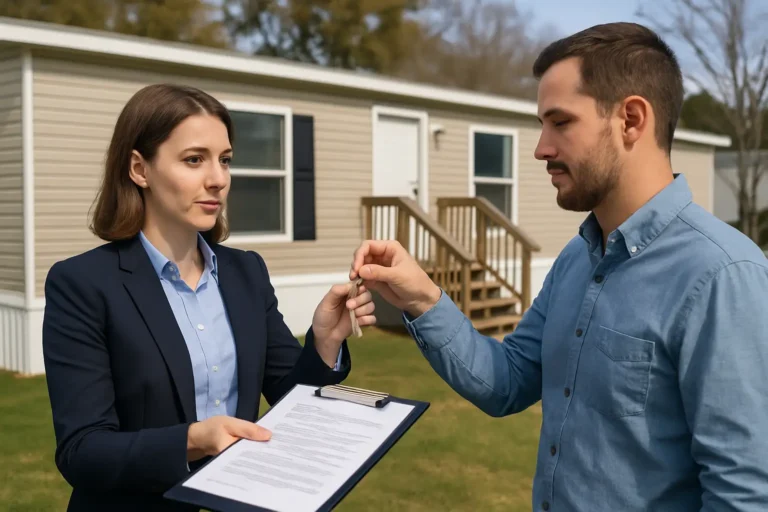
Sellers usually want cash (or certified funds), and buyers want the signed title and keys.
A safe approach is to exchange payment at the same time you hand over the signed, notarized title and any lien release documents. If the buyer is paying through a lender, timing can get tricky. Make sure you understand when funds are released and what the lender requires.
If the home is staying in a park, do not forget the park office. Many communities require a signed buyer application and approval before the sale is recognized. If the buyer is not approved, you may still be responsible for lot rent even if you “sold” it privately.
Common problems that delay NC mobile home title transfers
The name on the title does not match the seller
This happens after marriages, divorces, or when a family member “took over payments” but never changed the title. The DMV cares about what is printed on the title. If the title says one thing and your ID says another, expect to provide supporting documents.
A lien was paid off years ago but never released
Even if you paid the loan, the lien can still show on the title until a release is issued. Track down the lender or successor company and request the release. This can take time, so do it early.
The home is a doublewide with two titles
If there are two titles, you need both. If one is missing, you may have to request a duplicate and possibly clear up lien or owner issues on that specific unit.
The home is on land and someone says “there is no title anymore”
Sometimes a seller believes the title was surrendered, but it was not. Other times, it really was surrendered and the home is real property. Either way, you want to confirm before you promise a closing date.
If you want it done fast, build your timeline around the paperwork
If the title is clean and in your name, a transfer can be straightforward. If you have a missing title, an estate situation, a lien that needs a release, or a park that requires approval, the timeline stretches.
That is why many sellers choose a buyer who is used to manufactured housing and can help drive the process instead of leaving you to coordinate the DMV, the county, the lender, and the park office on your own.
If you are in the Triad area and you want a simple, no-pressure path, Triad Mobile Homes LLC can make a fair cash offer and help handle the paperwork so you are not chasing signatures and forms for weeks – start here: https://triadmobilehomes.com.
What to do if you cannot transfer the title right now
Sometimes you are ready to sell, but the title is not. That does not mean you are stuck, but it does mean you need to choose your next move carefully.
If the title is lost, request a duplicate immediately and avoid taking a deposit from a buyer who expects to move in next weekend.
If there is an estate issue, get clarity on who has legal authority to sign. Families often agree informally, but the DMV will require the proper documentation.
If the park is involved, talk to the manager early about approval requirements and any back lot rent. A park can effectively block the transaction if the buyer is not approved or the account is behind.
The closing thought that saves the most stress is simple: treat the title transfer like the sale itself, not an afterthought. When the paperwork is handled first, the rest of the deal feels easy – and you get to move on without loose ends hanging around your name.