

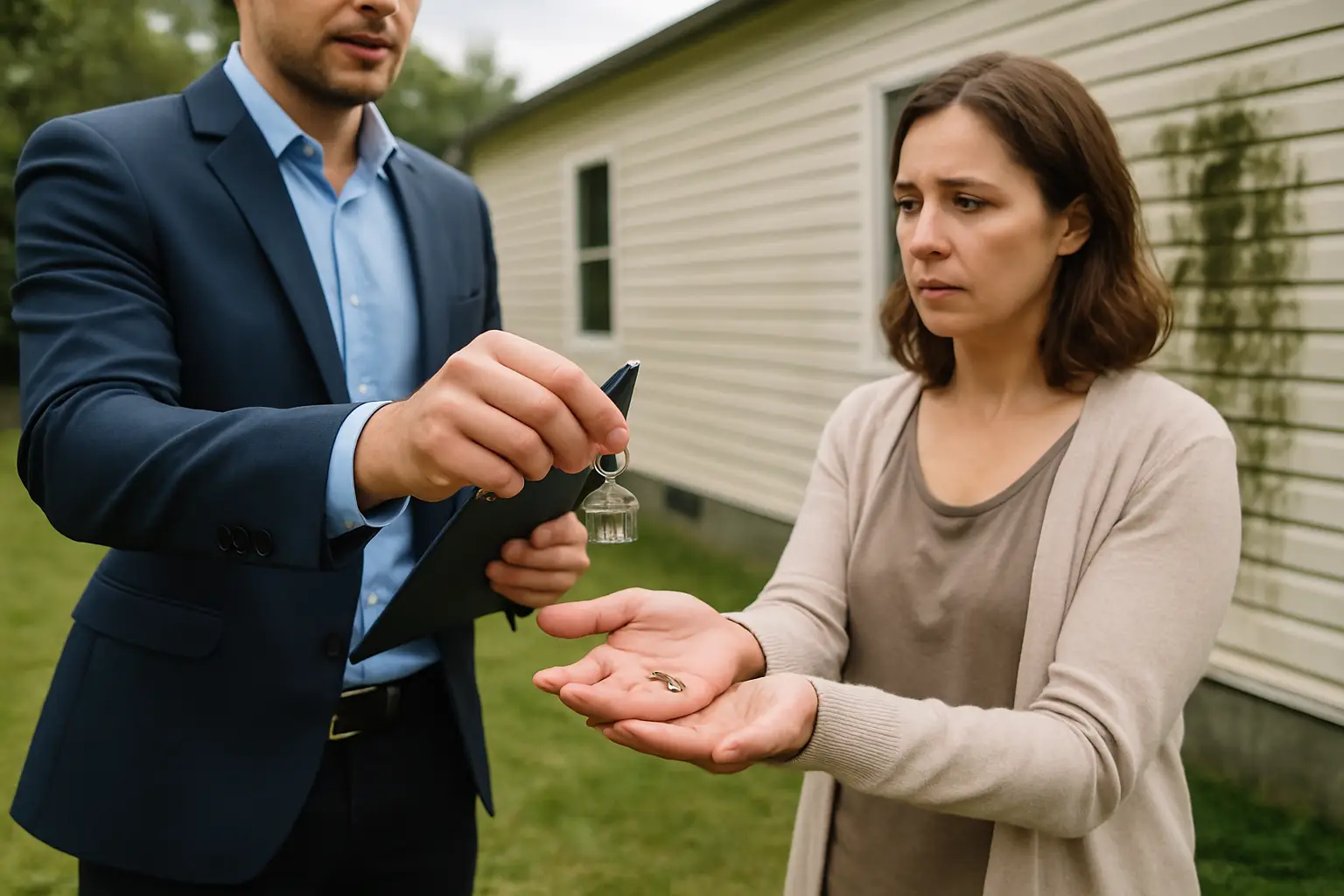
If you have mold in your mobile home, you already know what happens next: you stop inviting people over, you stop wanting to deal with it, and you start worrying about what it means for your health and your wallet. Then the big question hits – can you still sell it?
Yes. But selling a mobile home with mold problems is not the same as selling a clean, move-in-ready home. The best path depends on where the home sits (park vs. private land), how bad the mold is, and how quickly you need to be done.
Can you sell a mobile home with mold problems?
You can sell, but you need to be realistic about three things: buyer type, price, and timeline.
Most retail buyers want a home they can finance and move into. Mold scares them off because it signals hidden damage and a bigger repair bill than they can estimate. Even if they like the home, they may not qualify for financing once mold is mentioned or discovered.
Investors and experienced mobile home buyers are different. They expect condition issues. They price them in, plan the work, and move forward faster. That trade-off is usually simple: the more speed and certainty you want, the more you should expect the price to reflect repairs and risk.
What “mold problems” usually mean in a manufactured home
Mold is rarely just a surface issue. In mobile and manufactured homes, it often points to moisture coming from somewhere specific, and that “somewhere” affects value.
If the source is a roof leak, water may have run behind paneling or down an interior wall cavity. If it is plumbing, the subfloor around bathrooms and kitchens is a common failure point. If it is condensation and poor ventilation, you may see widespread mildew, soft spots around windows, and musty HVAC ducting.
The tough part is that two homes can look similar on a quick walkthrough, but one has cosmetic mold and the other has structural damage. Buyers know that, which is why mold tends to slow down traditional sales.
Your two basic options: fix it first or sell as-is
There are only two true routes. Everything else is a variation of one of them.
Option 1: Fix the mold before you sell
This is the “retail” path. It can get you a higher price, but only if the repair is done correctly and you have the time and money to get there.
For minor issues – like a small area from a past leak that is fully repaired – cleaning, replacing damaged materials, and documenting the fix may be enough to make buyers comfortable.
For bigger problems, mold remediation can snowball. Once walls open up, you can find rot, damaged insulation, bad subflooring, or a roof that needs more than patching. If the home is older, you may also run into electrical, HVAC, or plumbing issues while contractors are already on site.
If you are already behind on lot rent, facing a deadline, or trying to sell from out of state, this route often becomes stressful fast.
Option 2: Sell the home as-is with the mold
This is the “certainty” path. You are accepting that the buyer will take on the cleanup, demolition, and rebuild decisions.
As-is sales work best when speed matters, when the home is vacant or becoming vacant, or when the mold is part of a larger list of condition issues. It also makes sense when you do not want workers in and out of the home, or you are worried about spending money and not getting it back.
The key is setting expectations. If you try to market as retail and then disclose mold later, you waste time and trigger distrust. If you market as a value deal from the start, the right buyers self-select.
Disclosure: what you can and can’t “skip”
Disclosure rules can vary, and your situation depends on whether you are selling just the home, the home with land, or transferring in a park. But one principle is consistent: hiding known mold problems is a bad bet.
If you know there is active mold, water intrusion, soft flooring, or a leak that caused damage, treat that as material information. Problems tend to show up during buyer walkthroughs, inspections (when they happen), or even after the sale when a new owner starts tearing out flooring and wall panels. That is when disputes happen.
A straightforward approach protects you. Explain what you know, what you do not know, and what caused it if you have a clear history (roof leak, plumbing leak, storm damage, long vacancy, busted pipe). You do not have to diagnose it like a contractor. You just need to avoid misrepresenting it.
If you are selling in a mobile home park, also expect park management to have rules about buyer approval and the condition standard for homes staying in the community. Mold can become part of that conversation quickly, so it helps to check with the office early.
Pricing reality: how mold affects what you can get
Mold affects price in two ways: repair cost and risk.
Repair cost is the obvious one. Buyers estimate demolition, remediation, material replacement, and the labor to put everything back together.
Risk is what most sellers underestimate. Mold can mean hidden damage, and hidden damage means a buyer could end up spending far more than expected. The more uncertainty there is (unknown source, long-term leak, visible growth in multiple rooms, strong odor, soft subfloor), the more buyers protect themselves with a lower offer.
If you are comparing offers, do not compare only the top number. Compare the terms that create certainty: who pays closing costs, whether the buyer requires inspections, whether they require you to clean out the home, and how fast they can close. A higher “maybe” offer that drags out for weeks can cost you more than a slightly lower cash offer that actually closes.
Park vs. private land: why your location changes the sale
A mold-affected mobile home on private land is often easier to sell because the buyer has more options. They can renovate in place, replace the home, or even remove it if needed.
In a park, the park rules matter. Some parks will not allow a severely distressed home to be sold to a new tenant without repairs. Others will allow the sale but require a buyer application, background check, and proof the home will meet community standards. If your home is in a park and mold is visible, it is smart to clarify whether the home is allowed to stay, and what the park requires at transfer.
This is also where many Facebook Marketplace deals fall apart. The seller finds a buyer, then the park says no, or the buyer cannot get approved, or the buyer realizes the cost of repairs plus lot rent during the rehab period is too much.
If you sell as-is, what buyers will ask for
Even as-is buyers still need basics to move forward.
They will typically want to know the year, size, and whether it is single-wide or double-wide. They will ask where it sits and whether the title is in your name. They will ask about back lot rent, taxes, and whether utilities are on. And if mold is part of the story, they will ask where it is, what caused it, and whether there are soft spots in floors or ceiling stains.
If you can answer those questions up front, you save days of back-and-forth.
Simple steps to sell a mobile home with mold problems faster
You do not need a perfect plan. You need a clean decision and a clean process.
First, decide whether you are fixing it or selling it as-is. If you are not 100% committed to repairs, do not start tearing things apart. A half-demolished home usually sells for less and scares off more buyers.
Next, gather what you can: photos, any past repair receipts, your title status, and park contact info if applicable. If the title is missing or has a name issue, do not panic – it is common in manufactured housing – but it does affect timeline.
Then set expectations in your marketing. If you are selling it yourself, say clearly that there are mold problems and the home is being sold as-is. You will get fewer calls, but you will get more serious calls.
Finally, protect your time. If you need speed, focus on buyers who can actually perform: cash buyers, experienced mobile home investors, or local specialists who understand titles, park approvals, and condition issues.
The low-stress route in the Triad
If you are in Greensboro, Winston-Salem, High Point, or another Central North Carolina area and you want to sell without repairs, showings, or listing headaches, a direct buyer can be the cleanest path. Triad Mobile Homes LLC works with owners in exactly these situations – including mold, water damage, and other heavy-condition problems – and provides a straightforward process with a fast cash offer and help with the mobile-home logistics that trip up most sales. If you want to see what an as-is offer looks like, you can start here: https://triadmobilehomes.com.
A few “it depends” situations that change your best move
If the home has insurance coverage for a recent event, you may be able to repair enough to improve value, but only if you can manage the timeline and contractors.
If the home is already in rough shape beyond the mold – older roof, bad floors, outdated wiring, heavy pet damage – chasing remediation alone may not change the buyer pool much. In those cases, selling as-is can be the more rational decision.
If you are facing park pressure or eviction risk, speed matters more than squeezing out a few extra dollars. Lot rent adds up quickly, and a “higher price later” plan often loses to monthly carrying costs.
And if you are an out-of-state owner or an heir, the best plan is usually the one that minimizes trips, coordination, and uncertainty, even if it is not the absolute top price on paper.
Mold is stressful because it feels like a dead end. It is not. The win is picking the path that fits your timeline and your bandwidth – then letting the transaction be simple from there so you can move on without this house hanging over your head.