

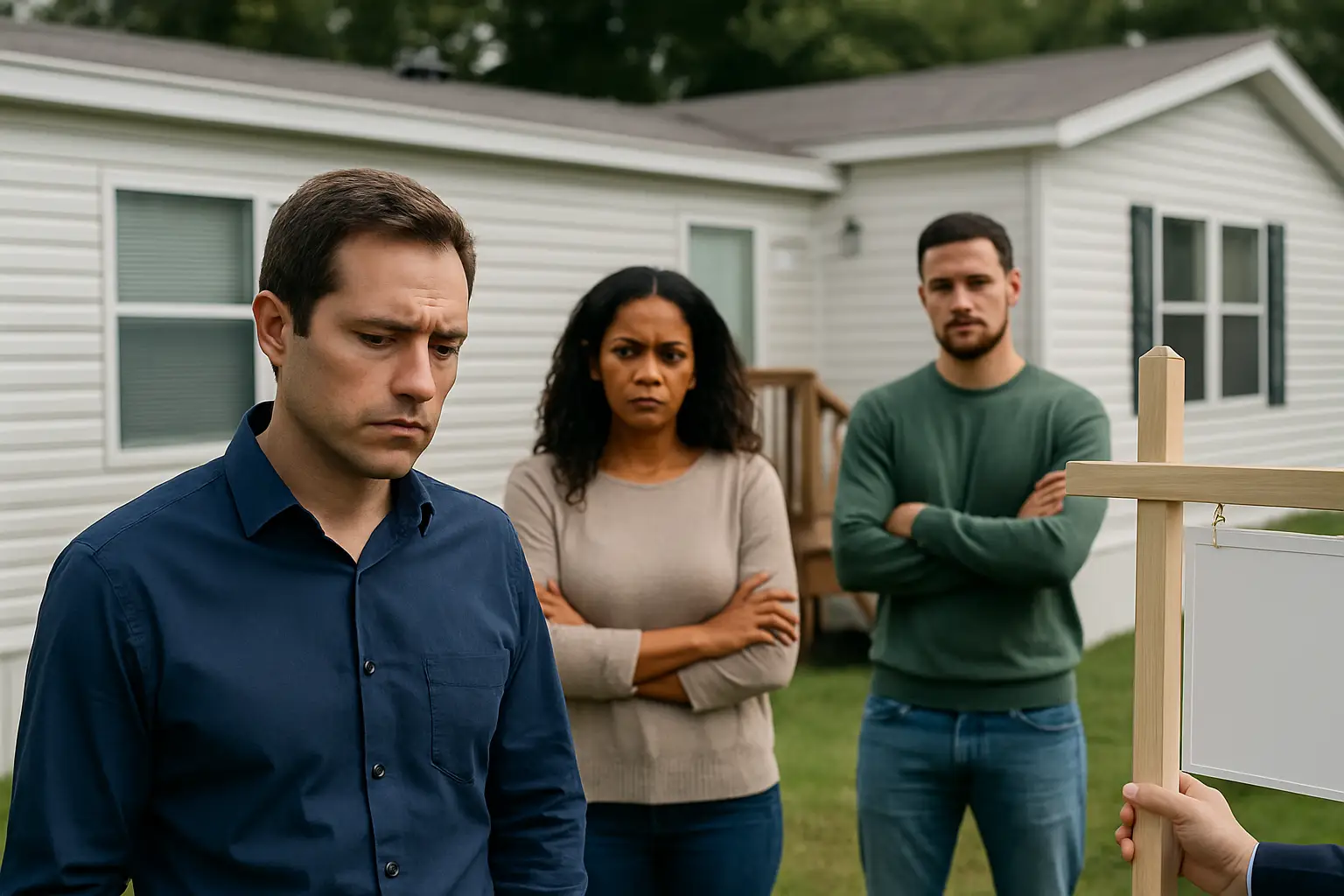
Divorce has a way of turning ordinary tasks into high-stakes problems. Selling a mobile home is one of them – especially when one person has moved out, lot rent is due, and nobody wants to pour money into repairs just to “get it listed.” In North Carolina, the fastest path is usually the one that avoids extra steps: clarify who can sign, confirm where the home sits (park vs. private land), and pick a sale route that matches your timeline.
This is a practical, execution-first guide for Central NC owners who need certainty, not a drawn-out process.
What changes when you sell a mobile home during divorce
When you sell a mobile home during divorce, the home is not just property – it is part of a legal and financial separation. That changes three things immediately: who has authority to sell, how the proceeds get split, and how quickly you can move.
If both spouses are on the title, both typically need to sign to transfer ownership. If one spouse refuses to cooperate, a “simple sale” can become a court-timed sale. And if the home is in a park, you also have a third party involved: the park management, with its own rules about buyers, applications, and lot lease transfers.
The big trade-off is speed vs. control. The more you try to maximize price through a traditional retail-style process (cleaning, repairs, showings, buyer financing), the more coordination you need between two people who may not be communicating well. If you need a clean break, reducing moving parts is often worth more than squeezing out an extra few thousand dollars.
Step 1: Confirm what you actually own (home only vs. home and land)
In North Carolina, a manufactured or mobile home can be sold as personal property (like a vehicle) or as real property (like a house on land). That distinction impacts paperwork, timelines, and closing.
If the home is in a mobile home park, it is almost always personal property. You will typically transfer title, and the buyer will either take over the lot lease (if the park approves them) or move the home.
If the home sits on private land, it depends. Some manufactured homes are still titled, while others have been converted to real property and recorded with the land. If you are not sure, do not guess – your divorce agreement and the closing paperwork need the correct classification.
A quick reality check: if you pay property taxes on the home as part of the real estate and there is a deed situation, that is a different sale than a basic title transfer.
Step 2: Look at the title and the loan, not just the divorce paperwork
Divorce decrees decide who gets what between spouses, but they do not automatically change the title, the lender’s rights, or the park’s lease.
Start with two items:
First, the title. Who is listed as owner? Are both names on it, or just one? Is there a lienholder listed (meaning there is a loan attached)? If there is a lien, the lien typically must be paid off at closing for a clean transfer.
Second, the loan and payment status. If payments are behind, repossession risk can accelerate quickly, and divorce does not pause that clock. Selling sooner can prevent fees, credit damage, and stress.
If only one spouse is on the title, you may still have a marital property claim in the divorce, but signing authority can be clearer. If both are on the title and one spouse has disappeared, is refusing, or is using the sale as leverage, you may need your attorney to push for a court-ordered process. That is not a “sell it this week” situation unless both parties get aligned.
Step 3: Decide whether you need a fast sale or a maximum-price sale
Most divorcing owners do not need a perfect sale. They need a workable one. Here are the three common routes, with the real-world trade-offs.
Selling it yourself (FSBO) can get a higher price if the home is in good condition, the title is clean, the park will approve buyers quickly, and you have time to field calls and show it. During divorce, the friction is that every buyer question becomes a joint decision. Also, many buyers need financing, and manufactured-home financing can be slower and pickier than people expect.
Listing with an agent can help with exposure, but mobile homes – especially older units, homes in parks, or homes needing work – do not always fit the standard MLS process. Showings, repair requests, and inspection negotiations are hard enough with one decision-maker. With two, they can stall the sale.
A direct cash sale is usually the shortest path when time is the priority or the home needs repairs. You trade some upside for certainty: no showings, no commissions, and typically no repair list. For a divorce timeline, that certainty can be the difference between closing before the next court date and dragging it out for months.
Park rules can make or break the timeline
If your home is in a park in Greensboro, Winston-Salem, High Point, or nearby areas, assume the park’s rules will matter as much as the buyer’s money.
Some parks require the buyer to be approved before the sale is finalized. Some require an age restriction, background check, or income verification. Some will not allow older homes above a certain age, or they may require repairs before approving a new tenant.
That means you need to ask early: will the buyer be allowed to keep the home on the lot? If the answer is uncertain, a sale can collapse late in the process.
If the park will not approve a buyer to stay, the buyer may need to move the home. Moving a mobile home is possible, but it adds coordination, permits, and cost. During divorce, added logistics usually equals added conflict.
Common divorce-specific problems (and what actually fixes them)
One spouse moved out and the home is sitting vacant
A vacant home in a park can become expensive fast. Lot rent does not stop, and parks may issue notices if the home looks abandoned.
If vacancy is building pressure, prioritize speed and clarity. Agree in writing on who has access, who will remove personal items, and how utilities will be handled until closing. If you cannot agree, involve counsel quickly because delays tend to create more financial damage.
The home needs repairs and neither of you wants to pay
This is extremely common. One spouse says, “Let’s fix it up,” the other says, “I’m not putting a dime into that place.”
The practical fix is to choose a sale route that matches your willingness to invest. If nobody wants to repair, do not set a plan that requires repairs. A cash offer route can make sense here because you are selling as-is and moving on.
Title issues, missing title, or a lien you forgot about
Manufactured housing paperwork is not forgiving. Missing titles, old liens, or incorrect owner names can slow everything.
The best move is to uncover these early, before you commit to a closing date. If the home is paid off but still shows a lienholder, you will likely need a lien release. If the title is lost, you will need a replacement. These steps are doable, but they take time, and divorce timelines do not wait.
Disagreements on price and proceeds
This is where many sales die. One spouse thinks the home is worth retail top dollar because they remember what they paid years ago. The other spouse is staring at the current condition, current park rent, and the fact that buyers are asking for concessions.
If you are stuck, get real data fast: recent comparable sales in the same park, realistic condition adjustments, and the cost of delays (lot rent, payments, utilities). Often, seeing the monthly carrying cost changes the conversation.
How the sale proceeds usually get handled
In a smooth divorce-related sale, both spouses agree in writing on the split, both sign what is required, the lien (if any) gets paid off, and the remaining funds are distributed according to the agreement.
If your divorce is not finalized, you can still sell, but you need to be careful about where the money goes and how it is documented. Many couples choose to have proceeds handled through their attorneys or held according to a written agreement until the court finalizes the settlement.
This is not legal advice, but the practical point is simple: do not “wing it” with cash proceeds during an active divorce. Clean documentation reduces future fights.
A fast, low-friction option in the Triad
If you are in Central North Carolina and your priority is speed, an all-cash buyer that handles manufactured-home details can remove a lot of the usual friction: marketing, showings, buyer financing delays, and repair negotiations.
Triad Mobile Homes LLC works with sellers in the Triad region and surrounding counties, including divorce situations, with a straightforward intake process and offers typically within 24 hours. If you want to explore a quick sale without committing to anything, you can start here: https://triadmobilehomes.com.
How to move forward without making the divorce harder
Pick one goal that both of you can agree on. For many couples, it is not “get the maximum price,” it is “sell it cleanly and be done.” Once that goal is clear, decisions get easier: sale route, timeline, responsibility for cleanout, and who communicates with the park.
If communication is strained, reduce decisions. Choose a process with fewer steps, fewer buyer variables, and fewer chances to renegotiate under stress. And if you are unsure about title status, lien payoff, or park approval, treat those as first-week tasks, not last-minute surprises.
You do not need a perfect ending to sell a mobile home during divorce. You need a clear plan, a realistic timeline, and a closing that lets both of you move forward.