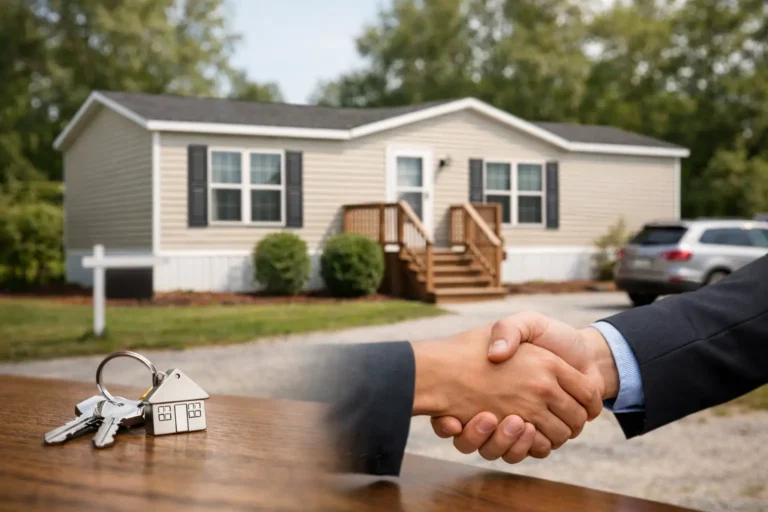


The voicemail came in on a Tuesday afternoon. An out-of-state daughter had inherited her mom’s older single-wide in the Triad. She hadn’t been to North Carolina in years, and she was getting notices from the mobile home park about lot rent and a deadline to clean up the yard.
She wasn’t trying to “get top dollar.” She was trying to stop the clock.
This is a real-world style breakdown of a case study inherited mobile home remote seller situation – what actually slowed things down, what mattered, and what a fast, low-drama sale looked like when the owner couldn’t be here in person.
The situation: inherited home, remote seller, park pressure
The home was an older manufactured home in a park near the Greensboro area. The heir lived several states away and had a full-time job. She had two big problems immediately.
First, she didn’t have keys, didn’t have the title in her hands, and didn’t know what paperwork North Carolina would require to sell. Second, the park manager wasn’t interested in the inheritance story. The lot rent was due, and the park wanted the property either brought into compliance or removed.
That combination is common. When a mobile home is inherited, the “real estate” instincts people have from selling a house don’t always apply. In a park, you are dealing with two tracks at the same time: the home sale and the park’s rules, approvals, and deadlines.
What the seller tried first (and why it didn’t work)
Like a lot of heirs, she started with the simplest plan: “I’ll just list it.”
She looked at Facebook Marketplace, saw a few similar homes priced higher than she expected, and thought she could do the same. But the practical issues hit fast.
A remote seller can’t easily handle buyer calls, showings, measurements, park office visits, or the back-and-forth that comes with “Is the AC working?” and “Can you fix the soft spot by the door?” Even if you pay someone locally to open the door, you’re still managing strangers walking through a property you haven’t seen.
Then the bigger issue surfaced: the park required an application for the buyer and had rules about repairs before approving a new resident. The park also wanted the lot rent brought current before they would cooperate with the transfer.
At that point, she wasn’t “marketing a home.” She was coordinating a mini project from out of state, under a deadline, with uncertain costs.
The real obstacles in a remote inherited mobile home sale
The home itself was not the only problem. The friction came from four pressure points that show up again and again in Central North Carolina manufactured housing.
Title and estate paperwork
Inherited mobile homes often come with missing titles, names that don’t match, or paperwork still in the deceased owner’s name. Sometimes the title is in a drawer. Sometimes it’s gone. Sometimes there was a lien years ago that everyone forgot about.
In this case, the heir had a death certificate and estate paperwork, but no physical title. That doesn’t mean the home can’t be sold. It means you need to slow down long enough to get the chain of ownership clean so the buyer can actually take it.
Park requirements (the hidden gatekeeper)
In a park, the land isn’t transferring – the right to keep the home on that lot is. Most parks have rules about who can move in, what condition the home must be in, and how the transfer is handled.
This is where remote sellers get trapped. Even if you find a buyer online, the park can still reject that buyer or require upgrades that kill the deal.
Condition and access
The heir didn’t know how bad the home was. She knew it was older and that her mom had struggled with maintenance near the end.
When you’re remote, every unknown turns into risk. If you list it “as-is” without knowing what “as-is” really means, you either scare off real buyers or you attract buyers who renegotiate hard once they get inside.
Time and carrying costs
Lot rent doesn’t pause because someone passed away. Neither do late fees, park notices, or the stress that comes with an empty unit.
This is the trade-off remote heirs have to make. You can chase a higher number, but each extra week costs money and attention. Sometimes the “highest price” is not the best outcome.
The turning point: choosing certainty over chasing a retail buyer
Once she saw the park’s deadlines and realized she’d need someone local to manage showings and cleanup, she switched goals.
Her new goal was simple: sell fast, sell as-is, and stop paying.
That’s when she reached out to a local mobile home buyer. We’ll keep the process focused on what matters, because the lesson here is not “call us.” The lesson is what a clean remote sale needs to include.
The process that made the sale possible from out of state
Here’s what worked – not in theory, but in the day-to-day details.
A quick intake that didn’t require perfect info
Remote heirs rarely have every answer. Year built, serial number, whether the roof was replaced, whether the furnace works – they often don’t know.
The first step was gathering what she did know: park name, approximate address, her relationship to the owner, and whether there was any known lien. That was enough to start.
Local verification of condition
Instead of forcing the heir to travel, the buyer arranged a local walkthrough to confirm the home’s condition and take photos. This matters because it sets expectations early and prevents the “surprise discount” right before closing.
The walkthrough found exactly what you’d expect in an older inherited home: soft flooring in a couple areas, roof wear, old appliances, and leftover belongings. Not a flip-ready situation. More like a cleanout-and-rehab job.
Park communication handled up front
One of the most important moves was calling the park office early. Not after an offer. Not after a buyer was lined up.
The park confirmed the lot rent balance, their transfer requirements, and whether the home could stay on the lot with a new owner. That removed a major uncertainty.
If the park had required big repairs before approving a transfer, the offer and strategy would have changed. Sometimes the right move is selling it for removal. Sometimes it’s negotiating with the park. It depends on the park’s policies and the home’s age and condition.
Paperwork plan for an inherited title
Because the title wasn’t in hand, the sale couldn’t rely on “we’ll figure it out later.” A realistic timeline and a clear checklist mattered.
The heir provided identification and estate documents. The buyer coordinated what was needed for a proper transfer and set a closing plan that accounted for the title process.
This is the part most remote sellers underestimate: the fastest offer in the world doesn’t help if the paperwork can’t support a legal transfer.
One point of contact, no showing circus
The heir didn’t have time to manage five different buyers, each asking for a different deal: rent-to-own, owner financing, “I’ll pay next month,” or “Can you hold it until my tax refund?”
A direct buyer structure cut through that. One decision, one agreement, one closing path.
The offer: what “fair” looks like in this scenario
A fair cash offer in an inherited park home is based on the reality of the asset, not the hope of a retail listing.
The home needed cleanup, repairs, and coordination with the park. The buyer was taking on the risk of unknowns behind walls and under floors, plus the time and cost to get it resale-ready or to resell it through local channels.
That’s the trade-off. The seller gives up some upside in exchange for speed, certainty, and not having to fund repairs, pay for cleanout crews, or travel.
In this case, the heir accepted because the numbers made sense next to the alternatives. If she tried to list it herself, she would likely pay ongoing lot rent, pay someone locally for access and cleanup, and still risk a buyer falling apart due to park approval.
Closing remotely without chaos
Remote closings are doable when expectations are simple and the steps are tight.
The heir signed from out of state, provided the required documents, and didn’t have to coordinate a parade of appointments. The payoff for her wasn’t just getting paid. It was closing the loop on a stressful loose end that had been hanging over her family.
If you’re in a similar spot in Central North Carolina and want a direct path, Triad Mobile Homes LLC is built for these situations – inherited homes, remote sellers, park rules, title issues, and as-is condition – with a straightforward intake and an offer timeline that doesn’t drag on.
What this case study teaches remote heirs in the Triad
If you inherited a mobile home in Greensboro, Winston-Salem, High Point, or a nearby county and you’re trying to handle it from out of state, here’s the honest reality: you don’t just need a buyer. You need a plan that accounts for park control, paperwork, and the true condition of the home.
Speed is possible, but only if you stop trying to run it like a traditional house sale.
When it’s a park home, talk to the park early. When it’s inherited, assume the title will take time unless you physically have it and it’s clean. When you’re remote, prioritize certainty over “maybe” deals that require ten favors from friends and three trips back to North Carolina.
A helpful closing thought: the fastest way to feel stuck is to wait until you’re under a deadline to start making calls. Even if you’re not ready to sell this week, getting clarity on the title, the park rules, and the real condition of the home gives you options – and options are what keep an inherited situation from turning into a financial drain.