

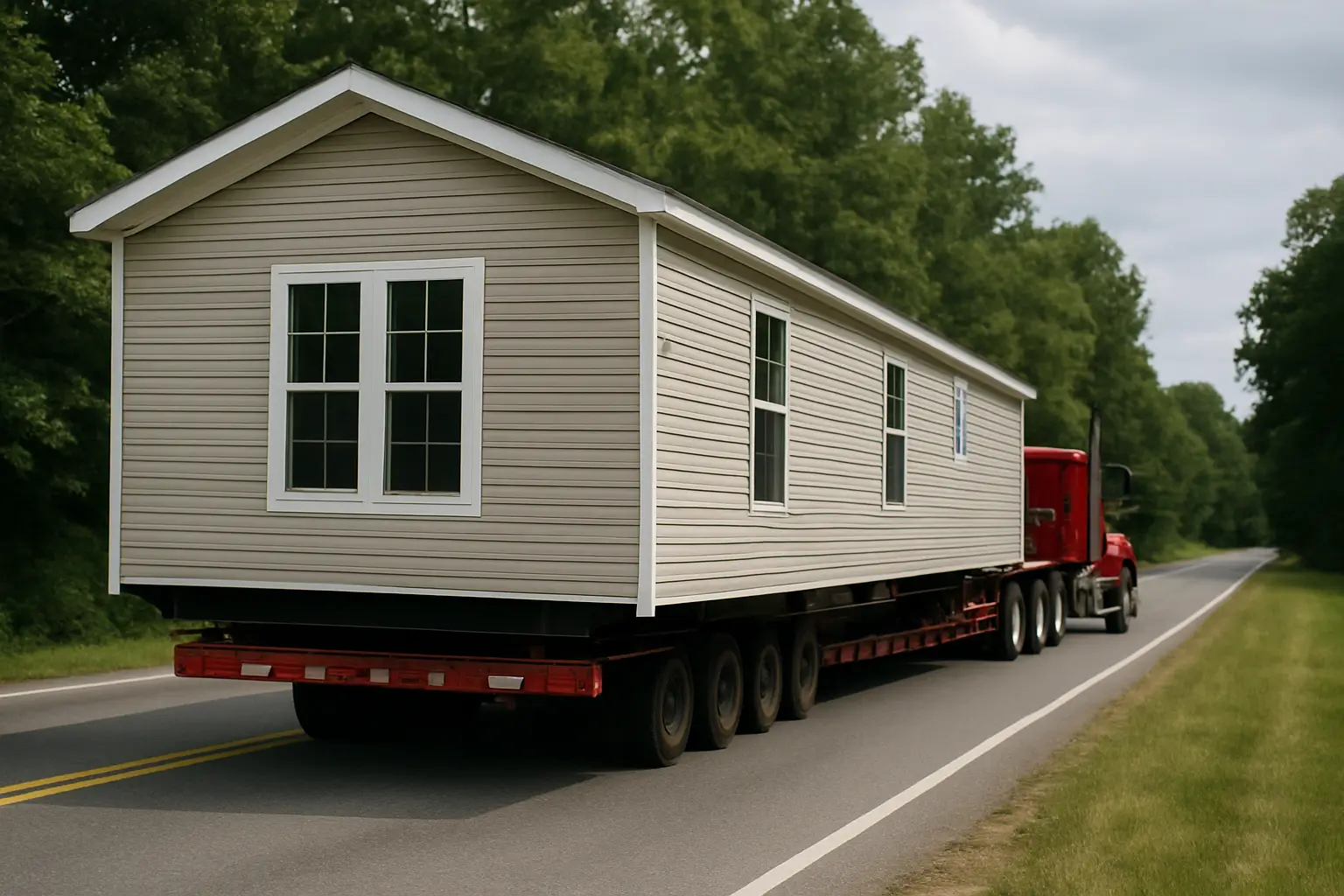
You can love your home and still hate the lot, the park rules, the commute, or the neighbor situation. When that happens, “We’ll just move the manufactured home” sounds simple – until you start calling movers and realize it’s closer to relocating a small building than towing a camper.
This guide to moving a manufactured home is written for North Carolina owners, especially across the Triad and surrounding counties, who want a clear, no-nonsense picture of what the process actually looks like, what it costs, and when moving it is worth it.
First question: can your manufactured home be moved?
Some homes move smoothly. Others technically can move, but it’s not financially smart. Before you spend a dollar on permits or deposits, you want answers to a few gating questions.
Start with the home’s build and condition. A single-wide in solid shape is generally the simplest move. A double-wide can be moved, but it’s a bigger job: two halves, more equipment, longer setup, and more opportunities for damage. Triple-wides and older, heavily modified homes can be possible but are often quote-by-quote.
Age matters too. Older homes may have weakened frames, rusted outriggers, soft floors, and brittle siding. That doesn’t automatically mean “no,” but it can mean expensive prep work to keep the home intact during transport.
Then there’s access. If a mover can’t get equipment to the home or can’t pull out cleanly because of tight turns, soft ground, low branches, or parked cars, your quote goes up – or the move gets declined.
Finally, zoning and placement rules can stop a move even if the home is perfectly towable. Many counties and municipalities have requirements on manufactured home age, roof pitch, tie-down standards, and minimum square footage. If your destination won’t accept the home, it does not matter how good the mover is.
Step 1: confirm where the home is going (and if it’s allowed)
Owners often focus on the move-out and forget the move-in. The move-in rules are what derail timelines.
If you’re moving into a mobile home park, ask the park manager what they require before you sign anything. Many parks have application fees, background checks, and rules on the age and condition of the home. Some won’t allow homes over a certain year, some require skirting and steps within a set time, and some require proof of insurance.
If you’re moving to private land, verify zoning, septic capacity, and driveway access. It’s common to find out late that the property needs a driveway widened for a tractor-trailer, or that power can’t be connected until inspections are passed.
A practical rule: do not schedule a move date until you have written approval from the park or clarity from the county on placement requirements.
Step 2: talk to a licensed manufactured home mover early
In North Carolina, reputable movers will walk you through what they handle and what you still need to arrange. A real quote usually depends on a site check or detailed photos.
Expect the mover to ask about:
- The home size (single-wide, double-wide) and approximate length/width
- Where it’s located now (park vs private land) and how tight the access is
- The destination address and setup type (piers, blocks, permanent foundation)
- Obstacles on the route (low lines, narrow roads, weight limits)
This is also where you ask what the quote includes. Some movers include “tear-down and set-up” as a package. Others quote transport only, and you’ll need separate help for disconnection and reinstallation.
If you’re comparing quotes, compare the scope, not just the number.
Step 3: permits, escorts, and route planning (the hidden time sink)
Transporting a manufactured home on public roads typically requires permits, and depending on width and route, may require escort vehicles. The mover often handles this, but you should still understand what affects your timeline and cost.
Wider loads usually mean more restrictions: travel only during certain hours, no travel during bad weather, and limitations on which roads can be used. If the route requires utility coordination, costs jump fast. A low line that needs lifting or a temporary disconnect can turn a “simple move” into an all-day project with multiple crews.
This is why the cheapest quote on paper is not always the cheapest in real life. If the mover hasn’t thought through the route, you can end up paying for delays, reschedules, and extra equipment.
Step 4: disconnects and tear-down at the current site
Moving day doesn’t start on moving day. A manufactured home has to be made “road-ready,” and that takes real labor.
Typical tear-down tasks include disconnecting power, water, sewer, and sometimes gas; removing skirting, decks, and additions; detaching tie-downs; and preparing the frame, axles, tires, and hitch.
Add-ons are where owners get surprised. A screened porch, a built-on room, or a carport that’s tied into the roofline can’t just be “left there” without planning. You may need demolition, hauling, and sometimes permits depending on what’s attached.
If the home has been set for years, you may also need repairs just to move it safely, like replacing dry-rotted tires, fixing lighting, or reinforcing weak points in the frame.
Step 5: set-up at the destination (where costs can spike)
Transport is only one part of the bill. Set-up is where the move becomes a full project.
At minimum, you’re paying to place the home, level it, and secure it with NC-compliant anchoring. For a double-wide, you also have marriage-line work: aligning the halves, fastening, sealing, and finishing.
If you’re moving onto private land, the site may need clearing, grading, and stone for a stable pad. If you need a new septic system, well work, or long utility runs, those can dwarf the transport cost.
And don’t forget the “livability” items. Steps, handrails, skirting, HVAC reconnect, appliance hookups, and minor repairs after transport add up. Even a careful move can cause cosmetic damage: cracked drywall seams, shifted doors, or siding issues.
What does it cost to move a manufactured home in NC?
It depends – and anyone who gives you a firm number without asking questions is guessing.
As a general reality check, moving a single-wide locally can sometimes land in the low-to-mid thousands for transport, but total project cost often climbs once you include tear-down, permits, and set-up. Double-wides commonly cost significantly more because you’re essentially moving two loads and doing more finish work at the destination.
The biggest cost drivers are distance, home width, site access, utility coordination, and how “turnkey” you need the mover to be. If you’re moving out of a tight park with sharp turns, or into raw land that needs prep, budget for a higher number.
If money is tight, ask movers to separate the quote into transport, tear-down, and set-up so you can see where the weight really is.
Timelines: why “next week” is often unrealistic
A clean move can still take a few weeks from planning to completion because you’re waiting on approvals, permits, and scheduling.
If the destination is a park, park approval and lot availability can slow you down. If the destination is private land, inspections and utility scheduling can stretch out longer than expected.
Weather is another factor in North Carolina. Heavy rain can make lots inaccessible and delay set-up work. Wind can stop transport on certain roads. Build slack into your plan, especially if you’re trying to coordinate a job change, school move, or eviction deadline.
When moving is the wrong move
Sometimes the smartest play is not moving the home at all.
If the home is older, needs major repairs, or has structural issues, you can end up paying to transport a problem to a new address. If you’re behind on lot rent or facing a park deadline, waiting weeks for a move may not be an option. If the home cannot meet the destination’s requirements, you can spend money and still be stuck.
There’s also the math problem. If the all-in move cost is close to the home’s market value, you’re taking on a lot of risk for little upside. Many owners only realize this after they’ve already paid deposits.
In those situations, selling the home in place can be the cleanest exit, especially if you want speed and certainty. If you’re in Central North Carolina and want a no-obligation option that can factor in the moving and paperwork headaches, you can reach out to Triad Mobile Homes LLC for a fast cash offer and a straightforward plan.
How to protect yourself from the most common headaches
The biggest problems we see come from assumptions. Owners assume the park will accept the home, assume the land is ready, assume the mover’s price includes set-up, or assume the title paperwork will be “easy later.”
Get everything concrete early. Ask the destination for requirements in writing. Ask the mover exactly what is included, and what you are responsible for. If your home has an addition or enclosed porch, ask how that affects tear-down and whether removal is required.
Also, do not ignore paperwork. Title issues can stop sales and can complicate moves too, especially if permits or community rules require proof of ownership. If you have missing title documents, a lien, or an estate situation, solve that upfront so you’re not trying to fix it while a mover is waiting.
Moving a manufactured home can absolutely be done – and when the home is in good shape and the destination is ready, it can be a smart way to keep what you already own. But the win comes from planning, not hope. Give yourself time, get clear quotes with clear scope, and make sure the destination is truly lined up before you commit. The less you leave to “we’ll figure it out,” the smoother your move – and your next chapter – will be.