

If you have got a mobile home to sell, the hard part is rarely deciding you are ready. The hard part is everything that comes after – the title, the park office, the buyer who says they have cash but needs “a few weeks,” the repairs you do not want to fund, and the question nobody answers clearly: how does the mobile home selling process actually work in North Carolina?
This is the straight, no-fluff version. Not the perfect-world version where every buyer is qualified and every document is already in a folder. The real version – including what changes if your home is in a park versus on private land, what you can do when the title is missing, and why some sales drag on for months.
The mobile home selling process starts with one big fork in the road
Before you talk price, you need to know what kind of sale you are dealing with. In manufactured housing, the process changes based on two things: where the home sits and how it is owned.
If your home is in a mobile home park, you are not only selling a structure. You are also dealing with park rules, lot rent, and the park’s approval process for whoever is taking over the home. Some parks require the buyer to apply. Others require certain skirting, steps, or removal of sheds. That is not a “later” problem – it affects who can buy and how fast you can close.
If your home is on private land, you may be selling a home-only, a home with land, or a home that is legally treated like real estate. That affects taxes, paperwork, and often the type of buyer. It can be simpler in some ways because there is no park approval, but it can be more complex if the land is involved.
Step 1: Get clear on ownership and paperwork (even if it is messy)
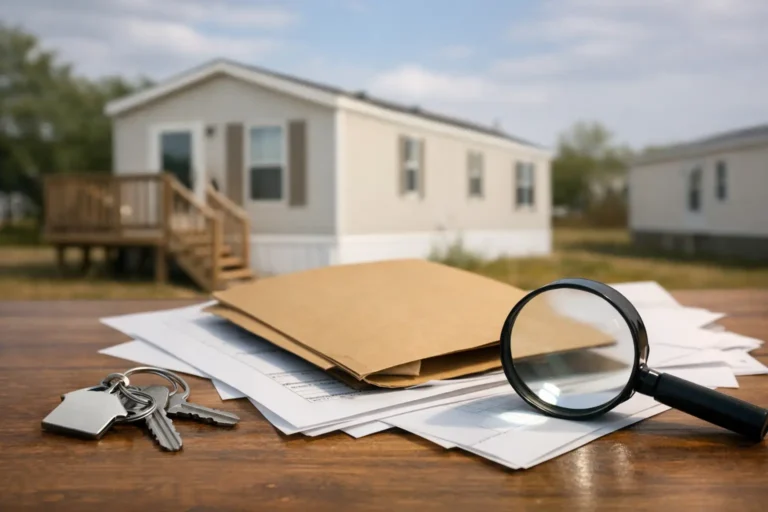
Most delays in a mobile home sale come from documentation – not from the home’s condition. In North Carolina, many manufactured homes are titled through the NC DMV, similar to a vehicle. That means the title matters, and the names on it matter.
Start by answering three questions:
First, who is on the title? If a spouse, parent, or co-owner is listed, you may need their signature even if they have not lived there in years.
Second, do you have the title in hand, and is it clear? If the title is lost, you will likely need to apply for a duplicate. If there is a lien, it must be resolved at closing – either paid off or otherwise released.
Third, is the home a single-wide or double-wide, and do you have both titles? Double-wides often have two sections and can require two titles.
If you are dealing with inheritance, it gets even more “it depends.” An heir may have rights to the home, but the transfer still has to be handled correctly. The goal is not to memorize legal terms – it is to get ahead of the paperwork so you do not accept an offer and then find out you cannot close.
Step 2: Decide what kind of sale you want – and what you are trading off
There are a few ways to sell, and each comes with a different balance of price, speed, and effort.
If you list it yourself, you can sometimes get a higher number on paper. But you are taking on marketing, screening buyers, scheduling showings, and dealing with the people who disappear after they say “I will be there at 5.” You may also get buyers who need financing, which can slow everything down and introduce lender inspections and repair requirements.
If you use a realtor, it can work for certain manufactured homes, especially newer homes on land with solid comps. The trade-off is time and cost. Many agents avoid older mobile homes, park homes, or heavy-repair situations, and commissions and listing fees cut into your net.
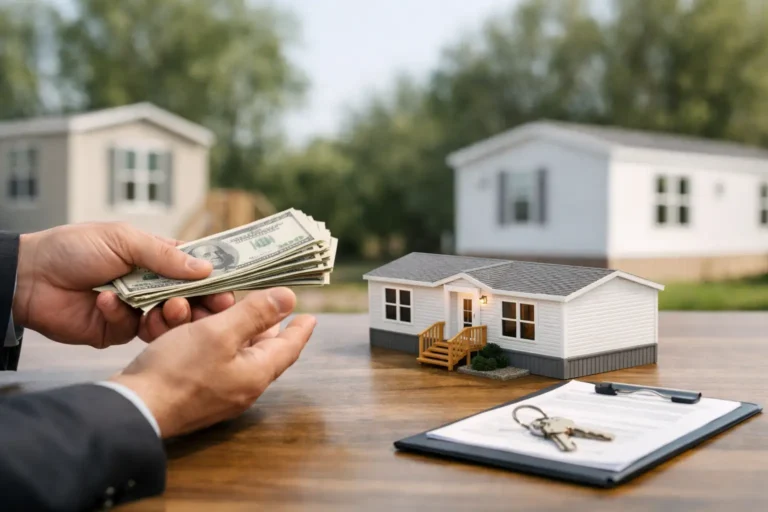
If you sell directly to a local cash buyer, the trade-off is usually speed and certainty versus squeezing for top-of-market. The upside is you can often sell as-is, skip repairs and showings, and close on your timeline.
A lot of Central NC sellers are not trying to “win” the market. They are trying to stop bleeding money from lot rent, avoid eviction, get out from under a vacant property, or cleanly resolve a divorce or estate. In those situations, the best sale is the one that actually closes.
Step 3: Set a realistic price (and do not price it like a stick-built house)
Mobile home pricing is its own world. Age, roof type, HVAC condition, floor soft spots, and water damage can change value fast. So can location – not just the city, but the specific park or road.
If you are pricing it yourself, compare apples to apples. A 1998 single-wide in a park is not comparable to a 2016 double-wide on land, even if the square footage is close.
Also be honest about the “hidden” costs buyers will take on. A home that needs a subfloor repair, a roof, and a hot water heater is not just three small projects – it is time, labor, and risk. Buyers price that in.
If your home is in a park, ask the park office what the lot rent will be for a new resident and whether there are back charges. Buyers look at monthly lot rent like a payment. Higher lot rent can shrink your buyer pool.
Step 4: Handle park requirements early (if the home is in a community)
This is where many sales fall apart.
Most parks in the Triad area – Greensboro, Winston-Salem, High Point, and nearby towns – want to know who is moving in. They may require an application, background check, income verification, and a minimum credit score. Some parks do not allow older homes to be brought in, and some have rules about pets, vehicles, or the number of occupants.
If your buyer cannot get approved, your deal can die even if you agreed on price.
The fastest path is to call the park manager early and ask what they require for a buyer to assume the lot. If you are behind on lot rent, ask what must be paid before transfer. It is better to face that up front than to find out at the last minute.
Step 5: Market the home (or let someone else do it)
If you are selling on your own, your marketing needs to do two things: prove the home is real and reduce wasted time.
Clear photos matter, but clarity matters more. State the year, size, bed/bath count, location, and whether the home is staying put or must be moved. If there is damage, say it. You will save yourself 20 calls that go nowhere.
Expect tire-kickers. Expect low offers. Expect people to ask if you will “take payments.” If you cannot take payments, do not negotiate with someone who cannot pay.
If you do not have the time, patience, or local bandwidth to run the marketing yourself, that is where a specialist can earn their keep by sourcing buyers through park networks and local channels and helping push the deal to the finish line.
Step 6: Screen buyers like your timeline depends on it (because it does)
A buyer saying “cash” is not the same as a buyer who can close.
Ask simple, direct questions. How soon can you close? Do you need park approval? Are you buying as-is? Who is handling title transfer? If the home must be moved, who is paying for the move and who is coordinating it?
If the buyer is using financing, expect more steps. Some lenders will require the home to meet certain standards. That can trigger repair demands you did not plan for.
If you are in a hurry – behind on lot rent, facing eviction, relocating for work – a clean cash offer with a defined closing date can beat a higher price that takes 60 days and falls apart.
Step 7: Closing and title transfer (where deals either finish or stall)
In a straightforward mobile home sale, you and the buyer sign the title over, complete the required DMV paperwork, and exchange funds. In practice, the “straightforward” part depends on whether names match, liens are cleared, and the park is satisfied.
If there is a lien, the payoff amount needs to be verified and paid so the lien release can be recorded properly. If there are multiple owners, everyone who is required must sign.
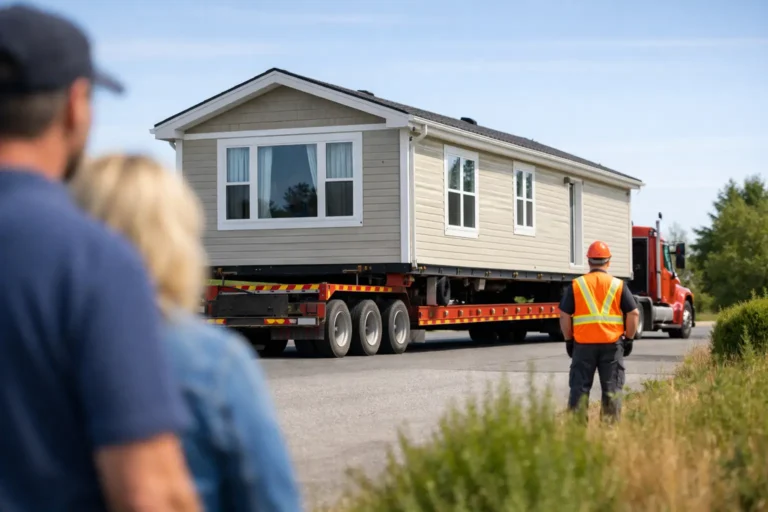
If the home is being moved, transportation adds another layer. The buyer may need permits, escorts, setup contractors, and a destination lot. Weather and scheduling can affect timelines. This is why many park-to-park buyers prefer homes that can stay where they are.
When everything is lined up, the closing can be fast. When one piece is missing, the sale can stall indefinitely.
What changes if the home is in rough shape?
A lot of mobile home owners assume they cannot sell if the home has soft floors, roof leaks, mold, fire damage, or has been vacant. You can. The process just changes.
A retail buyer may want move-in ready. An investor buyer may be fine with heavy repairs. Your buyer pool shrinks as condition worsens, but the deal can still happen if the expectations match reality.
If you are choosing between spending money you do not have on repairs and selling as-is, run the math on your net, not your pride. A $6,000 renovation to chase an extra $8,000 sounds good until you factor in delays, surprise issues, and another two months of lot rent.
A faster option if you want certainty
If you want to avoid listing, showings, repairs, and buyer drama, selling directly to a local buyer can compress the mobile home selling process into days instead of weeks. That is the model we use at Triad Mobile Homes LLC: tell us about the home, get a fair all-cash offer fast (often within 24 hours), and close without commissions, listing fees, or repair requirements. It is built for real-life situations – inherited homes, title issues, park complications, tenant damage, or a home you just need gone.
No pressure, no obligation. Just a clear path to an answer.
If you are selling a mobile home in Central North Carolina, the best next step is simple: pick the path that matches your goal. If your goal is maximum price, plan for time and effort. If your goal is speed and certainty, plan for a clean offer and a clean close. Either way, the smoother your paperwork and park communication are, the faster you get your life back.