

If you need to sell a manufactured home fast, the wrong help can cost you weeks, sometimes months. That is usually where sellers get stuck. They assume every home sale works the same way, hire a real estate agent, and then find out their situation is more complicated than a standard house listing.
A manufactured home dealer and a real estate agent can both play a role in selling, but they do not solve the same problems. If your home is in a park, needs repairs, has title issues, or needs to be moved, that difference matters right away.
Manufactured home dealer vs real estate agent: what is the real difference?
The short version is simple. A real estate agent is usually focused on listing and marketing property. A manufactured home dealer is usually focused on the home itself, the logistics around it, and getting a workable sale done.
That matters because manufactured housing does not always fit the traditional real estate model. Some homes are sold with land. Some are sold without land. Some are in mobile home parks where park approval is part of the deal. Some have title problems. Some buyers need the home moved. Some sellers are behind on lot rent and do not have time for a long listing process.
A real estate agent may be a good fit when the home is on private land, in solid condition, and likely to attract a standard retail buyer. But if the deal is messy, time-sensitive, or tied to manufactured-home-specific issues, a dealer is often the one better equipped to handle it.
When a real estate agent makes sense
There are situations where an agent is the right call. If your manufactured home is permanently attached to land you own, has clean title, no major repair issues, and can be financed like a more traditional home, an agent may help you list it broadly and push for a higher market price.
That approach can work well for sellers who are not in a hurry. If you have time for showings, back-and-forth negotiations, inspections, lender delays, and possible buyer fall-throughs, an agent gives you exposure to retail buyers. In the best case, that can mean more money on paper.
But there is a trade-off. Agents are generally paid when the home sells, not when a problem gets solved. If your sale depends on park communication, title correction, moving logistics, or finding a buyer comfortable with an older manufactured home, the process can get slow fast. A listing does not fix those issues by itself.
When a manufactured home dealer makes more sense
This is where the manufactured home dealer vs real estate agent question becomes practical instead of theoretical.
A dealer is often the better fit when speed, certainty, and problem-solving matter more than holding out for top-dollar retail pricing. That includes sellers dealing with inherited homes, storm damage, deferred maintenance, eviction risk in a park, divorce, vacancy, repossession pressure, or homes that simply are not finance-friendly.
A manufactured home dealer usually understands the parts of the transaction that trip up traditional listings. That can include verifying title status, dealing with single-wide or double-wide paperwork, helping coordinate moves, understanding park rules, and working with buyers already active in the manufactured housing market.
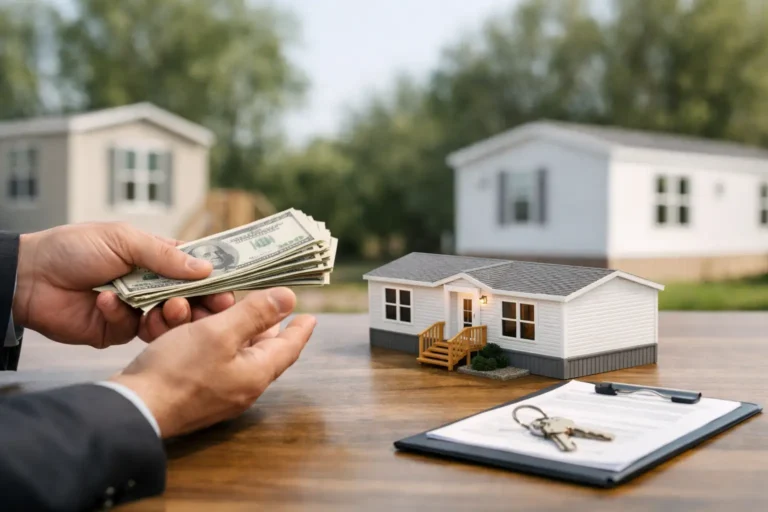
In some cases, a dealer may buy the home directly for cash. In other cases, the dealer may act more like a specialized marketing resource, helping locate a qualified buyer through local community contacts and manufactured-home sales channels. Either way, the value is not just posting the home for sale. The value is getting the deal across the finish line.
The biggest issue is not price – it is friction
Most sellers start with one question: who can get me the most money?
That is fair. But for manufactured homes, the better first question is often: what is most likely to stop this sale from happening?
If your home needs repairs, an agent may suggest cleaning it up, making updates, and preparing it for showings. If the buyer is getting financing, that may lead to more requirements. If the home is in a park, the buyer may need approval. If the title is missing or incorrect, that has to be addressed. If the home needs to be moved, you are dealing with a completely different layer of cost and coordination.
Every one of those issues adds friction. Friction slows the sale. Sometimes it kills it.
A dealer who works with manufactured homes every day is typically more prepared for that reality. Instead of assuming the market will sort it out, they work the problem directly.
Titles, land, and park rules change everything
One reason sellers get confused is that manufactured homes can be treated differently depending on how they are set up.
If the home is on land you own, and it is legally connected to that land in a way lenders and buyers recognize, a real estate agent may have a stronger lane. The sale may look more like a standard residential transaction.
If the home is in a mobile home park, the transaction may have little in common with a site-built house sale. Park management may need to approve the buyer. The home may transfer by title instead of deed. The buyer pool may be narrower. Condition matters more. Age matters more. Financing options may be limited.
That is where specialized help matters. Sellers often do not need more marketing. They need someone who understands why a park office, a title issue, or a move permit can hold up the entire deal.
Speed versus maximum listing price
This is the part many sellers need to hear clearly. A real estate agent may help you aim for a higher asking price. A manufactured home dealer may help you get a faster, cleaner sale.
Neither option is automatically better. It depends on your situation.
If you are not under pressure, your home shows well, and you are comfortable waiting for the right buyer, listing may be worth trying. If you need to stop the monthly drain, avoid more lot rent, settle an estate, or get rid of a problem property without repairs or repeated showings, a dealer is usually the more practical choice.
For many sellers, certainty is worth more than the possibility of a better number later. A cash offer with clear terms can be the better deal if it lets you move on now instead of chasing a maybe.
What sellers in North Carolina should watch for
In North Carolina, manufactured home sales can involve title transfer requirements, land-home classification questions, county paperwork, and park-level restrictions. That is why local experience matters.
A general real estate approach does not always line up with the way these sales actually happen on the ground. If your home is older, vacant, inherited, damaged, or located in a park, ask direct questions before choosing who to work with. Ask whether they have handled homes like yours before. Ask how they deal with title issues. Ask who handles buyer sourcing. Ask what happens if the buyer backs out. Ask whether you need to make repairs or clean the home out first.
Those answers will tell you quickly whether you are dealing with a generalist or a specialist.
So who should you call first?
If your manufactured home sale is straightforward and you are focused on testing the open market, a real estate agent may be worth considering.
If your sale has urgency, complications, or a home that does not fit the standard listing model, start with a manufactured home dealer. You can save yourself a lot of wasted time by talking to someone who already understands the process, the paperwork, and the local buyer pool.
That is especially true if you want to skip repairs, avoid commissions, and get a fair cash offer without dragging the sale out. In Central North Carolina, sellers in that position often work with specialists like Triad Mobile Homes LLC because the process is built around fast answers, no pressure, and getting difficult deals handled.
The right choice comes down to one thing: do you need exposure, or do you need execution? If you are dealing with a manufactured home and real-life problems are already piling up, execution usually wins.