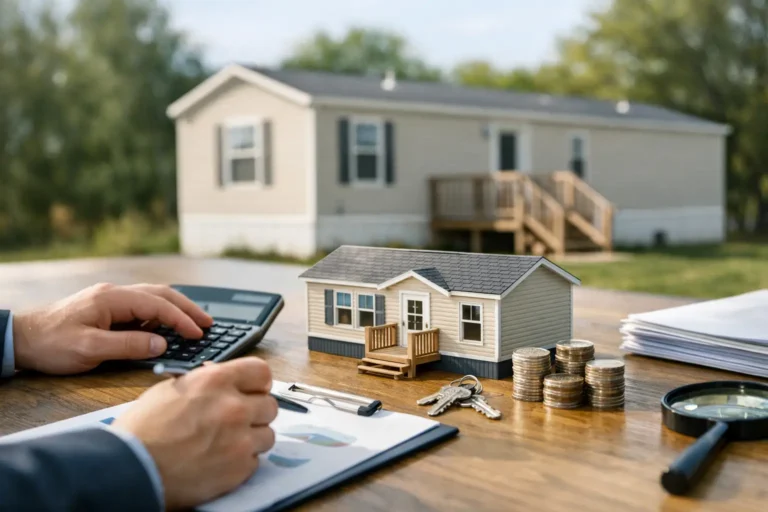

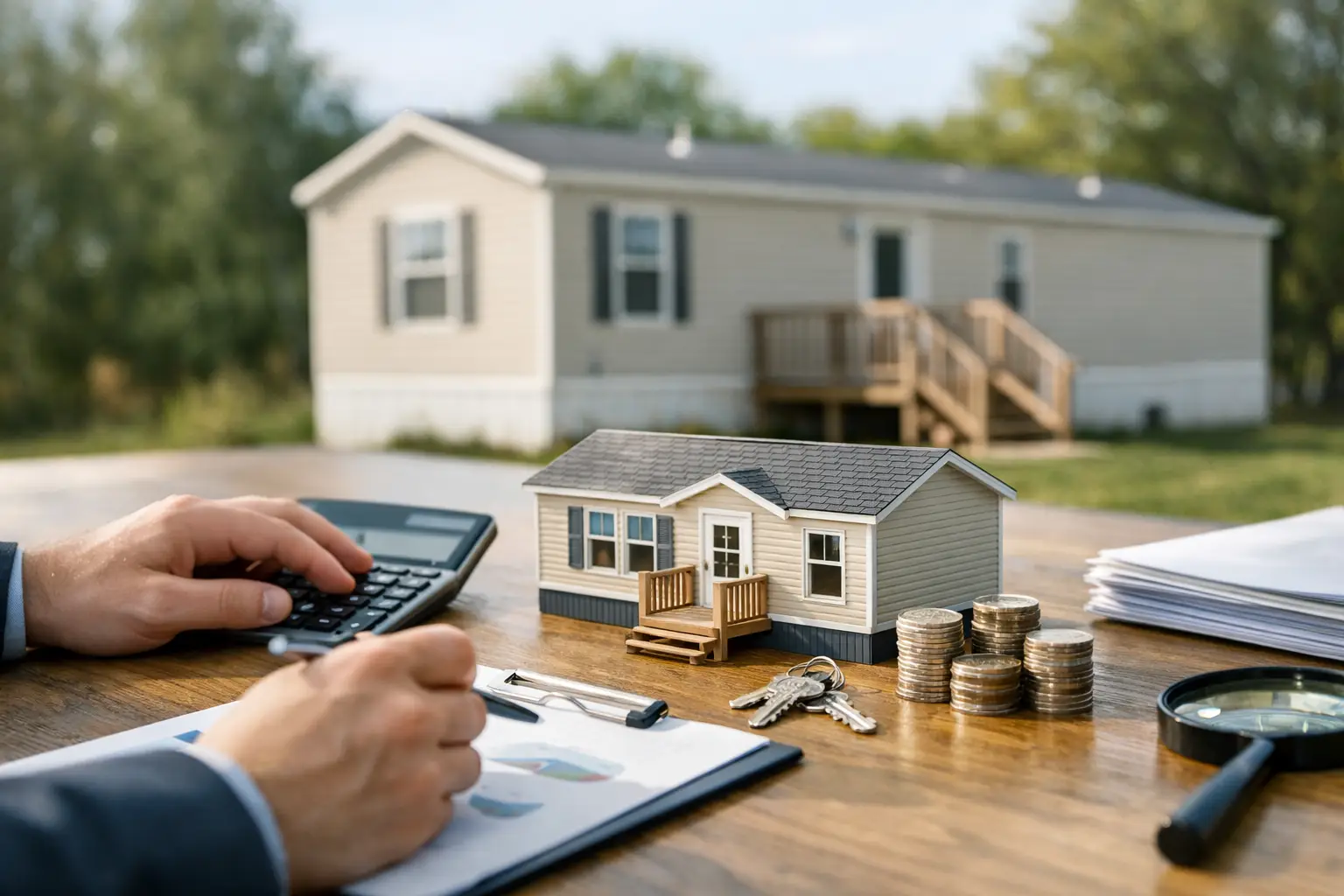
If you need to sell soon, figuring out how to price a used mobile home can feel like the hardest part of the whole process. Price it too high and buyers disappear. Price it too low and you leave money on the table. The right number comes from a mix of real-world factors – not guesswork, not hope, and definitely not what someone else got for a totally different home.
How to price a used mobile home without guessing
A used mobile home is not priced the same way as a site-built house. In many cases, the land is not included. Park rules may limit who can buy it. The home may need to stay where it is, or it may need to be moved. Titles, age, condition, and setup all matter more than sellers expect.
That is why online estimates are often off. A single-wide in a well-kept park in Greensboro with updated flooring and cold AC is not the same as a double-wide outside Winston-Salem with soft floors, title issues, and back lot rent. Both can sell, but not at the same price and not on the same timeline.
If your goal is speed and certainty, your pricing strategy should reflect that. If your goal is to hold out for the highest possible retail number, you need to be ready for more waiting, more buyer questions, and more risk that the deal falls apart.
Start with the five factors that drive value
The first factor is age and HUD compliance. Older homes usually sell for less, especially if they were built before June 15, 1976, when HUD standards changed. Many parks and lenders are stricter with older units. That does not mean an older home has no value. It means the buyer pool may be smaller.
The second factor is condition. Be honest here. Cosmetic wear is one thing. Major issues are another. Soft floors, roof leaks, water damage, missing skirting, bad subfloor, broken windows, plumbing problems, and HVAC issues all push the price down. A clean home with dated finishes can still sell well. A home with structural or moisture problems will be judged very differently.
The third factor is location. A mobile home in a desirable park with manageable lot rent and a good reputation may bring more than a similar home in a park with strict approval rules or rising fees. If the home sits on private land and that land is included, that changes the pricing conversation completely. If the home is being sold by itself and the land is not part of the deal, make that clear from the start.
The fourth factor is title and paperwork. A home with a clean title, VIN information, and clear ownership is easier to sell. If there are title problems, tax issues, missing paperwork, liens, or estate complications, buyers will factor that into what they are willing to pay.
The fifth factor is whether the home must be moved. A mobile home that can stay in its current spot is usually worth more than one the buyer has to move. Moving a home is expensive, and in some cases older homes cannot be moved at all without major trouble. If the buyer has to arrange transport, permits, setup, and utility hookups, your asking price needs to reflect that.
Look at comparable sales – but use the right comps
One of the biggest pricing mistakes sellers make is comparing their home to listings instead of sales. An asking price is just a seller’s opinion. It does not prove what buyers are actually paying.
The better approach is to compare homes that match your home in the ways that matter most: single-wide or double-wide, similar age, similar condition, same general area, same park if possible, and same sale setup. A home sold with land should not be used to price a home in a park. A renovated 2020 model should not be used to price a worn 1998 model.
If you cannot find exact matches, get close and then adjust. If your home needs a roof and the comparable did not, subtract for that. If your home has new flooring, fresh paint, and working systems, add some value back. The point is not to find a perfect formula. The point is to stop using unrealistic numbers.
Facebook Marketplace, park manager feedback, local dealer activity, and recent manufactured home sales in your area can all help paint the picture. In Central North Carolina, buyer demand can shift fast based on park rules, financing access, and how many affordable units are available at that moment.
Condition matters more than sellers want to hear
A lot of owners remember what they paid, what they put into the home, or what they need out of it. Buyers do not price that way. They look at what they are getting right now and what it will cost to make the home livable, financeable, or move-in ready.
That can be frustrating, especially if you spent money on repairs over the years. But maintenance usually protects value more than it increases value. Replacing a leaking roof may keep your price from dropping further. It does not always create a dollar-for-dollar increase.
If you want a fast reality check, think like a buyer. Ask what would need to be fixed before someone could move in. Ask whether the park will approve a buyer quickly. Ask whether the title can transfer without delays. Those issues affect price just as much as square footage.
Price for your timeline, not just your ideal number
This is where many sales stall out. The best price on paper is not always the best price for your situation.
If you have time, clean title, a home in solid shape, and a park that allows straightforward transfers, you may be able to ask more and wait for a retail buyer. That route can work, but it usually comes with more calls, more no-shows, more negotiation, and more chances for financing or park approval to fail.
If you are behind on lot rent, dealing with an inherited home, facing repairs, moving out of state, or just need the home gone without more hassle, pricing for speed often makes more sense. A lower but realistic number can save you months of stress, carrying costs, and uncertainty.
That is especially true if every extra month means more lot rent, taxes, utilities, or exposure to vandalism. Sellers sometimes hold out for a higher price, only to lose money while waiting.
Common pricing mistakes to avoid
The first mistake is building your price around what you owe. Your loan balance does not determine market value. If the home is worth less than what you owe, the market will not stretch to cover that gap.
The second is ignoring park restrictions. Some parks require buyer approval, age limits, repairs, or even removal of older homes. Those rules directly affect what buyers will pay.
The third is using upgraded houses or land-home packages as comparisons. Manufactured home pricing is very specific. Small differences change the deal.
The fourth is pricing high just to leave room for negotiation. In a slower market, an inflated price does not create leverage. It can make buyers skip your home completely.
The fifth is hiding problems. Buyers notice. If they find damage late in the process, trust drops and so does the offer.
A simple way to set your asking price
Start with realistic comparable sales, then adjust down for needed repairs, title issues, back lot rent, or move requirements. Adjust up for strong condition, recent updates, cold AC, working appliances, clean presentation, and a location where the home can stay in place.
Then decide what kind of sale you want. If you want maximum exposure and are prepared to wait, price near the top of your realistic range. If you want a quicker sale, price in the middle or slightly below market to attract immediate interest.
If your home has complications, the cleanest option may be a direct buyer who already understands mobile home titles, park rules, and condition issues. In that case, the trade-off is simple: you may get less than top retail, but you avoid repairs, listings, commissions, and a long, uncertain process. For many sellers, that is a fair deal.
In Central North Carolina, sellers who want a fast, no-pressure option often reach out to Triad Mobile Homes LLC for a straightforward cash offer and help with the hard parts. That kind of route is not for everyone, but it can make sense when speed matters more than squeezing out every last dollar.
When a fair price is better than a perfect price
A used mobile home is worth what a real buyer will pay under your actual circumstances – not what a calculator says and not what a neighbor hopes theirs is worth. The best pricing approach is honest, local, and tied to your timeline.
If you are stuck, stop asking what the home should be worth in a perfect world. Ask what price gives you the best outcome with the least stress. That is usually the number that gets the home sold.