
A leaking roof, soft floors, storm damage, or a home park notice can turn a manageable situation into a deadline fast. If you’re weighing the best options for damaged manufactured home owners, the right answer usually comes down to one thing – how much time, money, and uncertainty you can realistically take on.
Some owners still have a solid home with a fixable problem. Others are dealing with years of deferred maintenance, title issues, lot rent pressure, or a park that will not allow an older home to stay. Those are very different situations, and they call for different decisions. What matters most is choosing the option that solves the problem without creating a bigger one.
Best options for damaged manufactured home owners
The main paths are usually repair and keep it, repair and sell it, sell it as-is, move it to another site, or remove and scrap it. Each can make sense. Each also has trade-offs that sellers do not always see upfront.
If the damage is limited and the home is otherwise in decent shape, repairing it may be worth it. If the home has major structural issues, water damage, missing HVAC, bad subfloors, or outdated systems, sinking more money into it can become a losing battle. A lot of owners start with the idea that a few repairs will solve everything, then find out permits, park rules, contractor delays, and hidden damage change the math.
That is why the best decision is rarely about the highest theoretical value. It is about the cleanest path from where you are now to being done with the property.
Option 1: Repair the home and keep it
This makes the most sense when the damage is isolated and you want to stay put. Maybe a pipe burst under one bathroom, a section of roof needs replacement, or a broken window led to minor interior damage. If the title is clean, the home is financeable enough for your needs, and the lot situation is stable, repairing and keeping it can be practical.
But be honest about scope. Manufactured homes can hide damage under the belly wrap, behind paneling, and around windows and roof seams. What looks like a flooring repair can turn into subfloor replacement. What looks like cosmetic water staining can turn into mold and framing issues. If money is tight, partial repairs can leave you in limbo.
Option 2: Repair the home before selling
This sounds smart on paper, but it depends heavily on price point and buyer type. In many Central North Carolina markets, buyers looking at older manufactured homes care more about affordability and move-in basics than polished finishes. Spending thousands on upgrades does not always come back in the sale price.
If you go this route, focus on repairs that stop active damage and make the home functional. Roof leaks, floor safety issues, plumbing failures, and electrical hazards matter more than new countertops or fresh trim. Cosmetic work can help marketability, but major rehab projects can drag on and eat up cash while lot rent, taxes, or land payments keep running.
Option 3: Sell the damaged manufactured home as-is
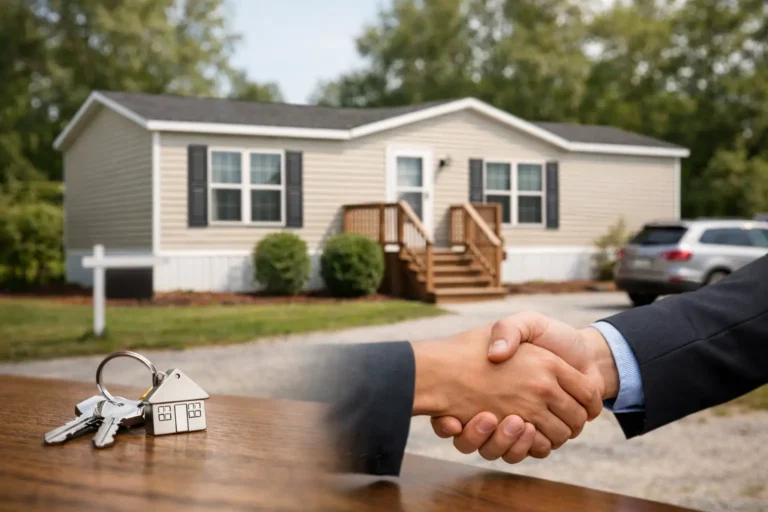
For many owners, this is the most practical answer. If you need speed, do not want to manage repairs, or are dealing with inherited property, tenant damage, divorce, repossession pressure, or a park problem, selling as-is removes a lot of friction.
An as-is sale usually works best when you sell directly to a buyer who understands manufactured homes, title transfers, and park or land-related issues. That matters because damaged manufactured homes are not like standard site-built homes. You may be dealing with age restrictions, serial number verification, DMV title records, moving costs, or community approval. A general real estate buyer often is not set up for that.
With a direct buyer, the upside is certainty. You do not have to clean it out perfectly, fix every issue, schedule multiple showings, or pay commissions. The trade-off is simple: you may not get the same price as a fully repaired retail-ready home, but you avoid repair risk, carrying costs, and months of waiting.
When selling as-is is the best option for a damaged manufactured home
If your home has major water damage, soft floors throughout, fire damage, missing components, code problems, or title complications, selling as-is is often the better business decision. The same goes for owners who live out of state, inherited a home they do not want, or are already behind on lot rent.
The hidden cost in damaged home situations is not just repair money. It is delay. Every extra month can mean more lot rent, taxes, insurance, vandalism risk, weather exposure, and stress. If the home is vacant, that risk climbs even faster.
This is where a local manufactured home buyer can save you time. Companies like Triad Mobile Homes LLC focus on exactly these situations – poor-condition homes, fast cash offers, and the paperwork and logistics that usually trip sellers up. If your goal is to be done without fixing the home first, a direct buyer is usually the shortest path.
Option 4: Move the home to another location
Sometimes owners think moving the home is the fix, especially if the park wants it out or the lot situation has changed. In reality, moving a damaged manufactured home can be one of the most expensive and uncertain options.
Older homes may not qualify to be moved at all, or the cost may not make sense compared with the home’s value. You may need permits, transporter availability, setup crews, utility disconnects, utility reconnects, and approval at the destination site. Damage can also worsen during transport if the home is already compromised.
Moving can work if the home is structurally sound, accepted by the new site, and worth enough to justify transport and setup costs. But if the home already needs major repair, moving it often adds cost to a problem instead of solving it.
Option 5: Remove or scrap the home
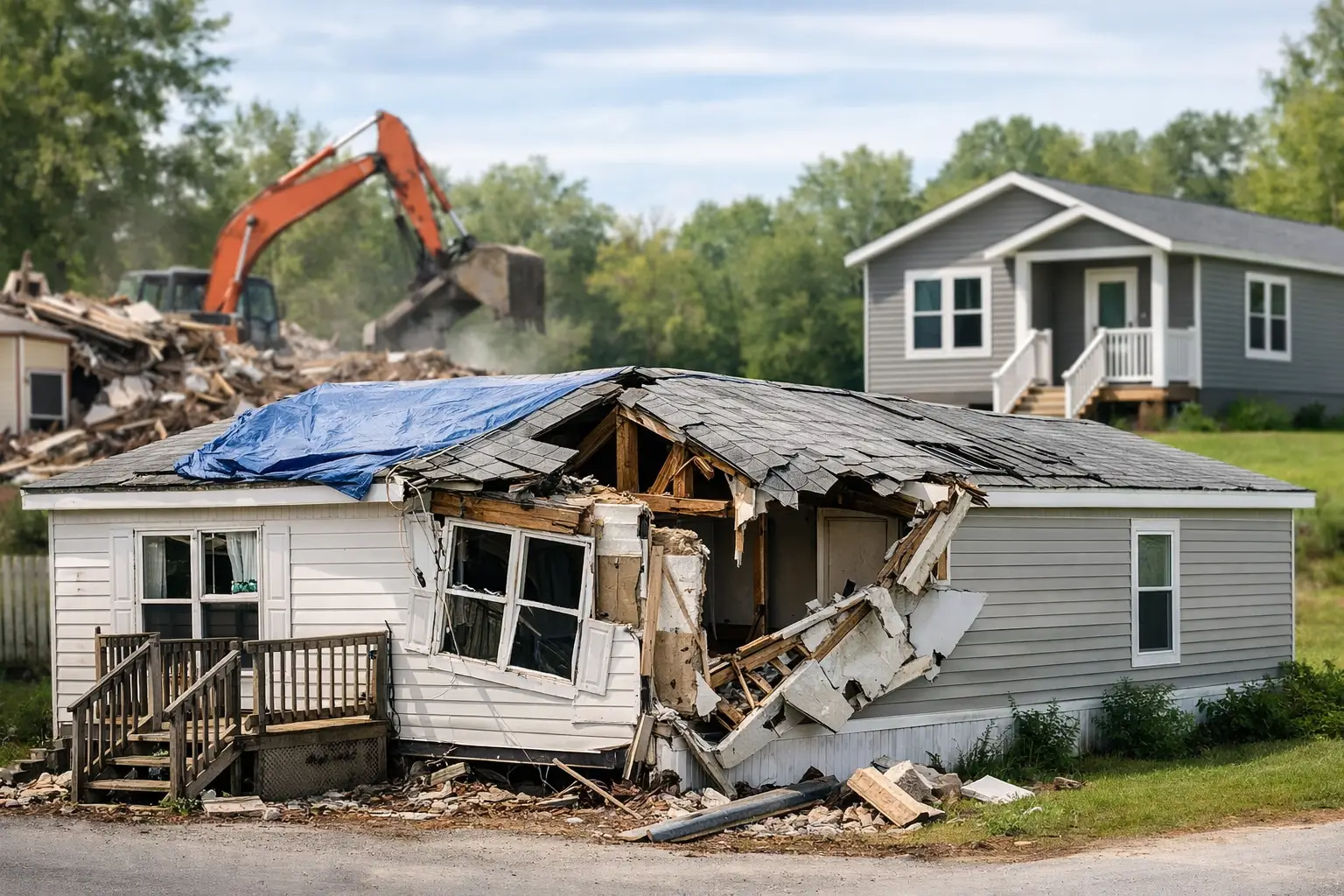
This is usually the last option, but sometimes it is the right one. If the home is beyond repair, unsafe, heavily burned, collapsed, or impossible to sell due to condition and title issues, demolition or scrapping may be the cleanest path.
Owners are often surprised that this option can still cost money. Demolition, hauling, disposal fees, permit requirements, and site cleanup can add up quickly. If the home sits in a park, management may also have deadlines and removal standards. On private land, you may still need to deal with septic, utility disconnection, and debris disposal.
That is why it often makes sense to explore whether a buyer will take the home as-is before paying to remove it. Even a low-value sale can be better than writing a check for teardown.
What affects your real-world options
The damage itself is only part of the picture. The rest comes down to paperwork, location, and whether the home can stay where it is.
Title status matters. If the title is missing, transferred incorrectly, or still in a deceased owner’s name, that can slow down a retail sale. Park rules matter too. Some communities restrict the age of homes they will approve for resale, and some buyers must be approved before the transaction can close. If the home is on private land, you may need to think about whether land and home will be sold together or separately.
Then there is cost. Repairs are not the only expense. Holding costs are real, especially if you are paying lot rent, taxes, insurance, storage, or travel expenses to manage the property. Sellers often compare a repaired sale price to an as-is cash offer without subtracting what it will cost to get there.
That is the wrong comparison. The better comparison is net outcome after repairs, time, carrying costs, and risk.
How to choose the best path quickly
Start with three questions. Is the home safe and structurally repairable? Can it stay where it is? And do you want to put more money into it?
If the answer to all three is yes, repair may make sense. If the home can stay but you do not want to fund repairs, selling as-is is usually stronger. If the home cannot stay and moving costs are high, compare a direct as-is sale against removal. If title issues are involved, talk to a buyer who already handles manufactured home paperwork instead of trying to force a traditional listing that may stall.
You do not need a perfect house to get a fair outcome. You need a realistic plan.
For a lot of owners, the best move is the one that stops the bleeding fast and keeps the process simple. That may not be the highest price on paper, but it is often the best value in real life. If your damaged manufactured home is creating more stress than equity, a straightforward as-is sale can be the clean break that lets you move on.